AI Appraisal Estimate

AI-generated estimates · not official valuations

From the user

What was submitted

Photo and notes provided by the user — not generated by AI

Submitted item photo
Submitted photo · June 20, 2026

User's notes

No additional notes provided.

AI analysis below

AI appraisal

AI analysis & estimate

AI-Generated · Verify before acting

Everything below is generated by AI for informational purposes only. AI can make mistakes — the AI may misidentify items or misattribute them (artist, maker, brand, designer, origin, era). This is not an official valuation and should not be used for insurance, sale, tax, estate, legal, or lending purposes — or any decision requiring a certified appraisal. It is not an authoritative claim about any person, brand, or rights holder — do not share or rely on it as a factual statement about a third party. Always consult qualified professionals before making financial decisions.

Read the full disclaimer

AI Identification

·Not independently authenticated·Verify before acting

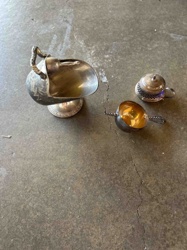
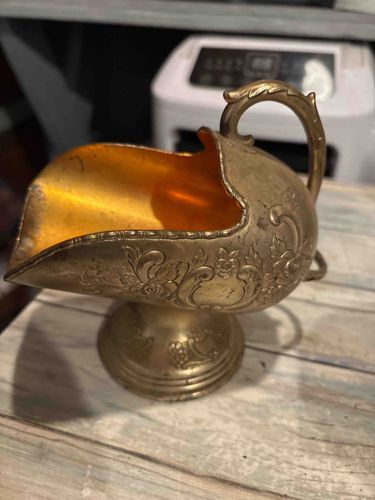
Victorian Miniature Silver-Plated Scuttle Sugar Bowl with Gold Wash Interior

Antique Silver-Plated Tableware

AI Estimated Value

·Not an official valuation·Verify before acting

$45.00 - $75.00

As of June 20, 2026

AI Item Analysis

·AI can make mistakes·Verify before acting
This item is a decorative sugar bowl designed in the shape of a miniature coal scuttle, a popular motif during the late Victorian era (circa 1880-1900). The piece is constructed from a base metal, likely copper or pewter, which has been silver-plated. It features a striking gold vermeil or gold wash finish on the interior of the scoop, which provides a warm contrast to the exterior. The exterior body displays intricate repoussé and chased floral ornamentation, including roses and scrolling acanthus leaves surrounding a central vacant cartouche meant for engraving. The scuttle is supported by a spreading pedestal foot with matching embossed decorative bands. It includes a fixed, ornate C-scroll handle with foliate accents at the top and a smaller secondary handle at the rear for tipping. In terms of condition, the silver plating shows significant signs of wear and age, particularly on the exterior where the base metal is beginning to show through (bleeding), resulting in a tarnished, yellowish-brown patina. There are visible surface scratches, minor pitting, and some accumulation of tarnish in the recessed areas of the design. No specific maker's marks are visible in the photograph, but the craftsmanship suggests a mass-produced piece of Victorian tabletop hollowware meant for a middle-class household. Typical dimensions for such pieces are approximately 4 to 6 inches in height.
AI Appraisal Report

·AI can make mistakes·Verify before acting
This Victorian miniature coal-scuttle form sugar bowl is a characteristic example of mass-produced silver-plated hollowware from the late 19th century. My visual examination confirms the piece is constructed from a base metal, likely copper or white metal, with a silver electroplate finish and a gold wash interior. The repoussé floral work and scrolling acanthus motifs are typical of the period's aesthetic. However, the condition significantly impacts the market value; the exterior shows substantial 'bleeding' where the silver plate has worn away to reveal the base metal, particularly on the relief highlights. The tarnish and minor pitting further indicate poor storage conditions over time. Market demand for silver-plated tea service accessories remains soft compared to sterling silver, as modern collectors often view plated items as purely decorative rather than investment pieces. Comparables for utilitarian plated items of this era in similar condition typically sell within the sub-$100 range at auction or in antique malls. Limitations: Verification of the base metal and the exact thickness of the gold wash cannot be determined via photography. A physical inspection is required to identify any hidden maker's marks on the underside of the pedestal or interior of the scoop, which could potentially link the piece to a specific manufacturer like Sheffield or Meriden. Scientific testing, such as an acid test or XRF analysis, would be necessary to confirm the exact composition of the plating and base metal, though such testing often exceeds the value of the item itself.

Get your items appraised

Instant estimates of your treasures with AI-powered appraisals

Browse More Appraisals