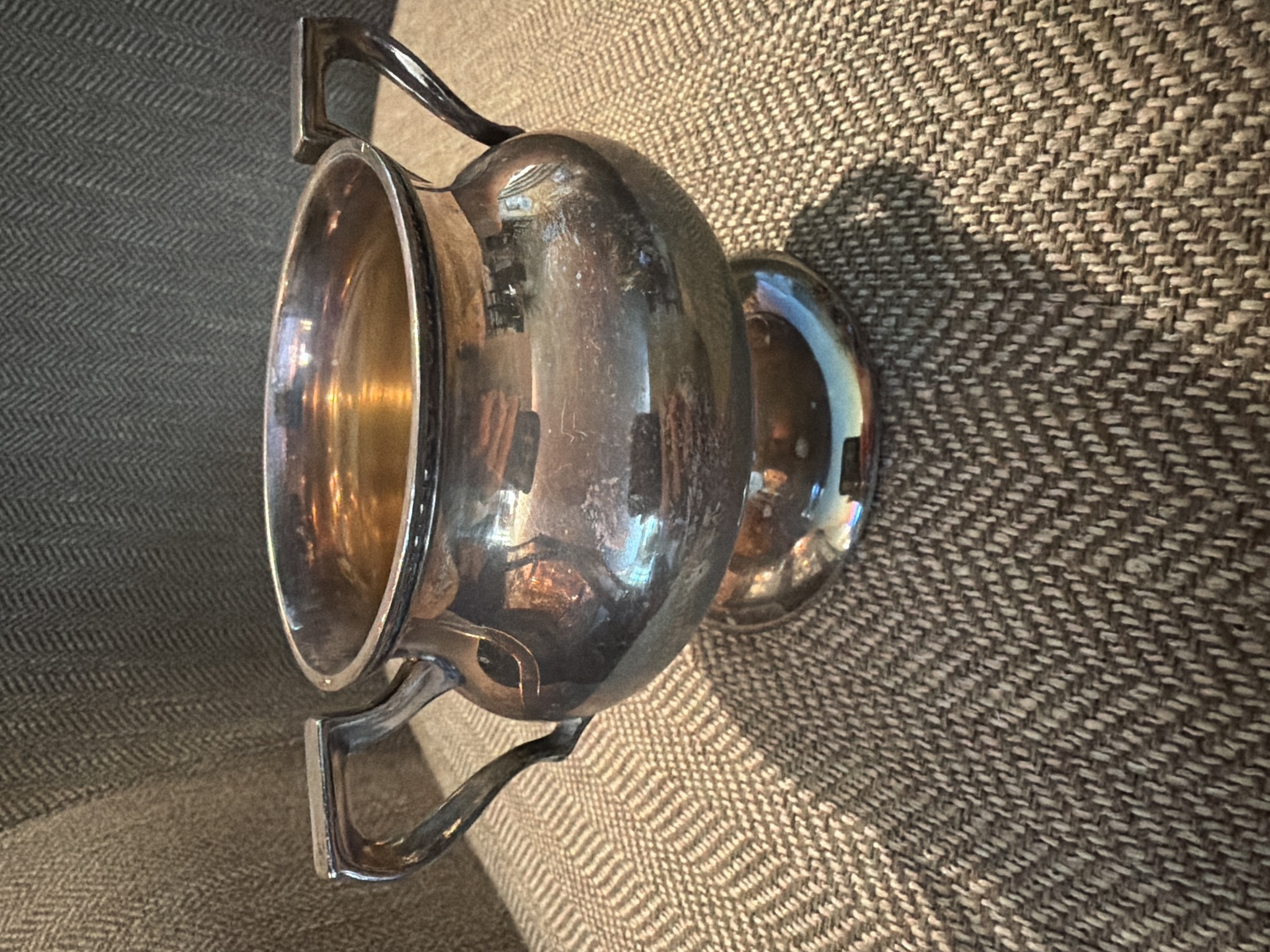
Silver-Plated Footed Sugar Bowl
Antique Tableware

Silver-Plated Footed Sugar Bowl

This item is an antique or vintage footed sugar bowl, likely made of silver-plated brass or copper. It features a bulbous, rounded body with two angular, geometric handles that suggest an Early 20th Century or Art Deco influence. The bowl sits atop a flared pedagogical foot. Inside the bowl, there is a visible gold-tone wash, often referred to as vermeil, which was a common technique used to prevent corrosion from sugar or salt and to add aesthetic luxury. The exterior surface exhibits a significant amount of tarnish and mottled patina, ranging from deep charcoal to yellowish hues, which indicates a long period of oxidation without polishing. There are visible surface scratches and some minor pitting consistent with age and regular use. While no maker's mark is visible from this angle, the sturdy construction and seamless joints suggest a mid-tier industrial manufacturing process typical of the 1920s through 1940s. The contrast between the sleek, curved body and the stiff, angular handles provides a unique design element that differentiates it from standard colonial revival styles.
Estimated Value

$45.00 - $65.00

Basic Information

Category

Antique Tableware

Appraised On

May 6, 2026

Estimated Value

$45.00 - $65.00

Item Description

This item is an antique or vintage footed sugar bowl, likely made of silver-plated brass or copper. It features a bulbous, rounded body with two angular, geometric handles that suggest an Early 20th Century or Art Deco influence. The bowl sits atop a flared pedagogical foot. Inside the bowl, there is a visible gold-tone wash, often referred to as vermeil, which was a common technique used to prevent corrosion from sugar or salt and to add aesthetic luxury. The exterior surface exhibits a significant amount of tarnish and mottled patina, ranging from deep charcoal to yellowish hues, which indicates a long period of oxidation without polishing. There are visible surface scratches and some minor pitting consistent with age and regular use. While no maker's mark is visible from this angle, the sturdy construction and seamless joints suggest a mid-tier industrial manufacturing process typical of the 1920s through 1940s. The contrast between the sleek, curved body and the stiff, angular handles provides a unique design element that differentiates it from standard colonial revival styles.
Get Your Items Appraised

Instant estimates of your treasures with AI-powered instant appraisals

Browse More Appraisals