AI Appraisal Estimate

AI-generated estimates · not official valuations

From the user

What was submitted

Photo and notes provided by the user — not generated by AI

Submitted item photo
Submitted photo · June 10, 2026

User's notes

Spelter

AI analysis below

AI appraisal

AI analysis & estimate

AI-Generated · Verify before acting

Everything below is generated by AI for informational purposes only. AI can make mistakes — the AI may misidentify items or misattribute them (artist, maker, brand, designer, origin, era). This is not an official valuation and should not be used for insurance, sale, tax, estate, legal, or lending purposes — or any decision requiring a certified appraisal. It is not an authoritative claim about any person, brand, or rights holder — do not share or rely on it as a factual statement about a third party. Always consult qualified professionals before making financial decisions.

Note

This analysis also relies on unverified notes provided by the user, which may be incomplete or inaccurate and could affect the result.

Read the full disclaimer

AI Identification

·Not independently authenticated·Verify before acting

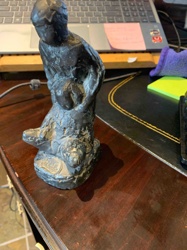
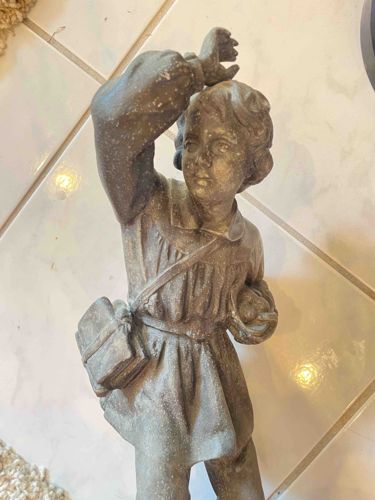
Spelter Sculpture of a Boy with Rucksack and Basket

Sculpture

AI Estimated Value

·Not an official valuation·Verify before acting

$100-200

As of June 10, 2026

AI Item Analysis

·AI can make mistakes·Verify before acting
This is a detailed sculpture, likely crafted from spelter, depicting a young boy in a pose that suggests looking into the distance, perhaps shading his eyes with one hand. The figure wears what appears to be a rustic or peasant-style tunic with pleats and a collar, and pants. A rucksack or satchel is slung over his shoulder with a strap visible across his chest and back, which contains what might be books or other provisions. In his other hand, he carries a small basket, possibly filled with gathered items, though the contents are not clearly discernible in the image. The material, identified as spelter, gives the piece a dark, aged, metallic appearance, possibly with a patinated finish that simulates bronze or an antique cast iron look. The surface displays a somewhat mottled or textured finish, consistent with older spelter castings or intentional surface treatment, and shows areas of lighter gray against darker tones, indicating wear or a natural aging process. No specific maker's marks or signatures are visible in the provided images. The style appears classical or European folkloric, suggesting an estimated age from the late 19th to early 20th century, a period when spelter sculptures were popular as affordable alternatives to bronze. The craftsmanship appears to be of reasonable quality for a spelter piece, with attention to facial features and drapery of the clothing. While no significant damage such as breaks or repairs are immediately obvious, the overall condition suggests some surface wear consistent with age and handling.
AI Appraisal Report

·AI can make mistakes·Verify before acting
Based on my visual examination of the provided image, this spelter sculpture of a boy with a rucksack and basket appears to be an authentic piece from the late 19th to early 20th century. The material, spelter, is consistent with the period and the style is indicative of popular European folkloric or classical themes of that era. The surface displays a patinated finish, which, while suggesting age, also shows some mottling and lighter areas, consistent with typical wear on spelter. From the image, I detect no significant damage like breaks or repairs, though surface wear is evident and expected given its presumed age. Market conditions for spelter sculptures generally place them at a more accessible price point compared to bronze. While well-executed, these pieces are not considered rare, and demand, though stable among collectors of antique decorative arts, is not exceptionally high. The lack of visible maker's marks or signatures limits its historical attribution, which would otherwise enhance its value. Factors significantly impacting its value include the material itself (spelter is less valuable than bronze), its decorative rather than fine art status, and the absence of a known artist or foundry. Limitations in authenticity verification from images alone are considerable. A physical examination would be necessary to confirm the material composition definitively, assess the extent of surface wear and patination, and search for any obscured marks. Provenance documentation, if available, would significantly aid in verifying its history and origin. Scientific testing, such as elemental analysis, could confirm the spelter composition.

Get your items appraised

Instant estimates of your treasures with AI-powered appraisals

Browse More Appraisals