These notes were written by the person who submitted this item. Appraiser.AI has not verified them, and the AI's identification and estimate may rely on them.
AI Estimated Value
Not an official valuation
$50 - $100
AI estimate as of November 9, 2025 · verify with a professional before acting
AI-Generated · Verify before acting
Everything on this page is generated by AI for informational purposes only. AI can make mistakes — the AI may misidentify items or misattribute them (artist, maker, brand, designer, origin, era). This is not an official valuation and should not be used for insurance, sale, tax, estate, legal, or lending purposes — or any decision requiring a certified appraisal. It is not an authoritative claim about any person, brand, or rights holder — do not share or rely on it as a factual statement about a third party. Always consult qualified professionals before making financial decisions.
This analysis also relies on unverified notes provided by the user, which may be incomplete or inaccurate and could affect the result.
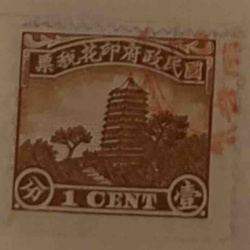
This item is a vintage Brazilian postage stamp, specifically a 100 Reis denomination featuring the portrait of Emperor Dom Pedro II. The stamp is predominantly reddish-orange in color with a muted, somewhat faded appearance, suggesting age. It has a rectangular shape with serrated edges, indicating it has been perforated and likely detached from a larger sheet. The central motif is a circular portrait of a distinguished-looking man, presumably Dom Pedro II, facing slightly to the right, with visible facial hair. Above the portrait, arched text clearly reads "BRAZIL", flanked by the numeral "100" on both the left and right upper corners, signifying the denomination. Below the portrait, the word "REIS" is visible, accompanied by '100' on the lower left and right corners within decorative elements. The overall design features ornate scrollwork and decorative filigree around the central portrait and denomination indicators, typical of 19th-century stamp designs. The paper appears to have some discoloration and minor wear consistent with its age and use, possibly including some smudging or light soiling near the lower left quadrant of the portrait. The perforations appear relatively intact, though some wear might be present upon closer inspection. The stamp is set against a light, off-white background, possibly from a stamp album page, with visible perforation lines from adjacent stamps. The stamp exhibits a classic design style indicative of the Brazilian Empire period, likely from the mid to late 19th century. Quality indicators suggest it is a standard issue stamp of its era, with reasonable printing clarity despite the visible wear and age.
AI Appraisal Report
I have examined the provided image of the Brazil 100 Reis Dom Pedro II stamp. This stamp, with its reddish-orange hue and classic design featuring Emperor Dom Pedro II, appears to be an authentic issue from the mid-to-late 19th century Brazilian Empire. The design elements, including the 'BRAZIL' inscription and '100 REIS' denomination, are consistent with known examples of this type.
The condition of this particular stamp is fair. While the perforations appear largely intact, I observe visible fading and discoloration, common with age. There's also evidence of minor wear, possibly including light soiling or smudging near the lower left quadrant of the portrait. These aspects, while lending to its vintage appeal, do impact its overall grade and, consequently, its value. Stamps in superior condition, with vibrant original color and flawless centering, command much higher prices.
From a market perspective, Dom Pedro II stamps, particularly common denominations like the 100 Reis, are relatively plentiful. While they hold historical significance, they are not exceedingly rare unless they possess specific varieties (e.g., paper types, printing errors, rare cancellations) not discernible from this image. Demand is consistent among collectors of Brazilian philately, but high-value transactions are typically reserved for stamps in much finer condition or with rare attributes.
My valuation of $50-$100 reflects the stamp's fair condition and its commonality within the Dom Pedro II series. It's important to note a significant limitation: this assessment is based solely on a high-resolution image. For full authentication and a definitive condition report, an in-person examination is crucial. This would allow me to accurately assess paper type, presence of watermarks, gum condition, specific plate varieties, and any potential repairs or alterations that are undetectable digitally. Physical inspection would also permit a precise grading, which could slightly adjust the final valuation.