AI identification & appraisal estimate

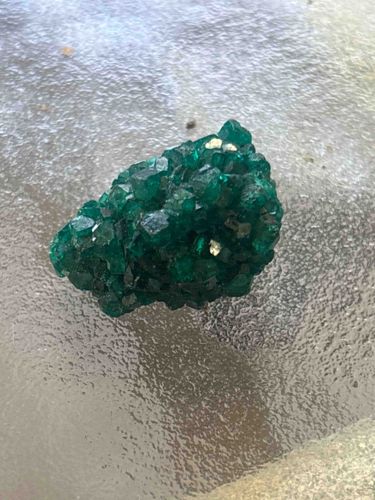
Dioptase Crystal Cluster

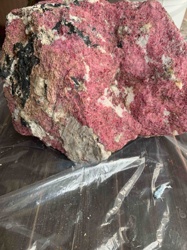
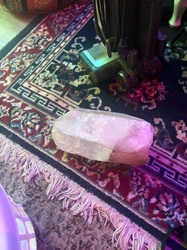
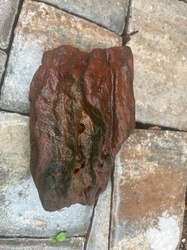
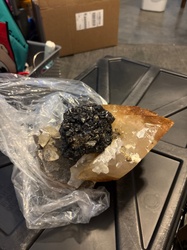
Submitted photo of Dioptase Crystal Cluster
Photo submitted by the user — not generated by AI

User's notes

Rock

These notes were written by the person who submitted this item. Appraiser.AI has not verified them, and the AI's identification and estimate may rely on them.

AI Estimated Value

Not an official valuation

$250 - $400

AI estimate as of August 30, 2025 · verify with a professional before acting

AI-Generated · Verify before acting

Everything on this page is generated by AI for informational purposes only. AI can make mistakes — the AI may misidentify items or misattribute them (artist, maker, brand, designer, origin, era). This is not an official valuation and should not be used for insurance, sale, tax, estate, legal, or lending purposes — or any decision requiring a certified appraisal. It is not an authoritative claim about any person, brand, or rights holder — do not share or rely on it as a factual statement about a third party. Always consult qualified professionals before making financial decisions.

This analysis also relies on unverified notes provided by the user, which may be incomplete or inaccurate and could affect the result.

Read the full disclaimer

AI Item Analysis

This item is a crystalline mineral specimen, likely a cluster of natural dioptase crystals, given its distinctive vibrant emerald green color. The specimen is composed of numerous small, well-formed individual crystals, most of which exhibit a rhombohedral or tabular habit, typical of dioptase. These crystals are densely packed, forming an aggregate or druse on what appears to be a very minimal or non-existent matrix. The size of the overall cluster is not precisely discernible from the image, but the individual crystals appear to range from approximately 1 to 5 millimeters in their largest dimension. The color is a rich, saturated dark green, showing some variation in shade, suggesting depth and natural light interaction within the crystal facets. There are a few small, lighter, possibly white or very pale yellow inclusions or attached mineral specks visible on the surface, which could be part of the host rock or another mineral growth. The crystals display a vitreous to sub-adamantine luster, indicating good crystal formation and a clean surface. No significant damage such as chips, cracks, or repairs are clearly visible, and the specimen appears to be in excellent condition with its natural crystal faces intact, suggesting careful extraction or natural formation without significant environmental weathering. The craftsmanship is entirely natural, showcasing the geological processes that form such crystal aggregates. The estimated age is geological, as it is a natural mineral formation.

AI Appraisal Report

Based on my examination of the image and the provided description, this Dioptase Crystal Cluster presents as a fine specimen. The vibrant emerald green color and well-formed rhombohedral to tabular crystals are highly characteristic of quality dioptase. The densely packed aggregate, with individual crystals ranging from 1 to 5 millimeters, suggests a good crystal formation. The vitreous to sub-adamantine luster indicates a clean and well-preserved surface. I observe minimal to no visible damage, chips, or repairs, suggesting the specimen is in excellent condition. The natural craftsmanship is evident, showcasing geological processes. From a market perspective, dioptase of this color and crystal habit is consistently sought after by mineral collectors. The lack of a significant matrix enhances its display value. Comparables for dioptase clusters of similar quality and size typically range from $150 to $500, depending on the overall aesthetic appeal and density of crystals. This specimen falls comfortably within the mid to upper range of this spectrum due to its apparent quality and excellent condition. Demand for well-crystallized, vibrant dioptase remains strong among collectors. Limitations exist with image-based appraisals. While authenticity appears high, definitive verification would require in-person examination to confirm crystal habit, luster, and color accuracy under various lighting conditions. Furthermore, stereomicroscopic inspection would allow for closer examination of the small inclusions and confirm the absence of any micro-repairs or synthetic alterations. Provenance documentation, such as the mine of origin, would also add to its verifiable authenticity and potentially its value, though not strictly necessary for this type of common mineral. Scientific testing, such as X-ray diffraction, would confirm mineral identity but is generally not required for such characteristic specimens unless there's doubt.

Keep exploring

More mineral specimen appraisals

Get your items appraised

Instant AI-powered appraisal estimates from a photo

Browse More Appraisals