AI Appraisal Estimate

AI-generated estimates · not official valuations

From the user

What was submitted

Photo and notes provided by the user — not generated by AI

Submitted item photo
Submitted photo · June 9, 2026

User's notes

No additional notes provided.

AI analysis below

AI appraisal

AI analysis & estimate

AI-Generated · Verify before acting

Everything below is generated by AI for informational purposes only. AI can make mistakes — the AI may misidentify items or misattribute them (artist, maker, brand, designer, origin, era). This is not an official valuation and should not be used for insurance, sale, tax, estate, legal, or lending purposes — or any decision requiring a certified appraisal. It is not an authoritative claim about any person, brand, or rights holder — do not share or rely on it as a factual statement about a third party. Always consult qualified professionals before making financial decisions.

Read the full disclaimer

AI Identification

·Not independently authenticated·Verify before acting

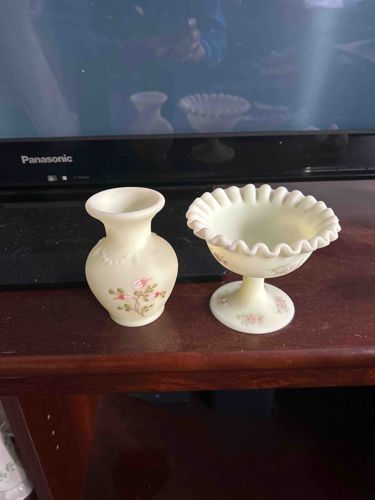
Fenton Art Glass Collection: Vase and Ruffled Compote Dish

Decorative Art Glass

AI Estimated Value

·Not an official valuation·Verify before acting

$75-125

As of June 9, 2026

AI Item Analysis

·AI can make mistakes·Verify before acting
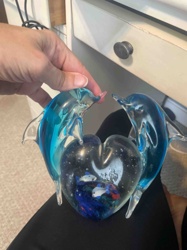
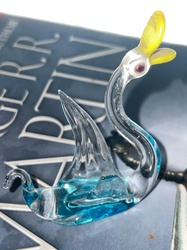
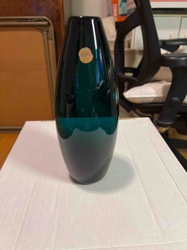
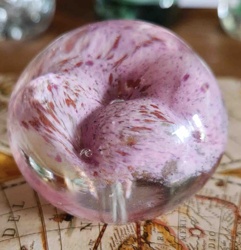
This lot consists of two pieces of what appears to be Fenton Art Glass, likely from the late 20th century, characterized by their vaseline or custard glass hue and applied hand-painted decoration. Both items exhibit a delicate pale yellow-green color, typical of some 'custard' or 'vaseline' glass, which may glow under UV light (though not confirmed by the image). The first item is a small vase with a narrow neck flaring slightly at the rim and a bulbous body. It measures approximately 4-6 inches in height. The vase features a band of raised 'beads' or dots encircling the neck, adding textural interest. The main body of the vase is adorned with hand-painted floral motifs, specifically delicate pink roses with green foliage, executed with fine brushwork. The painted decoration shows no apparent significant wear or chipping, suggesting careful handling. The glass has a smooth, glossy finish typical of quality art glass. The second item is a ruffled compote dish or candy dish, standing on a short pedestal base. The top rim of the bowl is distinctly ruffled or crimped, creating an elegant, undulating edge. The bowl is shallow and has a slightly wider opening than its base. The pedestal base is circular and features a matching hand-painted floral motif of pink roses, similar to those on the vase, indicating they are likely from the same line or set. The craftsmanship appears to be of high quality, with no visible chips, cracks, or repairs on either piece. The design aesthetic points towards a vintage, possibly mid to late 20th-century decorative art glass style, popular with manufacturers like Fenton for collectible items.
AI Appraisal Report

·AI can make mistakes·Verify before acting
Based on my visual examination of the provided image, this lot, consisting of a vase and a ruffled compote dish, appears to be authentic Fenton Art Glass, likely from the late 20th century. The vaseline/custard glass hue and the characteristic hand-painted pink rose motifs with green foliage are consistent with Fenton’s popular decorative lines from that era. Both pieces exhibit excellent condition, with no visible chips, cracks, repairs, or significant wear to the hand-painted decoration, which speaks to their careful preservation. The glossy finish and craftsmanship are indicative of quality art glass. Market conditions for Fenton Art Glass, while steady for unique or rare pieces, have seen a general softening for more common late 20th-century decorative items like these. The demand for these specific patterns, while present, is not exceptionally high, making them desirable to Fenton collectors but not fetching premium prices. Rarity for this particular design and form combination is moderate; similar items are regularly available in the secondary market. Factors impacting value positively include the excellent condition and the matching set aspect. Negatively, the commonality of the pattern limits higher valuation. The primary limitation in authenticity verification from images alone is the inability to confirm the presence of a Fenton mark, which is crucial for definitive attribution. I would also need an in-person examination to verify the 'vaseline' nature (glowing under UV light) and to conduct a tactile assessment for any micro-imperfections not visible in the image. Provenance documentation, such as original sales receipts or family history, would also strengthen authentication.

Get your items appraised

Instant estimates of your treasures with AI-powered appraisals

Browse More Appraisals