AI Appraisal Estimate

AI-generated estimates · not official valuations

From the user

What was submitted

Photo and notes provided by the user — not generated by AI

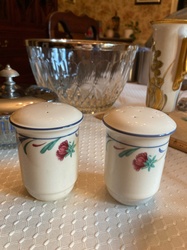
Submitted item photo
Submitted photo · June 1, 2026

User's notes

70 yrs old by in

AI analysis below

AI appraisal

AI analysis & estimate

AI-Generated · Verify before acting

Everything below is generated by AI for informational purposes only. AI can make mistakes — the AI may misidentify items or misattribute them (artist, maker, brand, designer, origin, era). This is not an official valuation and should not be used for insurance, sale, tax, estate, legal, or lending purposes — or any decision requiring a certified appraisal. It is not an authoritative claim about any person, brand, or rights holder — do not share or rely on it as a factual statement about a third party. Always consult qualified professionals before making financial decisions.

Note

This analysis also relies on unverified notes provided by the user, which may be incomplete or inaccurate and could affect the result.

Read the full disclaimer

AI Identification

·Not independently authenticated·Verify before acting

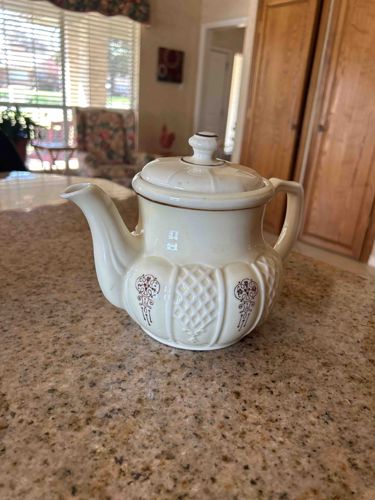
Mid-Century Ceramic Teapot with Lattice and Medallion Relief

Antique Kitchenware/Ceramics

AI Estimated Value

·Not an official valuation·Verify before acting

$45.00 - $75.00

As of June 1, 2026

AI Item Analysis

·AI can make mistakes·Verify before acting
This is a vintage ceramic teapot, likely dating to the mid-20th century (circa 1950s) based on the user's provenance of approximately 70 years. The teapot is constructed from a cream-colored earthenware or ironstone, finished with a high-gloss glaze. Its design features a bulbous lower body divided into deep vertical lobes. The central panels showcase a molded trellis or lattice-work relief, flanked by decorative transfer-printed medallions in a dark burgundy or brownish-red hue. The upper portion of the body is smooth, transitioning into a flared rim that holds a fitted, domed lid with a matching finial. A delicate gold or dark pinstripe accents the rim of the lid and the top edge of the teapot body. The spout is curved with a traditional silhouette, while the handle is angular and ergonomic. Regarding condition, the glaze appears intact without significant crazing visible in the photo, though some minor staining or surface wear may be present. The craftsmanship reflects mass-produced dinnerware of the post-war era, characterized by sturdy construction and classically inspired decorative motifs. No specific maker's mark is visible from this angle, but the style is consistent with American or European manufacturers like Hall China or similar pottery houses of that period.
AI Appraisal Report

·AI can make mistakes·Verify before acting
I have examined the digital representation of this mid-century ceramic teapot. Based on the 70-year provenance and the decorative relief work, the piece appears to be an authentic example of post-war domestic earthenware. The combination of molded lattice relief and transfer-printed medallions suggests a mid-tier manufacturer, likely American (such as Hall China or Stetson) or a British export house like Johnson Brothers. The condition appears remarkably good for its age; the lack of visible crazing on the high-gloss glaze preserves the aesthetic value, though the minor staining noted is consistent with light utility use. The current market for mid-century 'traditional' ceramics is stable but saturated. Unlike the high demand for 'Atomic' or 'Eames-era' minimalist designs, this classically-inspired aesthetic appeals primarily to collectors of vintage kitchenalia and cottage-core decor. Comparables for mass-produced earthenware tepots from the 1950s typically range from $30 to $85 depending on the completeness of the set and the presence of a maker's mark. Several factors limit this appraisal. Without a physical inspection, I cannot verify the presence of internal hairlines, underside chips, or the specific manufacturer's backstamp, which could potentially elevate the value if identified as a premium maker. Determination of a specific factory requires a physical examination of the base markings. Full authentication would also necessitate a 'ring test' to check structural integrity and a close-up inspection of the transfer decals to ensure they are original and not later additions. This valuation assumes the item is free of hidden repairs or significant internal discoloration.

Get your items appraised

Instant estimates of your treasures with AI-powered appraisals

Browse More Appraisals