Vintage Figural Owl Ceramic Creamer/Pitcher
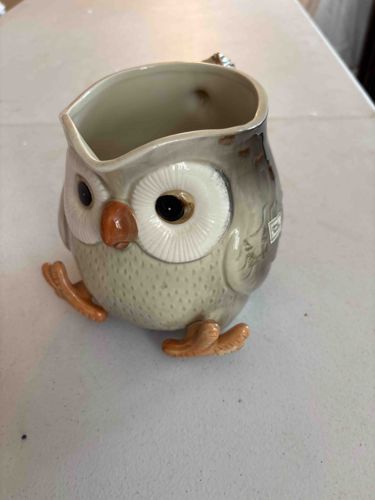
This item is a figural ceramic creamer or small pitcher designed in the shape of a rotund owl, likely of mid-20th-century origin. The piece is crafted from glazed earthenware or stoneware, featuring a color palette dominated by earthy tones including light beige, taupe, and dark chocolate brown. The owl's face is characterized by large, white concentric-circle eyes with black pupils and a protruding orange-brown beak. The body is textured with fine stippling and molded feather details to mimic plumage. Distinctive features include a pour spout integrated into the top rim above the eyes and two protruding orange-brown talons at the base that serve as forward feet, while the tail likely functions as the handle behind the vessel. A small, partially visible square silver foil label is attached to the side, which is a common indicator of 1950s-1970s Japanese or European imports. The glaze appears bright and glossy with no major visible cracks, chips, or grazing, though light shelf wear on the base is expected. The whimsical, anthropomorphic style suggests it was part of a novelty kitchenware set, showing high-quality hand-painted details and mold precision.
AI-Generated Appraisal Disclaimer
Estimated Value
$35.00 - $65.00
Basic Information
Category
Vintage Kitchenware / Ceramics
Appraised On
December 19, 2025
Estimated Value
$35.00 - $65.00
Item Description
This item is a figural ceramic creamer or small pitcher designed in the shape of a rotund owl, likely of mid-20th-century origin. The piece is crafted from glazed earthenware or stoneware, featuring a color palette dominated by earthy tones including light beige, taupe, and dark chocolate brown. The owl's face is characterized by large, white concentric-circle eyes with black pupils and a protruding orange-brown beak. The body is textured with fine stippling and molded feather details to mimic plumage. Distinctive features include a pour spout integrated into the top rim above the eyes and two protruding orange-brown talons at the base that serve as forward feet, while the tail likely functions as the handle behind the vessel. A small, partially visible square silver foil label is attached to the side, which is a common indicator of 1950s-1970s Japanese or European imports. The glaze appears bright and glossy with no major visible cracks, chips, or grazing, though light shelf wear on the base is expected. The whimsical, anthropomorphic style suggests it was part of a novelty kitchenware set, showing high-quality hand-painted details and mold precision.
Get Your Items Appraised
Instant estimates of your treasures with AI-powered instant appraisals