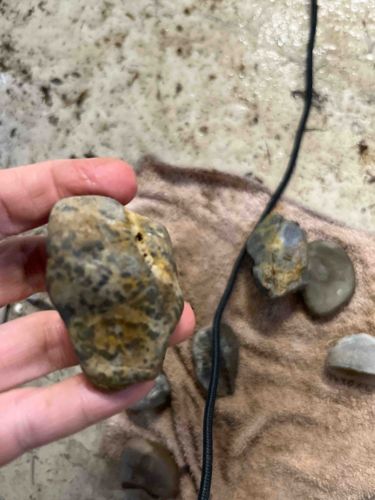
Weathered Chert or Flint Nodule
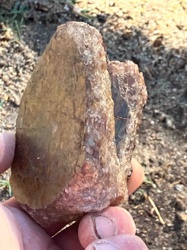
This item is a natural geological specimen, specifically a weathered chert or flint nodule, held in a person's hand for scale. The specimen exhibits a multi-tonal color palette including shades of olive green, brownish-tan, and darker gray patches. The surface texture is notably rugged and irregular, showing signs of heavy natural weathering and possible river-tumbled abrasion. A prominent creamy-yellow mineral vein or inclusions line runs vertically across the surface, possibly representing a quartz or calcite fill in a pre-existing fissure within the host rock. The specimen appears to be approximately 3 to 4 inches in length and possesses an amorphous, sub-angular shape typical of sedimentary nodules. There are no man-made markings, signatures, or manufacturer stamps, as this is a natural formation. The condition identifies it as a raw mineral specimen with significant natural patina, dirt, and surface oxidation. The age of such geological formations typically spans millions of years, originating from the deposition of silica-rich fluids within sedimentary rock layers. The piece lacks the refined lapidary work of polished stones, retaining its raw, earth-mined aesthetic.
AI-Generated Appraisal Disclaimer
Estimated Value
$5 - $15
Basic Information
Category
Geological Specimens / Raw Specimens
Appraised On
April 7, 2026
Estimated Value
$5 - $15
Item Description
This item is a natural geological specimen, specifically a weathered chert or flint nodule, held in a person's hand for scale. The specimen exhibits a multi-tonal color palette including shades of olive green, brownish-tan, and darker gray patches. The surface texture is notably rugged and irregular, showing signs of heavy natural weathering and possible river-tumbled abrasion. A prominent creamy-yellow mineral vein or inclusions line runs vertically across the surface, possibly representing a quartz or calcite fill in a pre-existing fissure within the host rock. The specimen appears to be approximately 3 to 4 inches in length and possesses an amorphous, sub-angular shape typical of sedimentary nodules. There are no man-made markings, signatures, or manufacturer stamps, as this is a natural formation. The condition identifies it as a raw mineral specimen with significant natural patina, dirt, and surface oxidation. The age of such geological formations typically spans millions of years, originating from the deposition of silica-rich fluids within sedimentary rock layers. The piece lacks the refined lapidary work of polished stones, retaining its raw, earth-mined aesthetic.
Related Tags
Get Your Items Appraised
Instant estimates of your treasures with AI-powered instant appraisals