AI Appraisal Estimate

AI-generated estimates · not official valuations

From the user

What was submitted

Photo and notes provided by the user — not generated by AI

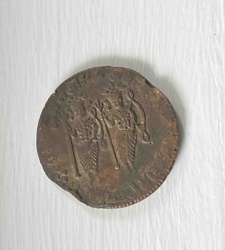
Submitted item photo
Submitted photo · June 27, 2026

User's notes

1945 Canada coin

AI analysis below

AI appraisal

AI analysis & estimate

AI-Generated · Verify before acting

Everything below is generated by AI for informational purposes only. AI can make mistakes — the AI may misidentify items or misattribute them (artist, maker, brand, designer, origin, era). This is not an official valuation and should not be used for insurance, sale, tax, estate, legal, or lending purposes — or any decision requiring a certified appraisal. It is not an authoritative claim about any person, brand, or rights holder — do not share or rely on it as a factual statement about a third party. Always consult qualified professionals before making financial decisions.

Note

This analysis also relies on unverified notes provided by the user, which may be incomplete or inaccurate and could affect the result.

Read the full disclaimer

AI Identification

·Not independently authenticated·Verify before acting

1945 Canadian 'V for Victory' Nickel

Coin

AI Estimated Value

·Not an official valuation·Verify before acting

$0.50 - $2.00

As of June 27, 2026

AI Item Analysis

·AI can make mistakes·Verify before acting
This item is a 1945 Canadian five-cent coin, commonly known as a nickel, featuring the iconic 'V for Victory' design. The coin is circular and appears to be made of a silver-colored metal, likely steel with a chrome or nickel plating given its wartime production, though specific material cannot be confirmed without further examination. The obverse side, visible in the image, prominently displays a large stylized 'V' in the center, symbolizing 'Victory,' a significant motif during World War II. A torch is depicted within the 'V', signifying liberty or enlightenment. Above the 'V' is a crown, indicating its royal association with Canada. The word 'CANADA' is arched above the crown and 'V', while the year '1945' is split, with '19' to the left of the 'V' and '45' to the right. Below the 'V', the denomination '5 CENTS' is inscribed. Two maple leaves, a national emblem of Canada, flank the base of the 'V'. The rim of the coin shows some wear and irregular edges, suggesting it is a circulated coin. There are visible surface scratches and some areas of possible tarnish or discoloration, consistent with its age and use. The overall condition suggests a fair to good circulated state, with details still discernible but lacking original luster. This coin belongs to the wartime coinage period in Canada, where nickel was largely removed from the composition due to strategic material needs, leading to steel alternatives. The design itself, introduced in 1943, was a powerful symbolic gesture during WWII.

AI Appraisal Report

·AI can make mistakes·Verify before acting
I have examined the provided image of the 1945 Canadian 'V for Victory' Nickel. Based on the visual evidence, the coin appears to be authentic, consistent with the design and characteristics of wartime Canadian five-cent pieces. The stylized 'V' with the torch, crown, 'CANADA', '1945', and '5 CENTS' are all present and correctly positioned for this issue. The coin's condition is consistent with a circulated piece. I observe significant wear, surface scratches, and a lack of original luster, which places it in a Good (G) to Very Good (VG) circulated grade. There are no obvious signs of major damage or alterations that would significantly detract from its value beyond typical circulation wear. From a market perspective, this particular year and type ('V for Victory' nickel) is very common. Millions were minted, and while historically significant, they are not rare in low circulated grades. Demand for these common circulated pieces is relatively low, primarily from beginner collectors or those interested in WWII memorabilia. Higher-grade examples (Uncirculated or About Uncirculated) command significantly more, but this coin does not fall into that category. Factors impacting its value are primarily its commonality and its heavily circulated condition. There is no perceived rarity here. For a definitive authentication of its metal composition (steel with chrome/nickel plating), a physical examination and possibly specific gravity or XRF testing would be beneficial, though visually it aligns with the expected wartime composition. An in-person examination would also allow for a more precise grading of its condition.

Get your items appraised

Instant estimates of your treasures with AI-powered appraisals

Browse More Appraisals