AI Appraisal Estimate

AI-generated estimates · not official valuations

From the user

What was submitted

Photo and notes provided by the user — not generated by AI

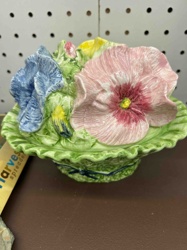
Submitted item photo
Submitted photo · May 27, 2026

User's notes

No additional notes provided.

AI analysis below

AI appraisal

AI analysis & estimate

AI-Generated · Verify before acting

Everything below is generated by AI for informational purposes only. AI can make mistakes — the AI may misidentify items or misattribute them (artist, maker, brand, designer, origin, era). This is not an official valuation and should not be used for insurance, sale, tax, estate, legal, or lending purposes — or any decision requiring a certified appraisal. It is not an authoritative claim about any person, brand, or rights holder — do not share or rely on it as a factual statement about a third party. Always consult qualified professionals before making financial decisions.

Read the full disclaimer

AI Identification

·Not independently authenticated·Verify before acting

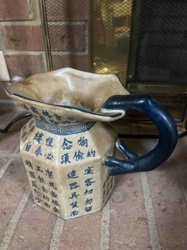
Hexagonal Blue and White Ceramic Vase with Lion-Dog Handles

Decorative Ceramics and Pottery

AI Estimated Value

·Not an official valuation·Verify before acting

$125 - $225

As of May 27, 2026

AI Item Analysis

·AI can make mistakes·Verify before acting
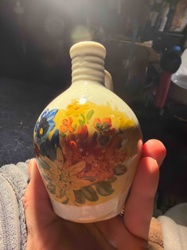
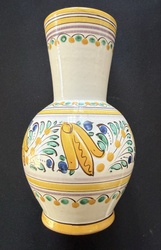
This is a decorative ceramic vase featuring a classic blue and white color palette, likely inspired by Chinese export porcelain styles. The vessel stands on a slim, footed base and tapers outward into a bulbous body before narrowing at the neck and opening into a wide, hexagonal rim. A prominent feature of the construction is its hexagonal cross-section, which creates six distinct flat panels. Each panel is decorated with an underglaze blue floral motif, specifically featuring large stylized peonies or chrysanthemums with scrolling foliage extending upward. The neck of the vase is flanked by two stylized handles, often referred to as 'chilong' or 'shi-shi' (lion-dog) handles, finished in a solid, deep cobalt blue. The rim is decorated with a geometric interlocking diaper pattern border. The glaze appears creamy white with a glossy finish. Regarding condition, the piece appears well-maintained with no visible cracks or significant chips from this angle, though minor glaze imperfections or 'pinholes' typical of mass-produced ceramics are present. The style suggests a mid-to-late 20th-century production, often created for the decorative home market rather than being a period antique. The level of craftsmanship indicates a molded production technique followed by hand-applied or transfer-printed decoration.
AI Appraisal Report

·AI can make mistakes·Verify before acting
Upon examining the provided documentation and visual evidence of this hexagonal blue and white ceramic vase, I have assessed its value based on contemporary market trends for decorative Asian-style pottery. The vessel exhibits classic motifs, including stylized peonies and 'shi-shi' lion-dog handles, which are hallmarks of 20th-century decorative exports. The hexagonal form is well-executed, and the cobalt application shows the characteristic contrast desired in Chinoiserie aesthetics. The condition appears excellent with no visible structural failures, though minor glaze pinholes confirm its nature as a mass-produced decorative item rather than a singular studio piece. The market for mid-to-late 20th-century export-style ceramics remains steady, fueled by interior design demand rather than high-stakes fine art collecting. Comparables sold at regional auctions and through vintage retailers typically fall within the $100 to $250 range depending on size and provenance. The primary factor limiting the value is the modern manufacturing technique, likely involving transfer printing or high-volume molding, which lacks the rarity of hand-painted Qing dynasty originals. It is important to note that this appraisal is based solely on digital representation. A physical inspection is required to definitively identify the ceramic body composition and check for 'fritting' or marks under the foot rim that might indicate a specific kiln. To elevate this assessment to a formal authentication, I would require high-resolution imagery of the base (under-markings), provenance documentation from previous owners, and tactile inspection to assess the weight and clay porosity, which are crucial for distinguishing period antiques from modern reproductions.

Get your items appraised

Instant estimates of your treasures with AI-powered appraisals

Browse More Appraisals