Decorative Ceramic Watering Can in Delft Style
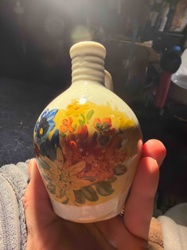
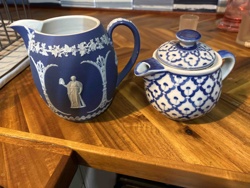
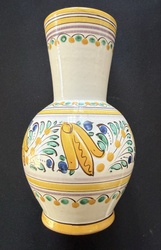
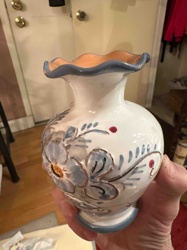
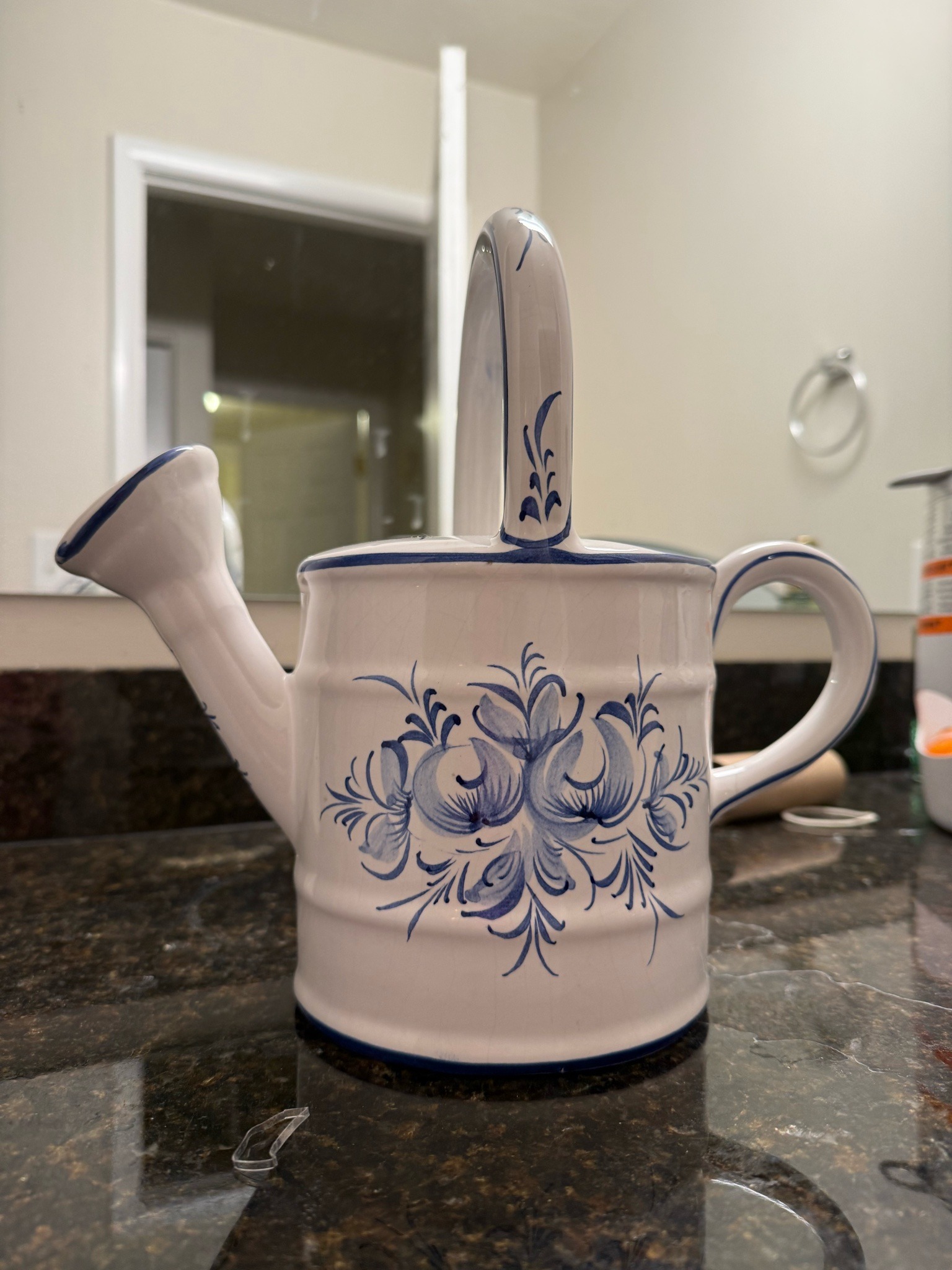
This item is a decorative watering can crafted from white ceramic or porcelain with hand-painted cobalt blue accents, strongly echoing traditional Delftware or Dutch folk art styles. The object features a cylindrical body with two raised horizontal decorative ribs. It includes a functional spout with an flared rose-style head and two handles: one arched overhead for carrying and one smaller loop handle on the back for pouring control. The central body is adorned with a symmetrical floral motif consisting of large stylized blossoms and feathery leaf strokes. The rim, base, and edges of the handles are highlighted with solid blue banding. The glaze is a smooth, high-gloss white. Overall condition appears excellent with no visible chips, cracks, or crazing in the glaze, though minor imperfections in the painted line work indicate a handmade or hand-finished process. The piece likely serves as a decorative indoor planter or a stationary decorative accent rather than a heavy-duty gardening tool, reflecting mid-to-late 20th-century decorative trends.
AI-Generated Appraisal Disclaimer
Estimated Value
$35.00-$65.00
Basic Information
Category
Decorative Ceramics and Pottery
Appraised On
May 2, 2026
Estimated Value
$35.00-$65.00
Item Description
This item is a decorative watering can crafted from white ceramic or porcelain with hand-painted cobalt blue accents, strongly echoing traditional Delftware or Dutch folk art styles. The object features a cylindrical body with two raised horizontal decorative ribs. It includes a functional spout with an flared rose-style head and two handles: one arched overhead for carrying and one smaller loop handle on the back for pouring control. The central body is adorned with a symmetrical floral motif consisting of large stylized blossoms and feathery leaf strokes. The rim, base, and edges of the handles are highlighted with solid blue banding. The glaze is a smooth, high-gloss white. Overall condition appears excellent with no visible chips, cracks, or crazing in the glaze, though minor imperfections in the painted line work indicate a handmade or hand-finished process. The piece likely serves as a decorative indoor planter or a stationary decorative accent rather than a heavy-duty gardening tool, reflecting mid-to-late 20th-century decorative trends.
Get Your Items Appraised
Instant estimates of your treasures with AI-powered instant appraisals