AI Appraisal Estimate

AI-generated estimates · not official valuations

From the user

What was submitted

Photo and notes provided by the user — not generated by AI

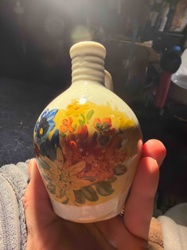
Submitted item photo
Submitted photo · June 23, 2026

User's notes

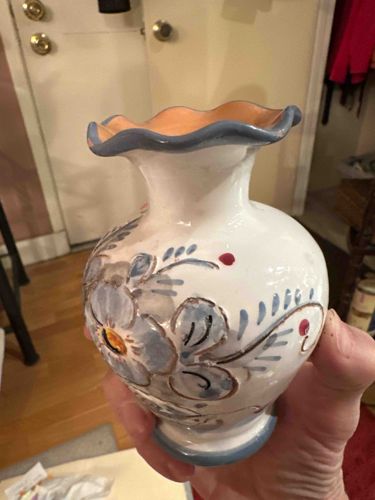
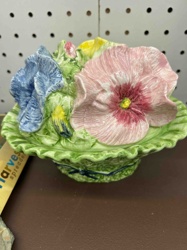
Painted small -med vase with nicks around wavy rim

AI analysis below

AI appraisal

AI analysis & estimate

AI-Generated · Verify before acting

Everything below is generated by AI for informational purposes only. AI can make mistakes — the AI may misidentify items or misattribute them (artist, maker, brand, designer, origin, era). This is not an official valuation and should not be used for insurance, sale, tax, estate, legal, or lending purposes — or any decision requiring a certified appraisal. It is not an authoritative claim about any person, brand, or rights holder — do not share or rely on it as a factual statement about a third party. Always consult qualified professionals before making financial decisions.

Note

This analysis also relies on unverified notes provided by the user, which may be incomplete or inaccurate and could affect the result.

Read the full disclaimer

AI Identification

·Not independently authenticated·Verify before acting

Hand-Painted Majolica Style Ceramic Bud Vase with Ruffled Rim

Decorative Ceramics and Pottery

AI Estimated Value

·Not an official valuation·Verify before acting

$25 - $45

As of June 23, 2026

AI Item Analysis

·AI can make mistakes·Verify before acting
This is a small-to-medium decorative ceramic bud vase, characterized by a bulbous midsection, a tapered neck, and a distinctive ruffled or wavy 'pie-crust' rim. The item is constructed from glazed earthenware, featuring an opaque white tin-glaze ground typical of Majolica or Delftware-style pottery. The hand-painted decoration consists of a large blue floral motif on the frontal vessel body, accented with ochre centers, swirling foliate leaves in a lighter blue-grey, and small raised red dots or 'beads.' A solid blue band defines both the wavy rim and the circular footed base. The interior of the ruffled neck is finished in a warm peachy-terracotta glaze, creating a nice color contrast. In terms of condition, the vase exhibits significant wear around the delicate wavy rim, with several visible nicks and chips revealing the underlying reddish-orange clay body. There appears to be light surface crazing consistent with 20th-century decorative ceramics. While no maker's mark is visible in the photograph, the style and gestural brushwork are reminiscent of mid-century Italian or Mediterranean folk pottery. The craftsmanship is functional but shows the charming irregularities of hand-finished ceramics.
AI Appraisal Report

·AI can make mistakes·Verify before acting
I have examined the digital images of the Hand-Painted Majolica Style Ceramic Bud Vase. This piece exhibits the characteristics of mid-20th-century Mediterranean folk art, likely of Italian (Cantagalli or Bassano style) or Portuguese origin. The use of a tin-glaze ground with gestural cobalt floral motifs and an ochre-washed interior reflects a common decorative aesthetic for export wares between 1940 and 1970. The 'pie-crust' rim is a charming touch, though the prominent chips around this delicate edge significantly detract from its marketability. In the current secondary market for decorative ceramics, collectors favor 'mint' condition items; the visible loss of glaze and exposure of the terracotta body reduce the value by approximately 50% compared to a pristine example. The lack of a visible maker's mark further categorizes this as a generic decorative piece rather than a sought-after designer kiln work. Demand for this style remains steady for 'Boho' or 'Cottagecore' interior design, but it lacks rarity. Limitations: This valuation is based solely on photographic evidence. A physical inspection is required to check for structural hairline cracks not visible in photos or to identify faint impressed marks on the underside of the foot. To confirm a specific region or maker, provenance documentation or comparisons with cataloged factory marks would be necessary. Without these, the item is valued as a functional decorative object rather than a fine antique.

Get your items appraised

Instant estimates of your treasures with AI-powered appraisals

Browse More Appraisals