AI Appraisal Estimate

AI-generated estimates · not official valuations

From the user

What was submitted

Photo and notes provided by the user — not generated by AI

Submitted item photo
Submitted photo · June 13, 2026

User's notes

No additional notes provided.

AI analysis below

AI appraisal

AI analysis & estimate

AI-Generated · Verify before acting

Everything below is generated by AI for informational purposes only. AI can make mistakes — the AI may misidentify items or misattribute them (artist, maker, brand, designer, origin, era). This is not an official valuation and should not be used for insurance, sale, tax, estate, legal, or lending purposes — or any decision requiring a certified appraisal. It is not an authoritative claim about any person, brand, or rights holder — do not share or rely on it as a factual statement about a third party. Always consult qualified professionals before making financial decisions.

Read the full disclaimer

AI Identification

·Not independently authenticated·Verify before acting

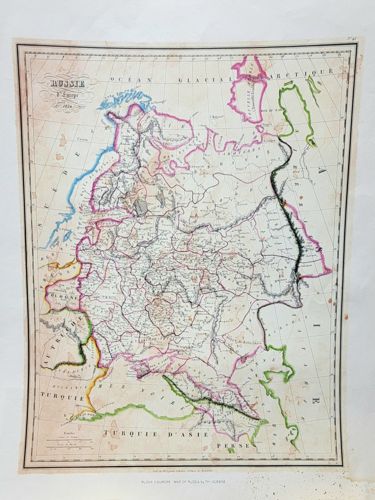
Antiquarian Map: Russie d'Europe, 1850

Antique Cartography and Paper Ephemera

AI Estimated Value

·Not an official valuation·Verify before acting

$150 - $250

As of June 13, 2026

AI Item Analysis

·AI can make mistakes·Verify before acting
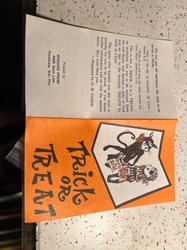
This is a detailed 19th-century engraved map titled 'Russie d'Europe' (Russia in Europe), dated 1850. The piece is a copper-plate or steel-plate engraving on medium-weight off-white paper, featuring hand-colored borders in vibrant shades of pink, green, blue, and yellow to delineate various regions and national boundaries. The map shows the Russian Empire's western extent, including parts of Eastern Europe, the Ural Mountains, and bordering regions of Turkey (Turquie d'Asie) and Persia. An ornate title cartouche is visible in the upper left corner, while a distance scale and topographical notations appear at the bottom. The cartography exhibits fine linework characteristic of the mid-19th century, likely from a French atlas such as those by Victor Levasseur or similar contemporaries. The condition of the map shows moderate signs of age; there is visible foxing (brown spotting) concentrated toward the lower-right margin and light overall toning of the paper. Hand-coloration appears largely intact though slightly faded in some areas. There are minor creases and a soft vertical fold line suggesting it was once part of a bound volume. The edges appear slightly uneven, consistent with an authentic extraction from an antique atlas. Its craftsmanship is evidenced by the precision of the engraved hydrography and the elegant serif typography used for place names.
AI Appraisal Report

·AI can make mistakes·Verify before acting
I have virtually examined this 1850 engraving 'Russie d'Europe.' Based on the plate-mark characteristics, typography, and hand-coloring style, the map appears to be an authentic extraction from a mid-19th-century French atlas. The steel-plate engraving exhibits the high degree of detail typical of the period, particularly in the hydrography and the ornate title cartouche. The condition shows moderate foxing in the lower-right margin and general paper toning; while common for paper of this age, these factors marginally detract from the aesthetic value compared to a fox-free specimen. The hand-colored borders remain visually appealing despite slight fading. The central vertical fold confirms its provenance as part of a bound folio. Market demand for 19th-century regional maps of Russia is stable, though items by more celebrated cartographers like Victor Levasseur (which often feature decorative vignettes) usually command higher premiums. Current auction comparables for standard mid-18th-century European-published maps of the Russian Empire fall within the $150 to $250 range. Key value drivers here are the cartographic detail and the period-correct coloring. Limitation Note: This assessment is based on high-resolution imagery. A definitive authentication would require physical inspection to examine the watermarks, paper fiber under magnification, and ink acidity levels. Verification of the specific atlas of origin and provenance documentation would further solidify its market position. This appraisal assumes the map has not been trimmed beyond the plate marks or subjected to modern chemical bleaching.

Get your items appraised

Instant estimates of your treasures with AI-powered appraisals

Browse More Appraisals