AI Appraisal Estimate

AI-generated estimates · not official valuations

From the user

What was submitted

Photo and notes provided by the user — not generated by AI

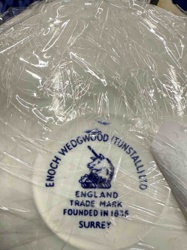
Submitted item photo
Submitted photo · June 10, 2026

User's notes

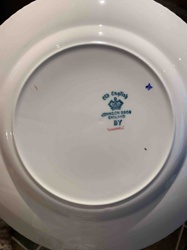
Alfred Meakin reg.#742046

AI analysis below

AI appraisal

AI analysis & estimate

AI-Generated · Verify before acting

Everything below is generated by AI for informational purposes only. AI can make mistakes — the AI may misidentify items or misattribute them (artist, maker, brand, designer, origin, era). This is not an official valuation and should not be used for insurance, sale, tax, estate, legal, or lending purposes — or any decision requiring a certified appraisal. It is not an authoritative claim about any person, brand, or rights holder — do not share or rely on it as a factual statement about a third party. Always consult qualified professionals before making financial decisions.

Note

This analysis also relies on unverified notes provided by the user, which may be incomplete or inaccurate and could affect the result.

Read the full disclaimer

AI Identification

·Not independently authenticated·Verify before acting

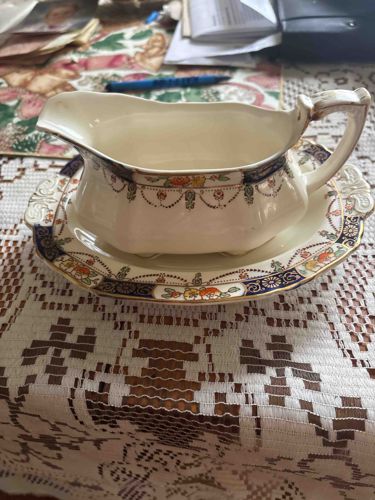
Alfred Meakin Royal Semi-Porcelain Gravy Boat with Underplate

Antique Tableware / English Fine Earthenware

AI Estimated Value

·Not an official valuation·Verify before acting

$45 - $65

As of June 10, 2026

AI Item Analysis

·AI can make mistakes·Verify before acting
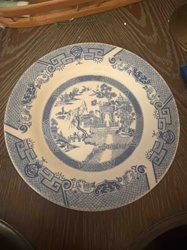
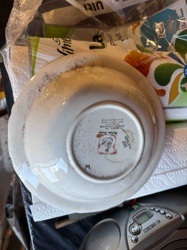
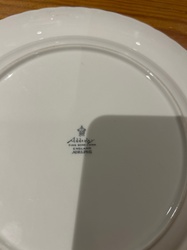
This is a two-piece gravy boat and matching underplate set crafted from royal semi-porcelain by Alfred Meakin (Tunstall) Ltd. The design features a distinct octagonal 'clipped corner' shape indicative of the Art Deco influence of the late 1920s to early 1930s. The body is a creamy white glaze adorned with an ornate transferware pattern consisting of cobalt blue bands with gilded highlights, complemented by floral swags in shades of orange, yellow, and green. The registration number 742046 provided indicates the design was officially registered in 1928, placing the manufacture in the interwar period. The gravy boat features a high-arched handle with scrolled detailing and gilded accents. Physically, the set shows signs of vintage wear, particularly significant gilt loss along the scalloped rims and handle, which is common for utilitarian pieces of this age. There appears to be light surface crazing consistent with semi-porcelain firing. The craftsmanship is high-quality for mass-produced English earthenware of the period, showcasing the 'Kensington' or similar pattern styles popular for formal dining services. No major chips or cracks are visible from the primary angle, though the gilding is heavily rubbed.
AI Appraisal Report

·AI can make mistakes·Verify before acting
Based on my examination of the Alfred Meakin Royal Semi-Porcelain gravy boat and matching underplate, I have determined the set to be an authentic example of late 1920s English earthenware. The registration number 742046 confirms the design's inception in 1928, specifically the clipped-corner octagonal form synonymous with the Art Deco transition. My visual inspection confirms a high-quality transferware application; however, the set shows significant 'honest' wear. There is substantial thinning of the gilding on the scalloped rims and high-use areas of the handle, and visible surface crazing consistent with aged semi-porcelain. The market for Alfred Meakin from this period is currently steady but saturated with mass-produced tableware. While the cobalt and floral swag motif is aesthetically representative of the interwar period, it does not carry the premium associated with Meakin’s 'Bleu de Roi' or more avant-garde Art Deco patterns. Similar sets typically realize modest prices at auction and in retail antique mall settings. The presence of the matching underplate is a positive factor for value, as these are frequently lost or broken. Value is significantly tempered by the condition of the gilding. Collectors currently prioritize 'mint' luster, and the heavy rubbing seen here places this as a 'decorator' or 'utilitarian' piece rather than a 'museum quality' specimen. Limitation Disclosure: This appraisal is based on photographic evidence and provided descriptors. A definitive authentication would require an in-person tactile inspection to check for professional restorations (invisible in photos), hidden hairlines under UV light, and a physical assessment of the weight and glaze depth. No provenance documentation was reviewed, which might otherwise enhance historical value.

Get your items appraised

Instant estimates of your treasures with AI-powered appraisals

Browse More Appraisals