Blue Willow Pattern Transferware Plate
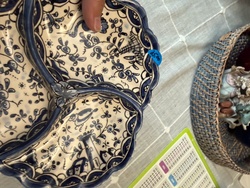
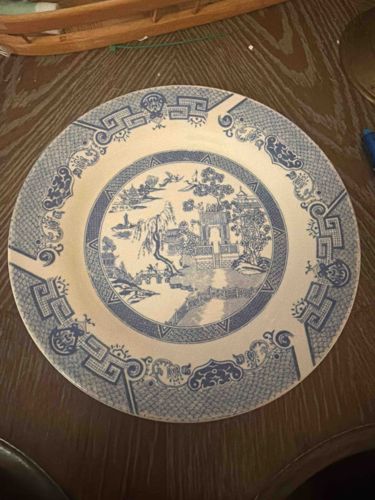
This is a circular ceramic dinner plate featuring the iconic 'Blue Willow' pattern, a classic chinoiserie design that originated in late 18th-century England. The plate is constructed from earthenware or ironstone with a white-to-cream base glaze and cobalt blue underglaze transfer printing. The central vignette depicts the traditional willow narrative elements: a large weeping willow tree, a bridge with three figures, a pagoda or tea house, an island with a boat, and two birds in flight representing lovers. The rim is extensively decorated with a complex border featuring a geometric fretwork pattern (Greek key influence) interspersed with butterfly or floral motifs and a cross-hatched textured ground. The construction appears sturdy, typical of English pottery manufacturers like Spode, Johnson Brothers, or Churchill. In terms of condition, there is visible minor crazing across the glazed surface, indicative of age. There are slight signs of shelf wear on the rim edges and faint utensil marks on the central well. No significant chips or cracks are immediately apparent from the overhead view, though some light staining or 'browning' is visible near the top edge, suggesting a vintage rather than modern reproduction. Based on the crispness of the transfer and the depth of the blue, this likely dates from the early to mid-20th century.
AI-Generated Appraisal Disclaimer
Estimated Value
$45.00 - $75.00
Basic Information
Category
Antique Ceramics and Collectible Tableware
Appraised On
March 27, 2026
Estimated Value
$45.00 - $75.00
Item Description
This is a circular ceramic dinner plate featuring the iconic 'Blue Willow' pattern, a classic chinoiserie design that originated in late 18th-century England. The plate is constructed from earthenware or ironstone with a white-to-cream base glaze and cobalt blue underglaze transfer printing. The central vignette depicts the traditional willow narrative elements: a large weeping willow tree, a bridge with three figures, a pagoda or tea house, an island with a boat, and two birds in flight representing lovers. The rim is extensively decorated with a complex border featuring a geometric fretwork pattern (Greek key influence) interspersed with butterfly or floral motifs and a cross-hatched textured ground. The construction appears sturdy, typical of English pottery manufacturers like Spode, Johnson Brothers, or Churchill. In terms of condition, there is visible minor crazing across the glazed surface, indicative of age. There are slight signs of shelf wear on the rim edges and faint utensil marks on the central well. No significant chips or cracks are immediately apparent from the overhead view, though some light staining or 'browning' is visible near the top edge, suggesting a vintage rather than modern reproduction. Based on the crispness of the transfer and the depth of the blue, this likely dates from the early to mid-20th century.
Get Your Items Appraised
Instant estimates of your treasures with AI-powered instant appraisals