AI Appraisal Estimate

AI-generated estimates · not official valuations

From the user

What was submitted

Photo and notes provided by the user — not generated by AI

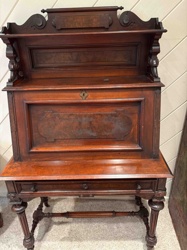
Submitted item photo
Submitted photo · June 12, 2026

User's notes

No additional notes provided.

AI analysis below

AI appraisal

AI analysis & estimate

AI-Generated · Verify before acting

Everything below is generated by AI for informational purposes only. AI can make mistakes — the AI may misidentify items or misattribute them (artist, maker, brand, designer, origin, era). This is not an official valuation and should not be used for insurance, sale, tax, estate, legal, or lending purposes — or any decision requiring a certified appraisal. It is not an authoritative claim about any person, brand, or rights holder — do not share or rely on it as a factual statement about a third party. Always consult qualified professionals before making financial decisions.

Read the full disclaimer

AI Identification

·Not independently authenticated·Verify before acting

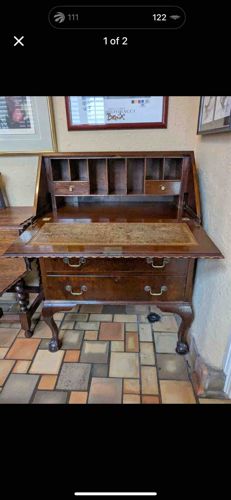
George II Style Burl Walnut Slant-Front Bureau Desk on Cabriole Legs

Antique Furniture / Desks

AI Estimated Value

·Not an official valuation·Verify before acting

$1,200 - $1,800

As of June 12, 2026

AI Item Analysis

·AI can make mistakes·Verify before acting
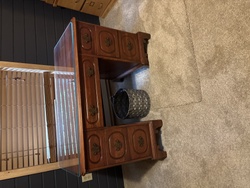
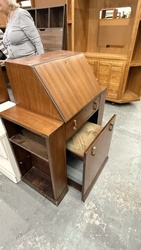
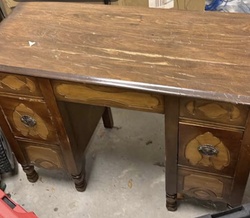
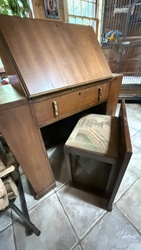
This is a fine-quality George II style slant-front bureau, likely dating from the mid-20th century, constructed with rich burl walnut veneers. The piece features a traditional slant lid that opens to reveal a fitted interior gallery comprising five vertical pigeonholes and two small drawers with brass pulls. The writing surface is inset with a gold-tooled brown leather or faux-leather writing pad, showing some historical wear and age-appropriate scuffing. Below the writing slope are two full-width graduated drawers fitted with decorative brass swan-neck or bail handles and central keyhole escutcheons. The desk is supported on elegant cabriole legs terminating in classic ball-and-claw feet. The front edge of the writing surface displays a distinctive scalloped or undulating carved detail, adding a refined touch to the silhouette. Condition appears generally good with a lustrous patinated finish, though minor surface scratches and indentations consistent with use are visible on the legs and lower drawer fronts. The use of burl walnut across the façade creates a highly decorative mirrored grain pattern, indicative of thoughtful craftsmanship and high-quality cabinetmaking. This piece blends utility with the formal elegance of 18th-century English furniture design.
AI Appraisal Report

·AI can make mistakes·Verify before acting
I have conducted a visual examination of this George II style slant-front bureau. Based on the construction style, the specific high-gloss finish, and the uniformity of the burl walnut veneers, I have identified this as a high-quality 20th-century revival piece rather than an 18th-century original. The craftsmanship is excellent, featuring well-matched book-matched veneers and classic ball-and-claw feet that remain popular in the traditional furniture market. The condition is generally good; the patina is consistent with a well-maintained mid-century piece. While there is minor scuffing on the cabriole legs and some wear to the leather-lined writing surface, these factors are typical and do not significantly detract from the value. Market demand for brown furniture has stabilized, particularly for 'statement pieces' like this that offer both utility and classic aesthetic appeal. Comparables for mid-20th-century English revival bureaus of this quality typically realize prices between $1,200 and $1,800 at specialized antique auctions. Values are significantly impacted by the quality of the burl walnut; the mirrored grain pattern on this facade is a major value driver. However, there are limitations to this digital appraisal. I cannot verify the joinery methods (such as dovetail construction), wood species of the secondary interior linings, or the authenticity of the brass hardware from images alone. A full authentication would require an in-person inspection to examine the underside of the drawers and the backboard for signs of machine versus hand-sawing. Provenance documentation or original purchase receipts from recognized 20th-century cabinetmakers would further solidify this valuation.

Get your items appraised

Instant estimates of your treasures with AI-powered appraisals

Browse More Appraisals