AI Appraisal Estimate

AI-generated estimates · not official valuations

From the user

What was submitted

Photo and notes provided by the user — not generated by AI

Submitted item photo
Submitted photo · June 3, 2026

User's notes

Wood desk

AI analysis below

AI appraisal

AI analysis & estimate

AI-Generated · Verify before acting

Everything below is generated by AI for informational purposes only. AI can make mistakes — the AI may misidentify items or misattribute them (artist, maker, brand, designer, origin, era). This is not an official valuation and should not be used for insurance, sale, tax, estate, legal, or lending purposes — or any decision requiring a certified appraisal. It is not an authoritative claim about any person, brand, or rights holder — do not share or rely on it as a factual statement about a third party. Always consult qualified professionals before making financial decisions.

Note

This analysis also relies on unverified notes provided by the user, which may be incomplete or inaccurate and could affect the result.

Read the full disclaimer

AI Identification

·Not independently authenticated·Verify before acting

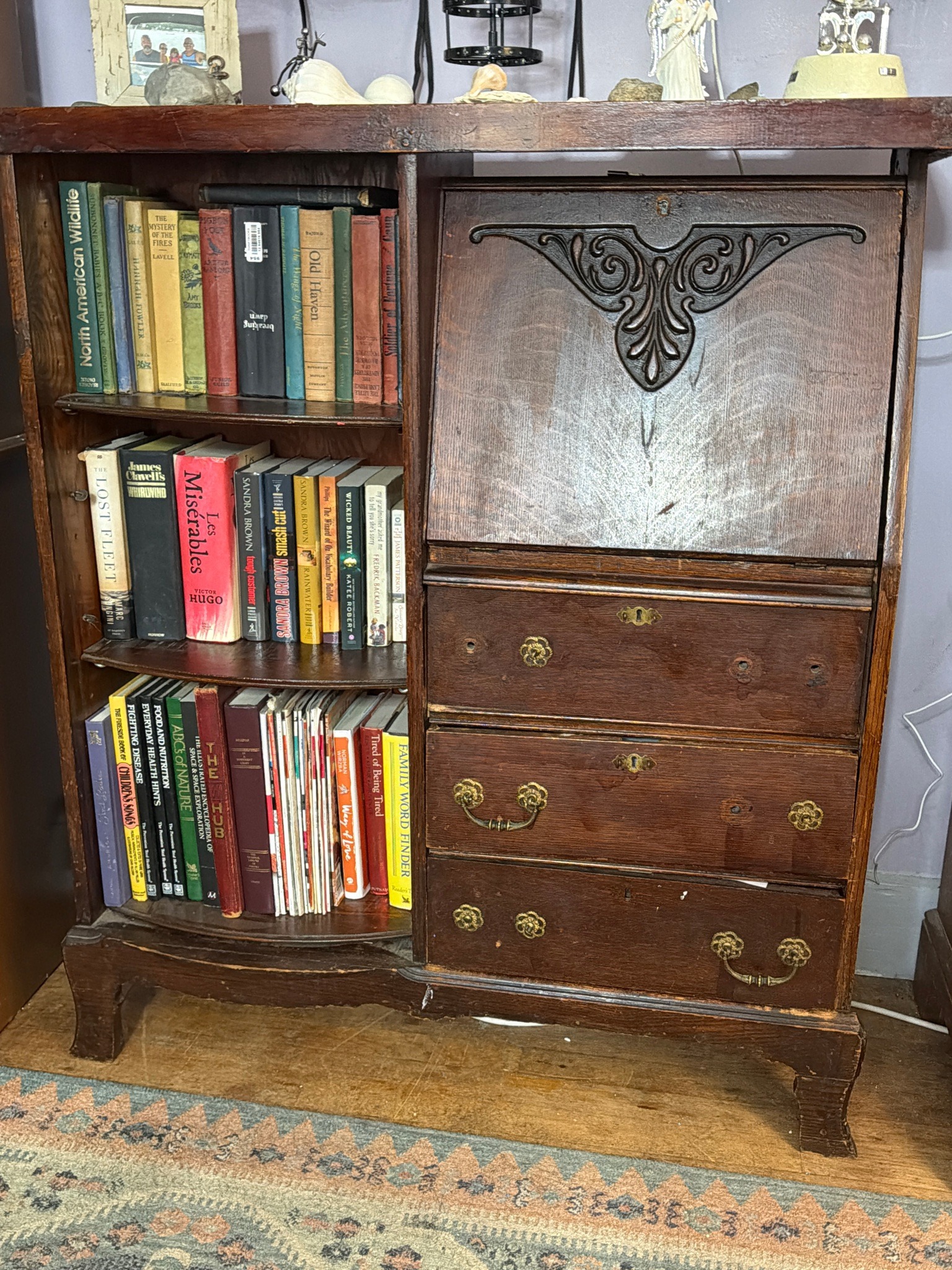
Early 20th Century Oak Side-by-Side Secretary Desk and Bookcase

Antique Furniture / Desks

AI Estimated Value

·Not an official valuation·Verify before acting

$250 - $400

As of June 3, 2026

AI Item Analysis

·AI can make mistakes·Verify before acting
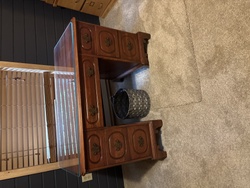
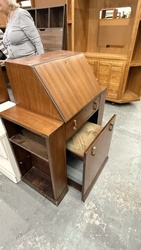
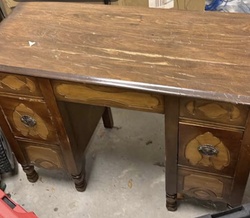
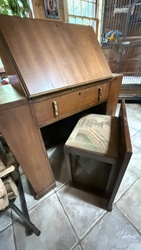
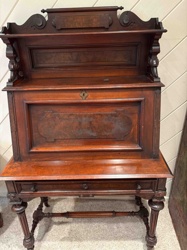
This is a vintage American 'side-by-side' secretary desk and bookcase unit, likely dating from the early 1910s to 1930s. Constructed primarily of oak with a dark reddish-brown stained finish, the piece features an asymmetrical design characteristic of the late Victorian to Edwardian era. The left side consists of three open bookshelves with curved frontal shelf edges, while the right side features a drop-front desk compartment above three graduated drawers. The drop-front is notably embellished with a large, carved wood appliqué in an scrolled acanthus leaf or fan-style motif. Physical condition shows significant age-related wear, including various scuffs, scratches, and finish loss along the base and edges. Most notably, the hardware is incomplete: the top drawer is missing its handles entirely, leaving exposed bore holes, and the middle and bottom drawers show a mix of original or mismatched brass-toned 'swan-neck' bail pulls and rosettes. The piece sits on simple square bracket feet, with the base exhibiting signs of delamination or wood chipping. The interior of the desk and drawer dovetailing are not visible, but the exterior suggests a mass-produced piece of functional household furniture from the early 20th century rather than a high-end custom commission.
AI Appraisal Report

·AI can make mistakes·Verify before acting
I have conducted a visual examination of this early 20th-century American 'side-by-side' secretary desk and bookcase. This piece is a classic example of mass-market furniture produced between 1910 and 1930, likely in the Midwestern United States. While the quarter-sawn oak construction and hand-carved acanthus appliqué on the fall-front are desirable features of the era, the current condition significantly impacts its marketability. My assessment reveals notable finish loss, wood chipping at the base, and incomplete hardware, with missing pulls and mismatched rosettes on the lower drawers. These factors categorized the item as a 'restoration project' for most collectors. The market for dark-stained oak furniture of this period has softened over the last decade, with supply currently exceeding demand. Similar pieces in pristine 'ready-to-use' condition typically fetch between $600 and $800, but the cost of professional refinishing and sourcing period-correct hardware for this specific unit necessitates a lower valuation. It is important to note that this appraisal is based on photographic evidence. A formal authentication would require an in-person inspection to verify joinery techniques (such as Knapp or dovetail joints), examine interior wood species, and search for manufacturer stamps or labels inside drawer bottoms or on the back panel. Without physical access, I cannot confirm the structural integrity of the shelving or the stability of the fall-front hinges, which are critical for functional use.

Get your items appraised

Instant estimates of your treasures with AI-powered appraisals

Browse More Appraisals