AI Appraisal Estimate

AI-generated estimates · not official valuations

From the user

What was submitted

Photo and notes provided by the user — not generated by AI

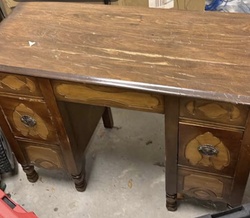
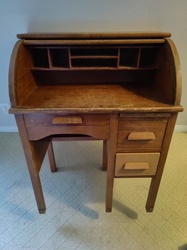
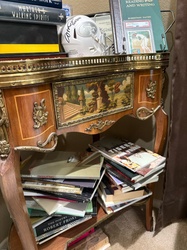
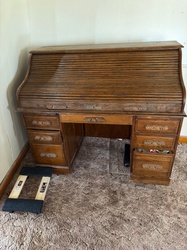
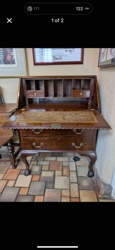
Submitted item photo
Submitted photo · June 20, 2026

User's notes

No additional notes provided.

AI analysis below

AI appraisal

AI analysis & estimate

AI-Generated · Verify before acting

Everything below is generated by AI for informational purposes only. AI can make mistakes — the AI may misidentify items or misattribute them (artist, maker, brand, designer, origin, era). This is not an official valuation and should not be used for insurance, sale, tax, estate, legal, or lending purposes — or any decision requiring a certified appraisal. It is not an authoritative claim about any person, brand, or rights holder — do not share or rely on it as a factual statement about a third party. Always consult qualified professionals before making financial decisions.

Read the full disclaimer

AI Identification

·Not independently authenticated·Verify before acting

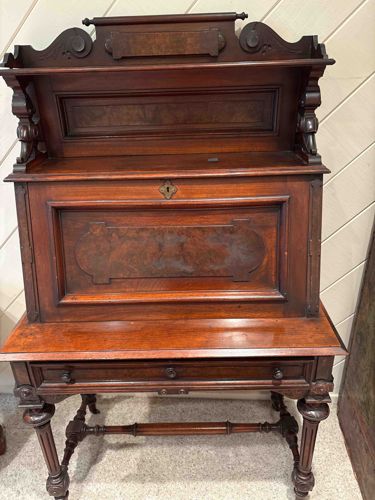
Victorian Walnut Burl Wooton-style Fall-Front Desk

Antique Furniture / Desks

AI Estimated Value

·Not an official valuation·Verify before acting

$1,200 - $1,800 USD

As of June 20, 2026

AI Item Analysis

·AI can make mistakes·Verify before acting
This is a highly ornate Victorian-era fall-front desk, likely dating from the late 19th century (circa 1870-1890). The piece is constructed primarily of walnut with exquisite figured burl walnut veneers on the recessed panels, providing a rich, multi-tonal contrast. The upper section features a decorative gallery with a scrolled pediment and a protruding central tablet, supported by carved corbels. Below this gallery is a secondary shelf and a large fall-front writing surface. The fall-front is centered with a decorative cross-banded burl panel and features an original brass keyhole escutcheon. The desk sits atop a table base featuring a full-width drawer with three turned wooden knobs. The support structure is notably complex, consisting of four fluted and turned legs joined by a sophisticated H-stretcher with central finial detailing. The craftsmanship is of high quality, indicative of Eastlake or Renaissance Revival influences. Condition-wise, the piece appears well-preserved with a deep, aged patina. There are minor surface abrasions, particularly on the lower shelf edge and the feet, consistent with age and use. No significant structural damage or modern repairs are visible. The richness of the burl and the complexity of the turnings suggest a high-end manufacturer of the period, possibly in the cabinet-making tradition of Cincinnati or Indianapolis.
AI Appraisal Report

·AI can make mistakes·Verify before acting
Based on my visual examination of the provided images, this is a fine example of a Victorian-era fall-front desk, likely dating to the Renaissance Revival period of the late 1870s or 1880s. The piece exhibits the characteristic hallmarks of high-quality American manufacturing from that era, specifically the use of rich walnut utilizing burl veneers to create visual depth on the facade. The construction—notably the complex turned legs, the centralized H-stretcher with finial, and the gallery pediment—suggests a maker of significant skill, possibly aligned with the Wooton Desk Company's aesthetic, though likely a distinct regional competitor from the Midwest cabinet-making centers like Cincinnati. The condition appears remarkably consistent with its age. I note the deep, oxidized patina that collectors prize; however, the surface abrasions on the lower shelf and feet are expected wear patterns. The hardware, specifically the escutcheon and turned pulls, appears original to the period. Structurally, the desk seems sound, with no visible warping in the fall-front mechanism, a common failure point. While the ornate detailing elevates its value, the market for large brown furniture has softened in recent years. However, pieces with this degree of burled veneer and specific structural complexity (like the gallery and stretcher base) maintain a stronger foothold than simpler counterparts. A limitation of this appraisal is the inability to inspect the secondary woods (drawer interiors) or joinery techniques (dovetailing), which are crucial for definitive attribution to a specific workshop. In-person inspection would also be required to verify that the burl is veneer rather than faux-graining and to ensure the fall-front hinges have not been modernized. Assuming the finish is original and the interior layout is intact, the estimated value reflects current auction results for similar high-style Victorian desks.

Get your items appraised

Instant estimates of your treasures with AI-powered appraisals

Browse More Appraisals