AI Appraisal Estimate

AI-generated estimates · not official valuations

From the user

What was submitted

Photo and notes provided by the user — not generated by AI

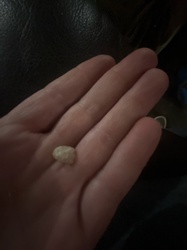
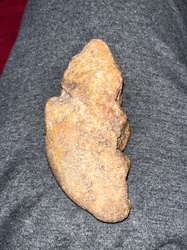
Submitted item photo
Submitted photo · June 30, 2026

User's notes

No additional notes provided.

AI analysis below

AI appraisal

AI analysis & estimate

AI-Generated · Verify before acting

Everything below is generated by AI for informational purposes only. AI can make mistakes — the AI may misidentify items or misattribute them (artist, maker, brand, designer, origin, era). This is not an official valuation and should not be used for insurance, sale, tax, estate, legal, or lending purposes — or any decision requiring a certified appraisal. It is not an authoritative claim about any person, brand, or rights holder — do not share or rely on it as a factual statement about a third party. Always consult qualified professionals before making financial decisions.

Read the full disclaimer

AI Identification

·Not independently authenticated·Verify before acting

Small rounded stone specimen

Natural Specimens and Geological Objects

AI Estimated Value

·Not an official valuation·Verify before acting

$1 - $5

As of June 30, 2026

AI Item Analysis

·AI can make mistakes·Verify before acting
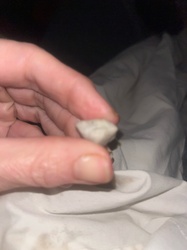
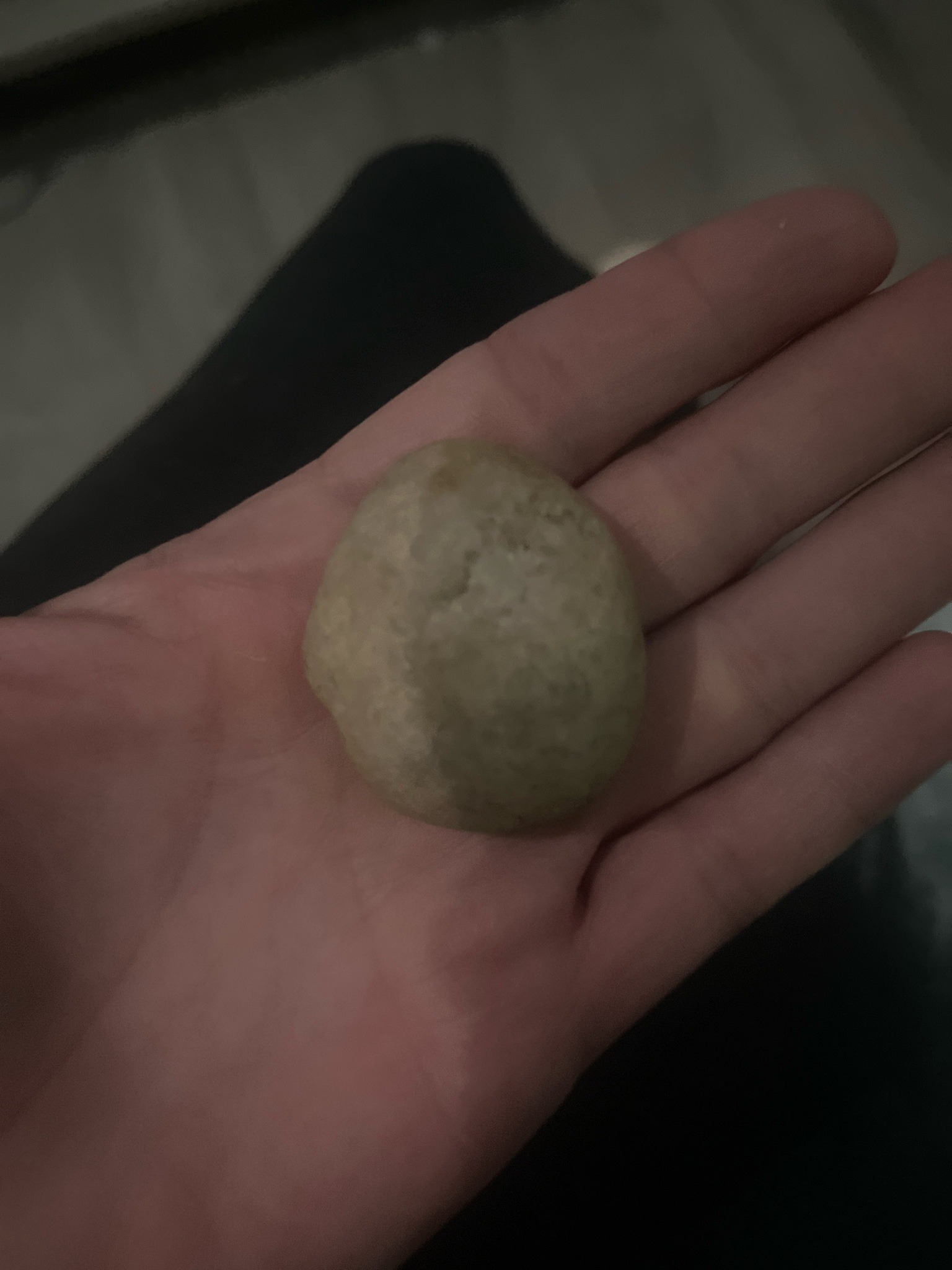
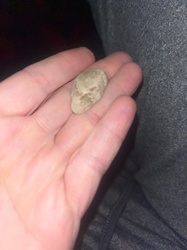
This item appears to be a small, naturally occurring river stone or pebble, roughly circular to ovoid in shape. Measured against the palm of the hand in the image, it is approximately 3 to 4 centimeters in diameter. The specimen features a muted, earthy color palette consisting of beige, tan, and light grey tones. Its surface texture is uneven and granular, displaying a matte finish consistent with natural weathering and water erosion rather than mechanical polishing. There are no visible maker's marks, signatures, or inscriptions, which is typical for geological samples. The composition is consistent with a sedimentary or perhaps fine-grained igneous rock, though a precise mineralogical identification is not possible without physical testing for hardness, streak, or chemical reaction. Small indentations and surface pitted areas are visible, likely resulting from natural wear or impact. Because there are no decorative elements or human-made features, it is categorized as a natural object. The identification remains a hypothesis based on visual appearance, as synthetic materials or heavily weathered concrete fragments can sometimes mimic this natural aesthetic.
AI Appraisal Report

·AI can make mistakes·Verify before acting
Based on the photograph provided, I have examined this specimen which appears to be a small, naturally occurring river stone or pebble. The object displays a granular texture and earthy tones consistent with common geological materials. Based on what I can see, there are no diagnostic features, rare mineral inclusions, or human-made modifications that would suggest a higher collector value. The item currently presents as a common natural object often found in fluvial environments. I cannot verify from a photo the exact mineralogical composition or density, which would be necessary to rule out synthetic materials or common construction fragments. To confirm its origins, a physical inspection involving hardness testing or a streak test would be required. In the current market, items of this type—unnamed natural pebbles without significant aesthetic rarity or provenance—hold negligible financial value and are typically regarded as decorative curiosities or educational samples rather than investment-grade specimens. The provided estimate of $1–$5 reflects the typical nominal value for a common geological specimen if it were sold in a retail gift shop or as part of a basic educational set. Because the attribution to a specific rare mineral is not supported by visual evidence, the value remains at the base level for an unidentified stone. If this item were later identified through scientific testing as a rare gemstone or a meteorite fragment, the valuation would increase significantly; however, based on the visual evidence of its granular surficial weathering and lack of fusion crust or crystal structure, such a reclassification is not supported. Conversely, if it is a fragment of weathered concrete, it would have no recognized secondary market value.

Get your items appraised

Instant estimates of your treasures with AI-powered appraisals

Browse More Appraisals