AI Appraisal Estimate

AI-generated estimates · not official valuations

From the user

What was submitted

Photo and notes provided by the user — not generated by AI

Submitted item photo
Submitted photo · July 7, 2026

User's notes

No additional notes provided.

AI analysis below

AI appraisal

AI analysis & estimate

AI-Generated · Verify before acting

Everything below is generated by AI for informational purposes only. AI can make mistakes — the AI may misidentify items or misattribute them (artist, maker, brand, designer, origin, era). This is not an official valuation and should not be used for insurance, sale, tax, estate, legal, or lending purposes — or any decision requiring a certified appraisal. It is not an authoritative claim about any person, brand, or rights holder — do not share or rely on it as a factual statement about a third party. Always consult qualified professionals before making financial decisions.

Read the full disclaimer

AI Identification

·Not independently authenticated·Verify before acting

Small nodular object consistent with a mineral specimen

Mineral Specimens and Natural Objects

AI Estimated Value

·Not an official valuation·Verify before acting

$5 - $25

As of July 7, 2026

AI Item Analysis

·AI can make mistakes·Verify before acting
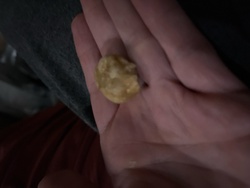
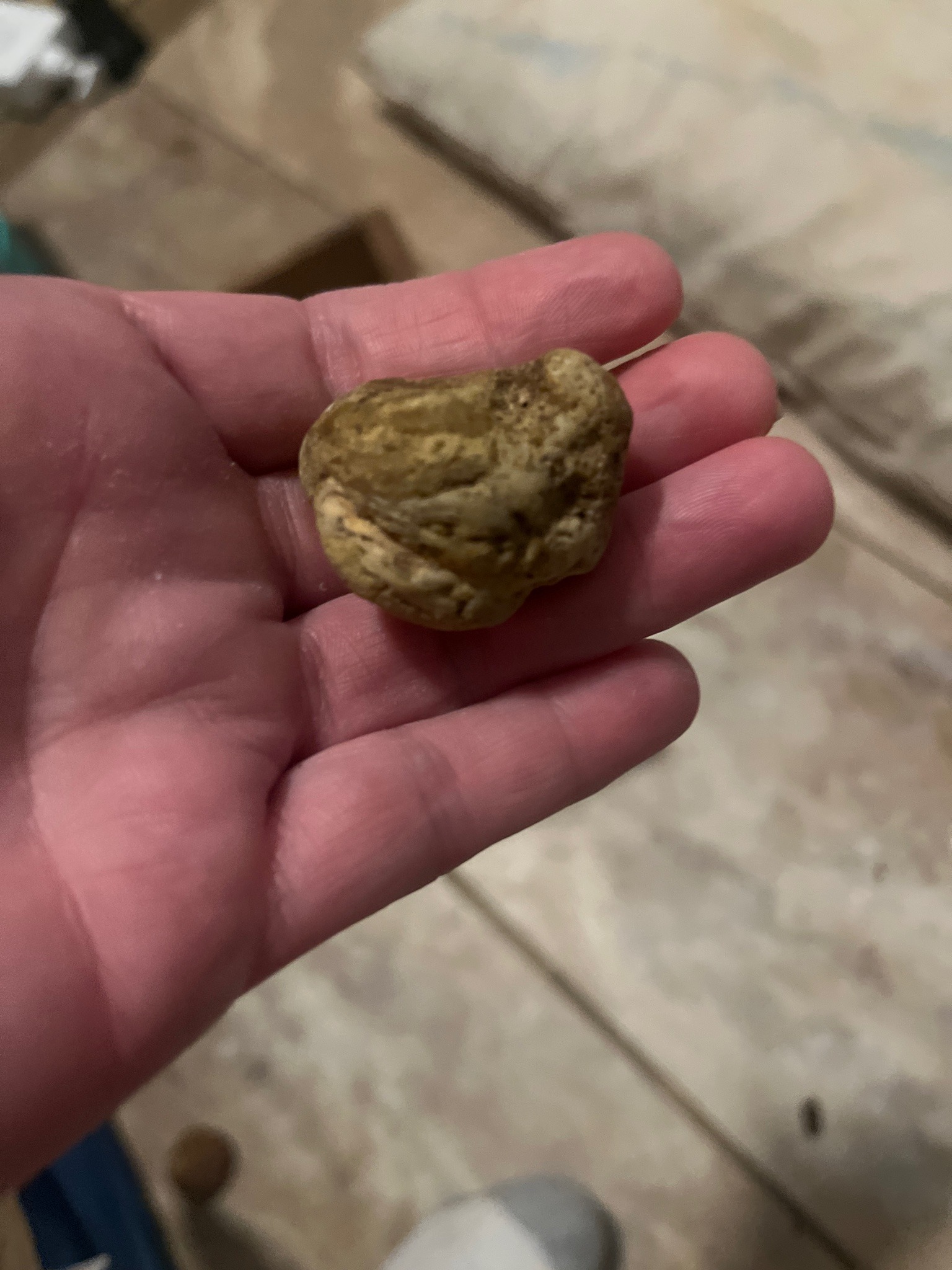
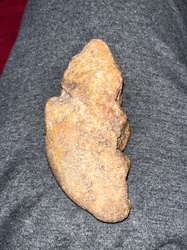
This item appears to be a small, irregular nodular object, approximately 2 to 3 centimeters in length, resting in the palm of a hand. The specimen exhibits a yellowish-brown or ochre-colored surface with a heavily textured, pitted, and uneven topography. Its physical characteristics are stylistically consistent with several naturally occurring materials, including a weathered river stone, a chert or flint nodule, or possibly a secondary mineral deposit such as limonite or ironstone. There are no visible maker's marks, signatures, or inscriptions, which is typical for a natural geological specimen. The surface shows signs of environmental wear, including small crevices and variations in color ranging from pale tan to deep mustard yellow. While some might suggest this is a gold nugget or a piece of amber due to its color, those possibilities remain unverified hypotheses without physical density testing or chemical analysis. The item lacks the characteristic metallic luster typically associated with raw gold under this lighting and displays a more earthy, matte finish instead. Because identifying minerals solely from a photograph is speculative, this attribution is based on apparent visual morphology and surface texture and requires in-person examination by a gemologist or geologist for a definitive classification.
AI Appraisal Report

·AI can make mistakes·Verify before acting
Based on my visual analysis of the provided image, this object presents as a small geological specimen, possibly a mineral nodule such as ironstone, chert, or weathered limonite. The yellowish-brown coloration and pitted surface are consistent with common secondary mineral deposits. However, I cannot verify the specific mineral composition from a photo alone; physical properties such as specific gravity, hardness, and streak testing are required to differentiate this from more valuable materials like a gold nugget or rare amber. Because the item lacks the distinctive metallic luster of gold and appears to have an earthy, matte finish, I am proceeding with the hypothesis that this is a common mineral specimen of decorative or educational interest rather than a precious metal. In the current market, small, unattributed geological finds of this size and appearance generally hold modest value as 'curiosity' pieces. If this were to be identified through scientific testing as a rare specimen or a precious metal, the value would increase significantly. Conversely, as a common river stone or iron-rich nodule, the value resides at the lower end of the provided range. A definitive classification would require an in-person examination by a professional geologist or gemologist. For valuation purposes, I have estimated this as a common natural object, as there is no visual evidence to suggest it belongs to a higher-value category of minerals or carries historical provenance. The value of such items is highly dependent on aesthetic appeal to collectors of natural history specimens, and without a confirmed identity, the market demand remains limited.

Get your items appraised

Instant estimates of your treasures with AI-powered appraisals

Browse More Appraisals