AI Appraisal Estimate

AI-generated estimates · not official valuations

From the user

What was submitted

Photo and notes provided by the user — not generated by AI

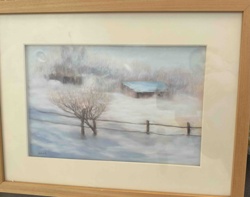
Submitted item photo
Submitted photo · June 15, 2026

User's notes

No additional notes provided.

AI analysis below

AI appraisal

AI analysis & estimate

AI-Generated · Verify before acting

Everything below is generated by AI for informational purposes only. AI can make mistakes — the AI may misidentify items or misattribute them (artist, maker, brand, designer, origin, era). This is not an official valuation and should not be used for insurance, sale, tax, estate, legal, or lending purposes — or any decision requiring a certified appraisal. It is not an authoritative claim about any person, brand, or rights holder — do not share or rely on it as a factual statement about a third party. Always consult qualified professionals before making financial decisions.

Read the full disclaimer

AI Identification

·Not independently authenticated·Verify before acting

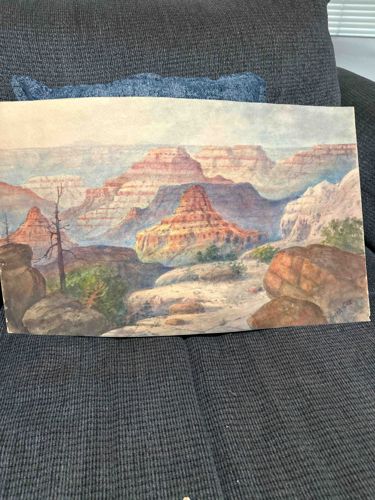
Grand Canyon Landscape Watercolor Painting

Artwork

AI Estimated Value

·Not an official valuation·Verify before acting

$75 - $150

As of June 15, 2026

AI Item Analysis

·AI can make mistakes·Verify before acting
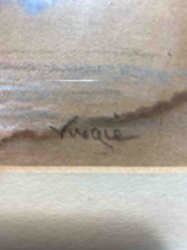
This item is a watercolor painting depicting a panoramic view of what appears to be the Grand Canyon or a similar arid mountainous landscape. The painting is executed on a piece of paper or thin board, rectangular in shape, and appears to be postcard-sized or slightly larger, though exact dimensions are not discernible from the image. The artist has utilized a palette of earthy tones, including various shades of browns, reds, oranges, and purples for the rock formations, contrasted with lighter blues and greys for the distant sky and hazy atmosphere. Greens are sparingly used to indicate sparse vegetation. The foreground features large, rounded boulders and shrubbery, with a distinctive dead tree or snag on the left side, adding a sense of ruggedness to the scene. In the midground, prominent layered rock mesas and formations rise, showing the characteristic erosion patterns of sedimentary rock. The background fades into a lighter, hazier rendition of more distant canyon walls. The brushwork appears somewhat loose and expressive, characteristic of watercolor techniques, with visible pigment variations and layering. There are no obvious signs of a frame or mounting. The edges of the paper appear slightly worn or soft, indicating age or handling. The overall condition looks good for its age, with no visible tears or significant damage, though there might be minor discoloration or foxing consistent with older paper-based art. No clear artist signature or manufacturing marks are discernible from the provided image. The style suggests an early to mid-20th-century aesthetic, possibly created as a souvenir or landscape study.
AI Appraisal Report

·AI can make mistakes·Verify before acting
Based on my visual examination of the provided image of this Grand Canyon watercolor painting, I assess its condition as good for its apparent age, with minor signs of wear consistent with an older paper-based artwork, such as slight edge softness. No significant tears or damage are visible. Authenticity, based solely on this image, is limited; while it appears to be an original watercolor, confirming the artist or precise age without clear signatures or marks is impossible. The style suggests an early to mid-20th-century aesthetic. In terms of market conditions, similar unsigned, smaller-scale landscape watercolors, often created as souvenirs or studies, typically fall into a modest price range. Comparables would include tourist art from national parks or uncatalogued regional artists. Demand for such pieces is generally stable but not high, primarily appealing to collectors of vintage Americana, national park memorabilia, or general landscape art. Rarity is not a significant factor here, as many unsigned watercolors exist. Factors impacting value significantly include the lack of a discernible artist signature, which prevents attribution to a known artist, thus capping its potential value. Its likely smaller size also contributes to a more modest valuation. For full authentication, an in-person examination would be crucial to assess paper quality, watermarks, pigment analysis, and microscopic examination for brushwork details. Provenance documentation, if available, would also be vital to establish its history and origin.

Get your items appraised

Instant estimates of your treasures with AI-powered appraisals

Browse More Appraisals