AI Appraisal Estimate

AI-generated estimates · not official valuations

From the user

What was submitted

Photo and notes provided by the user — not generated by AI

Submitted item photo
Submitted photo · June 15, 2026

User's notes

No additional notes provided.

AI analysis below

AI appraisal

AI analysis & estimate

AI-Generated · Verify before acting

Everything below is generated by AI for informational purposes only. AI can make mistakes — the AI may misidentify items or misattribute them (artist, maker, brand, designer, origin, era). This is not an official valuation and should not be used for insurance, sale, tax, estate, legal, or lending purposes — or any decision requiring a certified appraisal. It is not an authoritative claim about any person, brand, or rights holder — do not share or rely on it as a factual statement about a third party. Always consult qualified professionals before making financial decisions.

Read the full disclaimer

AI Identification

·Not independently authenticated·Verify before acting

Vintage Silver-Plated or EPNS Handled Basket/Tazza

Vintage Silverware and Decorative Arts

AI Estimated Value

·Not an official valuation·Verify before acting

$45.00 - $75.00

As of June 15, 2026

AI Item Analysis

·AI can make mistakes·Verify before acting
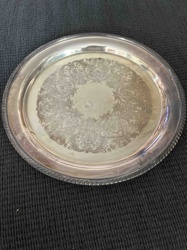
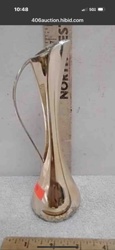
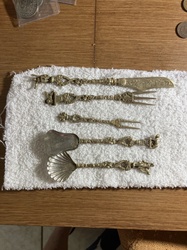
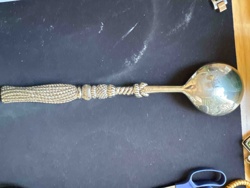
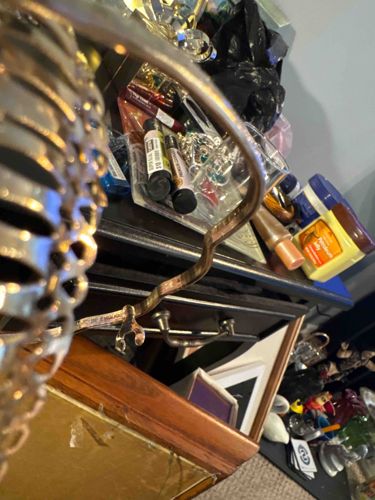
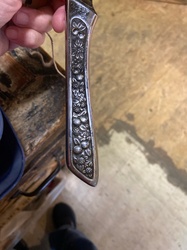
This item is a vintage decorative serving basket or tazza, likely constructed from electroplated nickel silver (EPNS) or silver-plated brass, originating from England as evidenced by the 'MADE IN ENGLAND' stamp visible on the underside of the handle mechanism. Physically, it features an ornate, reticulated or 'pierced' metal body with a scalloped rim, displaying a complex lattice-style design that suggests late 19th-century to mid-20th-century craftsmanship. The handle is a swinging bail type, attached with decorative hinges that appear to be shaped like fleur-de-lis or stylized leaf motifs. The color is a characteristic metallic silver with significant aged patina, showing dark oxidation or tarnish in the recessed areas of the piercing, which is common for vintage silver-plate. The construction utilizes a combination of casting for the handle and hinges and likely machine-stamping or manual piercing for the basket's body. Condition-wise, there is visible surface tarnish and minor wear to the plating, particularly along the handle curves and joints, but the metal appears structurally sound without significant warping. This style of hollowware was popular in Victorian and Edwardian eras for serving fruit, bread, or sweets as a tabletop centerpiece, representing middle-market luxury goods of the period.
AI Appraisal Report

·AI can make mistakes·Verify before acting
Based on my visual examination of the vintage handled basket, the 'MADE IN ENGLAND' mark confirms it is a mass-produced piece of British export hollowware, likely dating from the mid-20th century rather than the early Victorian era. The construction utilizes electroplated nickel silver (EPNS), a standard for middle-market tableware during this period. The pierced lattice work and scalloped edges are characteristic of standardized patterns prevalent in the 1940s and 50s. The condition shows significant oxidation and tarnish, which, while indicating age, also conceals potential 'bleeding'—where the base metal (often copper or nickel) shows through worn plating. This wear typically reduces desirability for collectors of high-end silver but appeals to the 'shabby chic' decor market. The current market for silver-plated hollowware is soft due to high maintenance requirements and a shift in consumer preferences toward dishwasher-safe items. Comparables for similar unbranded English EPNS baskets frequently sell in the $30 to $80 range at estate auctions and online marketplaces. The lack of a prestigious maker's mark (such as Elkington or Walker & Hall) limits its ceiling. Note that this appraisal is limited by the digital format. I cannot verify the integrity of the hinges or detect professional repairs without a physical inspection. A definitive valuation would require testing for base metal composition and an 'acid test' to determine the thickness of the silver layer. To fully authenticate its provenance, one would need original purchase receipts or family records. Without these, the value remains primarily decorative rather than as a blue-chip investment piece.

Get your items appraised

Instant estimates of your treasures with AI-powered appraisals

Browse More Appraisals