AI estimate as of September 9, 2025 · verify with a professional before acting
AI-Generated · Verify before acting
Everything on this page is generated by AI for informational purposes only. AI can make mistakes — the AI may misidentify items or misattribute them (artist, maker, brand, designer, origin, era). This is not an official valuation and should not be used for insurance, sale, tax, estate, legal, or lending purposes — or any decision requiring a certified appraisal. It is not an authoritative claim about any person, brand, or rights holder — do not share or rely on it as a factual statement about a third party. Always consult qualified professionals before making financial decisions.
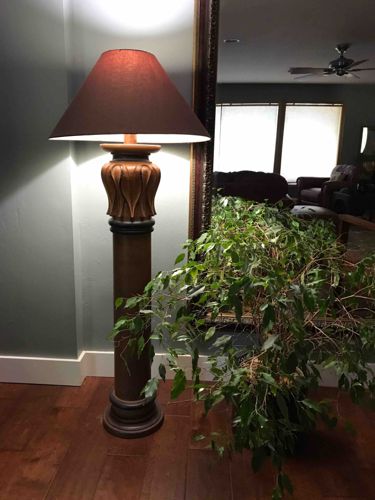
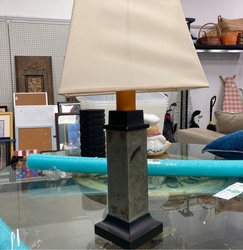
This is a substantial floor lamp featuring a classical or traditional design, likely made of wood, with a dark brown finish. The lamp stands tall, possibly around 5 to 6 feet in height, with a prominent cylindrical column forming the main body. Near the top, just below the lamp shade, there is a distinct carved section. This section appears to be ornately carved with repeating botanical or fluted patterns, resembling acanthus leaves or similar classical motifs, which gives it a sculptural quality. The carving is detailed, suggesting a certain level of craftsmanship. The base of the lamp is a round, stepped pedestal, matching the dark wood finish of the column, providing stability. There is a discernible dark ring or band, possibly of metal or a darker wood stain, separating the carved upper section from the main column and another similar ring above the base. The lamp is topped with a wide, conical or drum-shaped lampshade in a solid, dark reddish-brown or burgundy fabric, which appears opaque. The internal light source casts a warm glow upwards and downwards. The light emanating from the top highlights the textured surface of the shade. Overall condition appears good with no obvious signs of major damage or wear from the visible angle, though minor scuffs or patina consistent with age and use would be expected. The style suggests it could be from the late 20th century or early 21st century, designed to evoke a timeless, classic aesthetic.
AI Appraisal Report
Upon examining the provided image of this Traditional Carved Wood Floor Lamp, I assess its condition as good, showing no obvious major damage or significant wear from this visual angle. The dark brown finish appears consistent, and the carved botanical patterns on the upper section exhibit good detail, suggesting solid craftsmanship. The stepped pedestal base provides stability, and the dark reddish-brown fabric lampshade complements the traditional aesthetic.
From a market perspective, traditional carved wood floor lamps like this maintain steady, albeit not exceptionally high, demand. They appeal to individuals seeking classic décor elements. Comparables in the secondary market, such as auction sites and estate sales, typically range from $150 to $500, depending on the provenance, timber quality, and specific carving details. This particular lamp, with its substantial size and ornate carving, positions it towards the mid-to-upper end of that general range. Factors impacting value include the actual wood species, whether it's solid wood versus veneer, the quality of the internal wiring, and any signs of instability.
A limitation in authenticity verification from an image alone is significant. While the style suggests a late 20th or early 21st-century production, confirming the age and manufacturer without physical inspection is impossible. I cannot assess the integrity of the wiring, the stability of the joins, or the actual material composition of the 'wood' (e.g., solid wood, composite, or veneer). An in-person examination would involve checking for maker's marks, assessing structural integrity, testing the electrical components, and examining wood grain for authenticity. Provenance documentation, if available, such as original purchase receipts or lineage, would be invaluable for full authentication and could potentially increase its value. Scientific testing, such as wood analysis, would only be pursued if there were questions regarding truly antique status, which is not indicated here.