AI Appraisal Estimate

AI-generated estimates · not official valuations

From the user

What was submitted

Photo and notes provided by the user — not generated by AI

Submitted item photo
Submitted photo · June 12, 2026

User's notes

No additional notes provided.

AI analysis below

AI appraisal

AI analysis & estimate

AI-Generated · Verify before acting

Everything below is generated by AI for informational purposes only. AI can make mistakes — the AI may misidentify items or misattribute them (artist, maker, brand, designer, origin, era). This is not an official valuation and should not be used for insurance, sale, tax, estate, legal, or lending purposes — or any decision requiring a certified appraisal. It is not an authoritative claim about any person, brand, or rights holder — do not share or rely on it as a factual statement about a third party. Always consult qualified professionals before making financial decisions.

Read the full disclaimer

AI Identification

·Not independently authenticated·Verify before acting

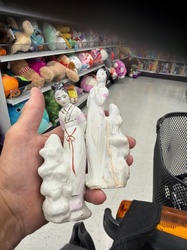
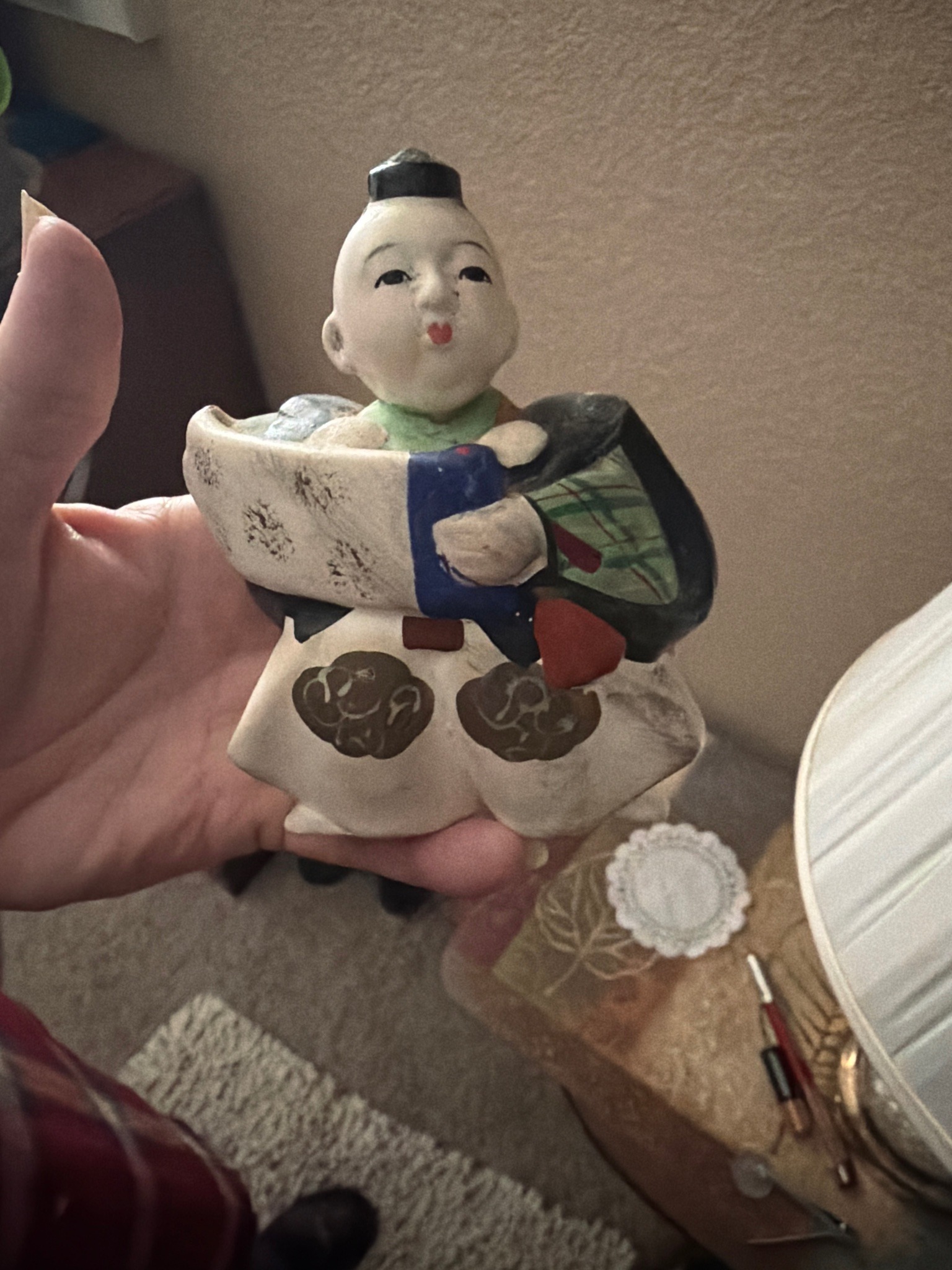
Japanese Hakata Doll (Hakata Ningyo) Figure of a Boy

Asian Decorative Arts / Traditional Ceramics

AI Estimated Value

·Not an official valuation·Verify before acting

$45 - $75

As of June 12, 2026

AI Item Analysis

·AI can make mistakes·Verify before acting
This is a vintage Japanese Hakata doll, a traditional clay figurine known as 'Hakata Ningyo,' originating from the Fukuoka region. The piece depicts a young boy dressed in a formal kimono and hakata-style robes. It is crafted from unglazed ceramic (bisque) and hand-painted with a characteristic matte, powdery finish. The boy features a pale, finely molded face with delicate features, including red-tinged lips and a traditional topknot hairstyle. His clothing is decorated with various patterns, including circular floral motifs on the lower white skirt and a green-and-black striped pattern on the sleeve. The colors are predominantly white, black, green, and deep blue, with small red accents. The craftsmanship shows typical Hakata modeling, being hollow-cast and lightweight. Regarding condition, there is visible surface wear and 'grime' buildup throughout, particularly on the white robe and facial area. Several dark rub marks and scuffs are present, likely from handling over several decades. Small areas of pigment loss or paint flaking are observable, especially on the raised edges of the clothing. Based on the style and paint application, this item likely dates from the mid-20th century (Showa period), roughly 1950s-1970s, which was a peak time for export of these figurines.
AI Appraisal Report

·AI can make mistakes·Verify before acting
I have conducted a visual appraisal of this vintage Hakata Ningyo (Hakata Doll) based on the provided images. This piece depicts a young boy in formal attire, showcasing the traditional unglazed bisque porcelain and matte pigment application characteristic of the Fukuoka region. Based on the stylistic execution and the specific color palette, this item appears to be an authentic Japanese export from the mid-Showa period (circa 1950s–1970s). The craftsmanship is consistent with mid-market production of that era. Condition is a significant factor in this valuation. The doll exhibits noticeable surface grime and 'rubbing' marks to the white bisque, which is notoriously difficult to clean without damaging the water-soluble pigments. The presence of paint flaking and scuffs on the raised edges indicates moderate wear. In the current market, collectors prioritize 'mint' condition pieces or those attributed to specific master craftsmen (Living National Treasures), which often include an artist-signed wooden stand or plaque. This example lacks such attribution and shows signs of aging that detract from its display value. The market for mid-century Hakata dolls is currently saturated, as many were brought back to the West as souvenirs by post-war servicemen. Consequently, rarity is low. For a definitive authentication, an in-person inspection would be required to examine the interior hollow casting for maker's marks, verify the stability of the pigments, and rule out structural repairs to the neck or hands. Provenance documentation, such as the original 'Tomobako' (wooden box), would also be necessary to justify a higher valuation at the top end of the range.

Get your items appraised

Instant estimates of your treasures with AI-powered appraisals

Browse More Appraisals