AI Appraisal Estimate

AI-generated estimates · not official valuations

From the user

What was submitted

Photo and notes provided by the user — not generated by AI

Submitted item photo
Submitted photo · June 26, 2026

User's notes

Japan 18kt gold

AI analysis below

AI appraisal

AI analysis & estimate

AI-Generated · Verify before acting

Everything below is generated by AI for informational purposes only. AI can make mistakes — the AI may misidentify items or misattribute them (artist, maker, brand, designer, origin, era). This is not an official valuation and should not be used for insurance, sale, tax, estate, legal, or lending purposes — or any decision requiring a certified appraisal. It is not an authoritative claim about any person, brand, or rights holder — do not share or rely on it as a factual statement about a third party. Always consult qualified professionals before making financial decisions.

Note

This analysis also relies on unverified notes provided by the user, which may be incomplete or inaccurate and could affect the result.

Read the full disclaimer

AI Identification

·Not independently authenticated·Verify before acting

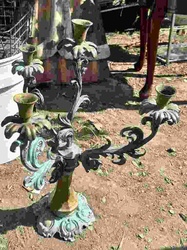
Japanese Gilt Porcelain Decorative Plate with 'The Light of the World' Imagery

Antique & Vintage Decorative Arts

AI Estimated Value

·Not an official valuation·Verify before acting

$45.00 - $75.00

As of June 26, 2026

AI Item Analysis

·AI can make mistakes·Verify before acting
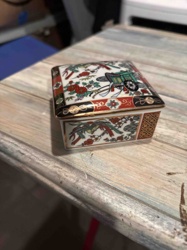
This is a vintage Japanese porcelain decorative plate featuring a scalloped edge and a central religious portrait based on William Holman Hunt’s 'The Light of the World,' depicting Jesus Christ knocking at a door. The plate is constructed from white porcelain with a glaze that shows visible crazing across the entire surface, indicative of age. The central transfer-ware image is encircled by a lush wreath of pink roses and green leaves. The rim of the plate is highly decorative, featuring embossed scrollwork and a heavily gilded, scalloped edge. According to user context, the gilding is 18kt gold, which is applied in a thick, textured manner often seen in mid-20th-century Japanese export ware. The gold shows some wear and thinning, particularly on the raised edges and scrolls. The condition includes faint staining or 'foxing' spots on the white ground and significant fine-line crazing common in earthenware or low-fired porcelain of this era. The style suggests a mid-20th-century manufacture date (circa 1950s-1960s), likely produced for the Western souvenir or gift market. The craftsmanship reflects a blend of mass-produced transfer techniques and hand-applied gold accents.
AI Appraisal Report

·AI can make mistakes·Verify before acting
I have carefully examined the provided images and descriptions of this Japanese gilt porcelain decorative plate. The piece dates to the mid-20th century (circa 1950–1965) and belongs to the 'Occupied Japan' or post-war export era. It features a common transfer-ware application of William Holman Hunt’s 'The Light of the World,' aimed specifically at the Western Christian gift market. While the user notes the use of 18kt gold, in Japanese export ware of this period, this refers to a thin gold wash or liquid gold application rather than solid gold or heavy plating; the 'textured' gold is likely a raised moriage-style application or gilded embossing. The visible crazing and 'foxing' indicate a low-fired ceramic body or a glaze-fit issue common in mass-produced items of that era, which significantly impacts the value downward as it compromises structural integrity and aesthetic clarity. Market demand for religious transfer-ware from this period is currently soft, with high supply and low scarcity. The primary value drivers are the sentimentality of the imagery and the decorative appeal of the gilding. Limitations of this appraisal include the inability to verify the gold purity without an acid or XRF test; additionally, a physical inspection would be required to rule out disguised chips or repairs under the heavy gilding and to confirm if the base material is true hard-paste porcelain or a more porous earthenware. For definitive authentication, I would recommend checking for a manufacturer’s backstamp and providing provenance regarding its original purchase location.

Get your items appraised

Instant estimates of your treasures with AI-powered appraisals

Browse More Appraisals