AI estimate as of August 8, 2026 · verify with a professional before acting
AI-Generated · Verify before acting
Everything on this page is generated by AI for informational purposes only. AI can make mistakes — the AI may misidentify items or misattribute them (artist, maker, brand, designer, origin, era). This is not an official valuation and should not be used for insurance, sale, tax, estate, legal, or lending purposes — or any decision requiring a certified appraisal. It is not an authoritative claim about any person, brand, or rights holder — do not share or rely on it as a factual statement about a third party. Always consult qualified professionals before making financial decisions.
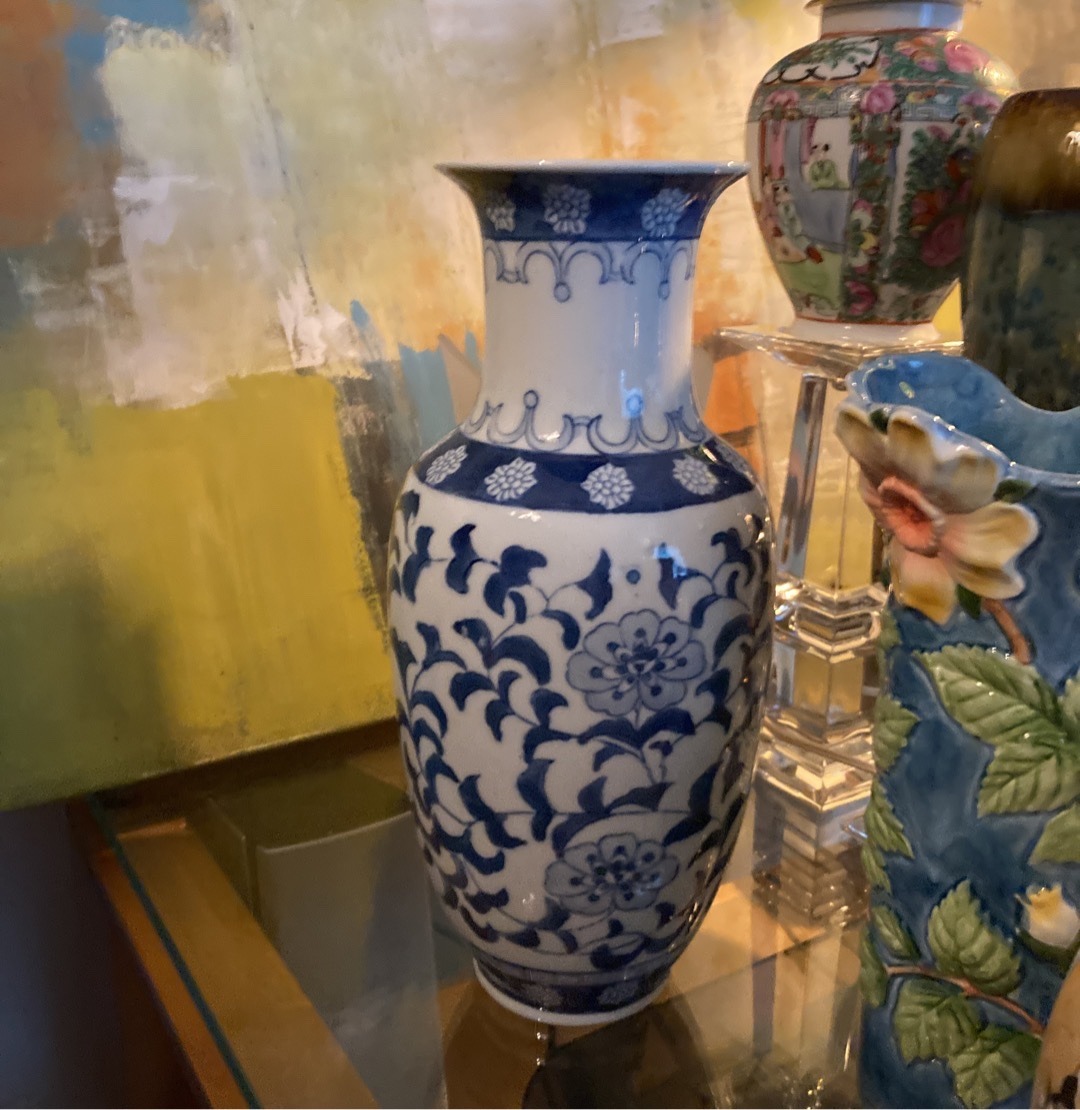
This is a ceramic porcelain vase featuring a classic blue and white underglaze color palette. The vessel exhibits a traditional baluster or rouleau shape with an everted, flared rim, a relatively slender cylindrical neck, a rounded shoulder, and a tapering body that rests upon a recessed foot rim. The primary decorative motif consists of hand-painted cobalt blue floral and scrolling vine patterns, commonly referred to as lotus or scrolling leaf motifs, enveloping the bulbous portion of the body. Bands of geometric, floral, and ruyi-head motifs encircle the neck and shoulder areas. The glaze appears glossy and smooth with typical reflective properties consistent with high-fired glazed ceramics. No maker's marks, signatures, or stamps are clearly visible from this photographic angle; the identification rests purely on visual and stylistic characteristics associated with traditional blue-and-white porcelain aesthetics. The overall condition appears to be well-preserved with no glaring surface cracks, chips, or major structural losses visible in the image, displaying a bright white ground contrasting sharply against deep cobalt blue pigmentation. The piece is characteristic of styles historically produced in Chinese export or traditional kilns, though age, exact period of manufacture, and authenticity remain unverified without a physical examination or inspection of the base markings.
AI Appraisal Report
Based on what I can see in the photograph, this ceramic porcelain vase features a classic blue and white underglaze palette with a traditional baluster shape, everted rim, and hand-painted lotus and scrolling vine motifs. I can't verify from a photo whether the piece is a genuine antique from historical Chinese kilns or a later revival piece, as age, exact period of manufacture, and material composition remain unverified without a physical examination. The overall surface appears well-preserved with a bright white ground and deep cobalt blue pigmentation, showing no glaring cracks or chips visible from this angle. For the purpose of this estimate, I am assuming the visual characteristics and stylistic attribution are correct. In the current market, pieces of this type generally attract steady interest from collectors of Asian art, with comparable items exhibiting similar decorative qualities typically selling in the $800 to $1,500 range. However, this valuation depends entirely on future authentication. If the piece were determined to be a modern reproduction, replica, copy, or produced merely 'in the style of' traditional export wares, the market value would drop significantly, likely ranging from $100 to $300. To fully clarify the status, attribution, and potential age of the vase, I would need a physical inspection, hallmark verification of the base, an in-person expert appraisal, and potentially scientific testing such as thermoluminescence or detailed pigment analysis.