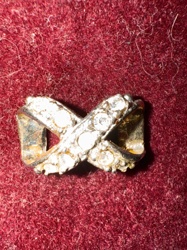
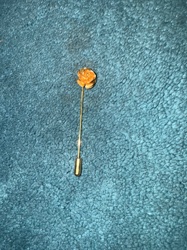
Can be worn as brooch or pendant, approximately 3.5 cm in diameter
These notes were written by the person who submitted this item. Appraiser.AI has not verified them, and the AI's identification and estimate may rely on them.
AI Estimated Value
Not an official valuation
$40-75
AI estimate as of July 19, 2025 · verify with a professional before acting
AI-Generated · Verify before acting
Everything on this page is generated by AI for informational purposes only. AI can make mistakes — the AI may misidentify items or misattribute them (artist, maker, brand, designer, origin, era). This is not an official valuation and should not be used for insurance, sale, tax, estate, legal, or lending purposes — or any decision requiring a certified appraisal. It is not an authoritative claim about any person, brand, or rights holder — do not share or rely on it as a factual statement about a third party. Always consult qualified professionals before making financial decisions.
This analysis also relies on unverified notes provided by the user, which may be incomplete or inaccurate and could affect the result.
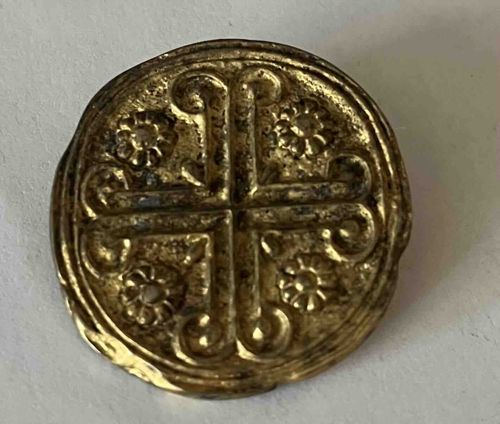
This item is a circular, gold-toned ornamental piece, approximately 3.5 cm in diameter, designed to be worn as either a brooch or a pendant. Its material appears to be a base metal with a brassy or gilded finish, exhibiting a worn patina, which suggests age and handling. The color is predominantly a subdued antique gold, with darker, oxidized areas, particularly in the recessed parts of the design, contributing to its aged aesthetic. The construction is solid, indicating it was likely cast or stamped from a single piece of metal.
The central motif is a stylized cross, formed by four wide, rectangular arms that extend from the center. Each arm terminates in an elaborate, scrolled or volute-like flourish, giving the cross a decorative, almost heraldic appearance. In each of the four quadrants created by the cross (between the arms), there is a distinct floral element, resembling a stylized six-petaled flower with a small central dot, possibly representing a pistil or stamen. The edges of the circular form show some irregularity and mild chipping or wear, particularly noticeable on the left side, which may be due to its manufacturing process or prolonged use. There are no visible maker's marks, signatures, or stamps evident in the provided image. The design, with its ornate cross and floral elements, suggests a possible Medieval, Renaissance, or Victorian Revival influence, though without further context or markings, a precise age is difficult to ascertain. The craftsmanship appears to be of moderate quality, with the details of the design still largely discernible despite the surface wear and oxidation. The item displays a good amount of character from its visible condition issues, which enhance its antique appeal rather than detract from it.
AI Appraisal Report
I have examined the provided image of the Antique Style Cross Floral Brooch/Pendant, noting its circular, gold-toned design, approximately 3.5 cm in diameter. The item appears to be crafted from a base metal with a brassy or gilded finish, exhibiting a worn patina consistent with age and handling. This wear contributes to its antique aesthetic rather than detracting from it. The central stylized cross motif with floral elements suggests possible Medieval, Renaissance, or Victorian Revival influences. While a precise age is difficult to ascertain from images alone, the craftsmanship appears moderate, with details still discernible despite surface oxidation.
From the visual evidence, the condition is good for an older piece, displaying typical wear like minor chipping along the edges. Authenticity is challenging to definitively confirm without physical inspection. I cannot verify the material composition beyond visual assessment, nor can I identify any maker's marks, which are crucial for authenticating origin and period. Market comparables for similar unsigned, base metal revival pieces in good condition typically fall into the lower-to-mid range of vintage costume jewelry.
Demand for such pieces exists among collectors of antique and vintage costume jewelry, particularly those interested in historical revival styles. However, without precious metal content or a discernible maker, its rarity is limited. The primary factors impacting value are its condition, aesthetic appeal, and the lack of identifiable marks or precious materials. For full authentication and a more precise valuation, I would recommend an in-person examination to assess the metal composition (e.g., using XRF testing), inspect for hidden marks, and evaluate the craftsmanship firsthand. Provenance documentation would also significantly aid in determining its true age and origin.
Considering these factors, particularly the lack of precious metals and identifiable marks, and relying solely on the provided image, my appraisal reflects its value as an aesthetically pleasing antique-style costume piece.