These notes were written by the person who submitted this item. Appraiser.AI has not verified them, and the AI's identification and estimate may rely on them.
AI Estimated Value
Not an official valuation
$20 - $2,500+
AI estimate as of August 17, 2025 · verify with a professional before acting
AI-Generated · Verify before acting
Everything on this page is generated by AI for informational purposes only. AI can make mistakes — the AI may misidentify items or misattribute them (artist, maker, brand, designer, origin, era). This is not an official valuation and should not be used for insurance, sale, tax, estate, legal, or lending purposes — or any decision requiring a certified appraisal. It is not an authoritative claim about any person, brand, or rights holder — do not share or rely on it as a factual statement about a third party. Always consult qualified professionals before making financial decisions.
This analysis also relies on unverified notes provided by the user, which may be incomplete or inaccurate and could affect the result.
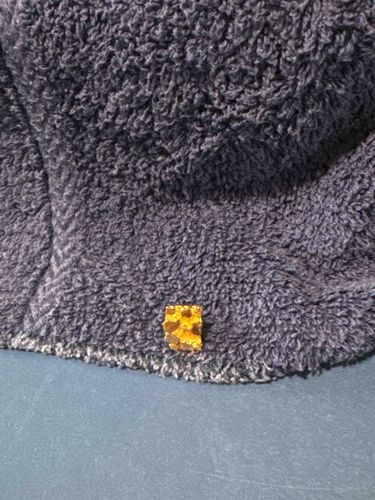
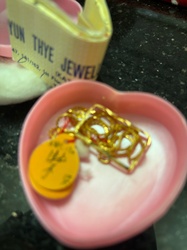
This is a small, rectangular lapel pin, approximately 5 inches in length as per the additional context, though the visible portion in the image appears to be a fraction of that size. The pin's face, which is the only part clearly visible, features a textured, uneven surface that strongly resembles a natural gold nugget. The color is a distinct golden yellow, consistent with raw gold, exhibiting variations in shade that suggest natural metallic luster and potential inclusions or oxidation. The texture is overtly irregular, with numerous small depressions and protrusions, giving it a porous, unrefined appearance. This specific texture points towards the item being a "nugget" style piece, where the raw, organic form of something, in this case, a gold nugget, is preserved or replicated. While no maker's marks or specific manufacturing details are discernible from the image, the rough, organic aesthetic suggests a design intended to mimic natural forms, potentially popular in jewelry from the mid to late 20th century, particularly pieces associated with mining heritage or naturalistic styles. The construction appears to be solid, and given the context, it is likely a metal casting or a genuine nugget encased/mounted. There are no obvious signs of significant damage such as dents or deep scratches, nor any visible repairs. The overall condition appears to be good, with a natural patina that complements its rugged aesthetic. The backing, mentioned in the context (5” gold nugget pin with backing), implies a traditional pin mechanism, likely a straight pin with a clasp or safety catch, but this is not visible in the provided image.
AI Appraisal Report
Upon visual examination of the provided image and considering the owner's description, I have assessed this gold nugget lapel pin. The face of the pin presents a highly textured, irregular surface consistent with the appearance of a natural gold nugget. Its color is a rich golden yellow, and the condition appears good, with no visible damage. The owner's description notes the pin is 5 inches long, which is unusually large for a lapel pin and could indicate it's a hat pin or similar decorative item. This significant size, if accurate, heavily influences its potential gold content and thus its value.
The primary value driver for this item is its material composition. Is it a solid gold nugget, gold-plated, or a gold-filled casting? Without physical inspection and materials testing (such as acid testing or X-ray fluorescence), its authenticity as solid gold cannot be confirmed. If it is a genuine, high-karat gold nugget of this substantial size, its value would be primarily based on its weight at the current market price for gold, plus a premium for its form. If it is gold-plated or base metal, its value would be minimal, likely under $20.
Market demand for nugget-style jewelry exists, but this item's large size may limit its wearability and appeal. Assuming authenticity as a solid gold piece, its value is directly tied to its weight. A full appraisal would require weighing the item and testing for gold purity (karat).