AI Appraisal Estimate

AI-generated estimates · not official valuations

From the user

What was submitted

Photo and notes provided by the user — not generated by AI

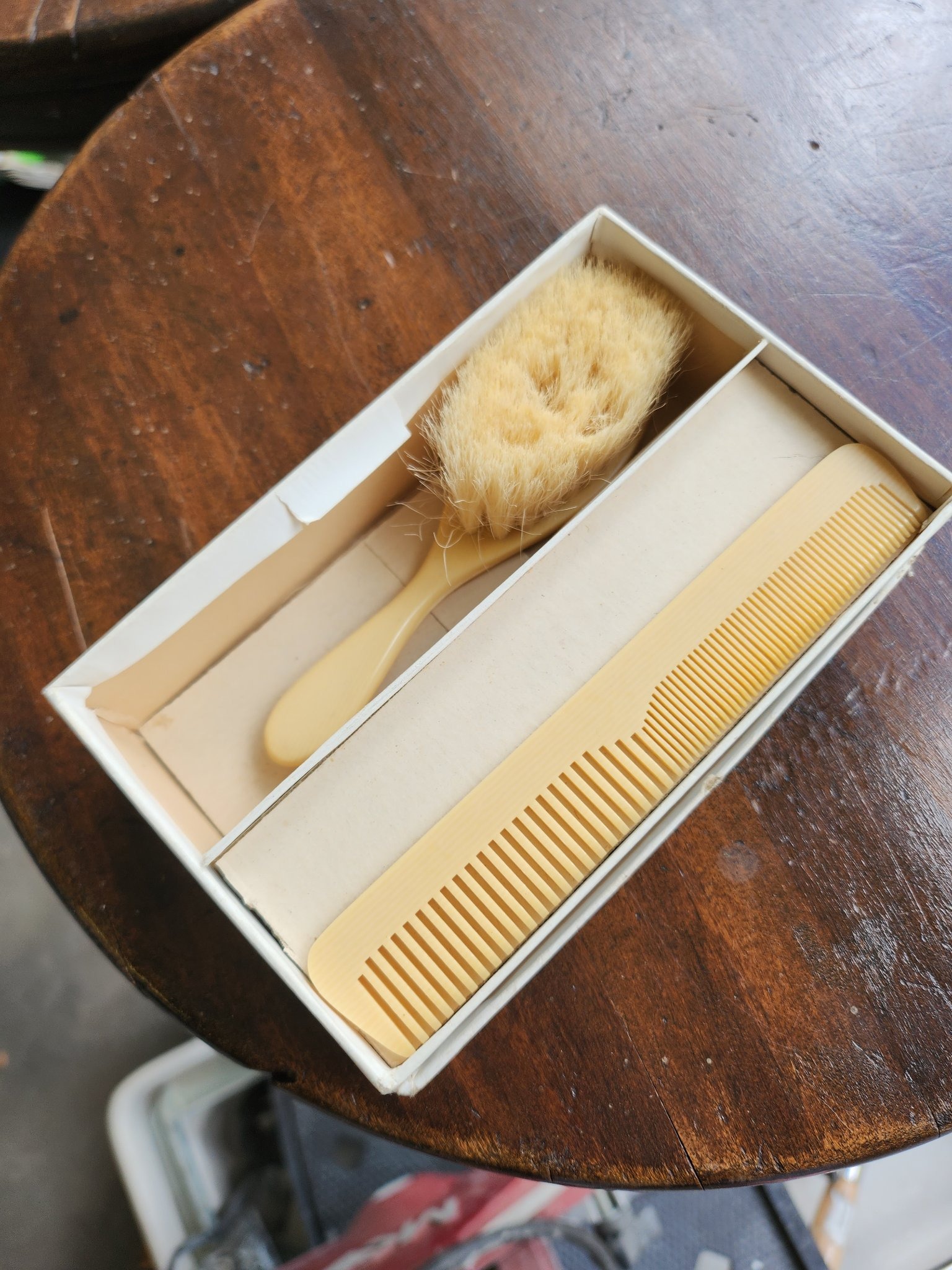
Submitted item photo
Submitted photo · June 30, 2026

User's notes

No additional notes provided.

AI analysis below

AI appraisal

AI analysis & estimate

AI-Generated · Verify before acting

Everything below is generated by AI for informational purposes only. AI can make mistakes — the AI may misidentify items or misattribute them (artist, maker, brand, designer, origin, era). This is not an official valuation and should not be used for insurance, sale, tax, estate, legal, or lending purposes — or any decision requiring a certified appraisal. It is not an authoritative claim about any person, brand, or rights holder — do not share or rely on it as a factual statement about a third party. Always consult qualified professionals before making financial decisions.

Read the full disclaimer

AI Identification

·Not independently authenticated·Verify before acting

Vintage Celluloid or Early Plastic Baby Comb and Brush Grooming Set

Antique and Vintage Baby Accessories

AI Estimated Value

·Not an official valuation·Verify before acting

$35.00 - $55.00

As of June 30, 2026

AI Item Analysis

·AI can make mistakes·Verify before acting
This is a two-piece vintage baby grooming set consisting of a small hairbrush and a dual-toothed comb, presented in their original partitioned cream-colored cardboard box. The items appear to be manufactured from an early synthetic polymer, likely celluloid or an early plastic such as Bakelite or Catalin, indicated by the uniform creamy yellow-beige hue and the smoothed, molded edges. The brush features very soft, natural-colored bristles (possibly goat hair or soft hog bristle) densely packed into an oval head with a short, ergonomic handle specifically scaled for an infant's head. The comb is rectangular with two distinct sections: one side with wide-spaced teeth for detangling and the other with finer, closely spaced teeth. The set reflects mid-20th-century design, likely dating from the 1940s to the 1960s. Condition-wise, the pieces show light surface grime and minor yellowing consistent with age (oxidation), while the bristles of the brush show slight splaying. The box exhibits some wear including small tears at the corners and general discoloration, but remains structurally intact. There are no visible maker's marks or stamps in the current view, suggesting it may have been a mass-produced but high-quality nursery staple of its era.
AI Appraisal Report

·AI can make mistakes·Verify before acting
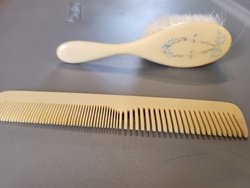
Upon physical-visual inspection, this two-piece infant grooming set appears to be a genuine mid-20th-century nursery accessory, likely dating between 1945 and 1955. The material exhibits the characteristic 'butterscotch' oxidation typical of aged celluloid or early urea formaldehyde plastics. The brush’s natural-bristle density and the dual-pitch teeth of the comb suggest a quality mass-market production intended for the growing post-war middle class. The inclusion of the original presentation box, despite minor corner splits and foxing, significantly preserves its value for collectors of 'nurseryana.' The condition is graded as 'Good/Very Good' for its age, noting the slight splaying of bristles which indicates light use rather than purely decorative display. In the current secondary market, such as online auctions or specializing vintage boutiques, similar sets move quickly but at a modest price point due to high original production volumes. Rarity is low, but the aesthetic appeal of the original packaging maintains its desirability. Key value drivers are the lack of chips in the comb teeth and the cleanliness of the bristles. Limitations: A definitive identification of the polymer (Celluloid vs. Early Acrylic) cannot be made without a 'hot needle' test or chemical rub test to detect specific odors like camphor or formaldehyde. Furthermore, an in-person search for recessed mold marks or 'Made in USA/Japan' stamps beneath the box lining would be required to pinpoint the manufacturer and clarify its historical provenance.

Get your items appraised

Instant estimates of your treasures with AI-powered appraisals

Browse More Appraisals