Early 20th Century Wicker Baby Carriage
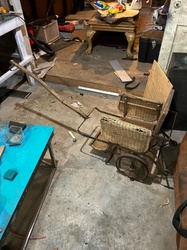
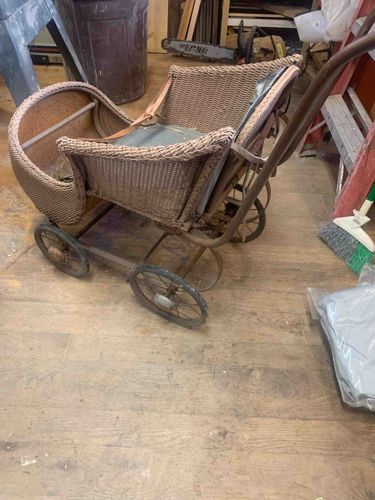
This is an antique baby carriage, likely dating from the early 1900s to the 1920s. The body is constructed from woven wicker or reed, featuring a high-back seat and a rounded, shell-like footrest area. The carriage is supported by a robust metal frame with a curved tubular handle finished in a dark, aged brown patina. It sits on four wire-spoke wheels with thin solid rubber tires, which show significant wear and dehydration. The metal components exhibit widespread surface oxidation and rust, consistent with long-term storage in a non-climate-controlled environment. The interior features a padded seat cushion, now faded and showing signs of biological staining and fabric deterioration. Unique structural elements include a leather safety strap and C-spring suspension designed for a smoother ride. While the wicker structure appears largely intact, there are visible frays, particularly along the top edges and at the joints where movement occurs. No obvious maker's mark is visible in the provided image, though such items were commonly produced by companies like Heywood-Wakefield during this era. The overall condition is considered poor-to-fair, requiring professional restoration to return it to a displayable or functional state.
AI-Generated Appraisal Disclaimer
Estimated Value
$150-$250
Basic Information
Category
Antique Children's Furniture and Transport
Appraised On
February 4, 2026
Estimated Value
$150-$250
Item Description
This is an antique baby carriage, likely dating from the early 1900s to the 1920s. The body is constructed from woven wicker or reed, featuring a high-back seat and a rounded, shell-like footrest area. The carriage is supported by a robust metal frame with a curved tubular handle finished in a dark, aged brown patina. It sits on four wire-spoke wheels with thin solid rubber tires, which show significant wear and dehydration. The metal components exhibit widespread surface oxidation and rust, consistent with long-term storage in a non-climate-controlled environment. The interior features a padded seat cushion, now faded and showing signs of biological staining and fabric deterioration. Unique structural elements include a leather safety strap and C-spring suspension designed for a smoother ride. While the wicker structure appears largely intact, there are visible frays, particularly along the top edges and at the joints where movement occurs. No obvious maker's mark is visible in the provided image, though such items were commonly produced by companies like Heywood-Wakefield during this era. The overall condition is considered poor-to-fair, requiring professional restoration to return it to a displayable or functional state.
Get Your Items Appraised
Instant estimates of your treasures with AI-powered instant appraisals