AI Appraisal Estimate

AI-generated estimates · not official valuations

From the user

What was submitted

Photo and notes provided by the user — not generated by AI

Submitted item photo
Submitted photo · June 23, 2026

User's notes

No additional notes provided.

AI analysis below

AI appraisal

AI analysis & estimate

AI-Generated · Verify before acting

Everything below is generated by AI for informational purposes only. AI can make mistakes — the AI may misidentify items or misattribute them (artist, maker, brand, designer, origin, era). This is not an official valuation and should not be used for insurance, sale, tax, estate, legal, or lending purposes — or any decision requiring a certified appraisal. It is not an authoritative claim about any person, brand, or rights holder — do not share or rely on it as a factual statement about a third party. Always consult qualified professionals before making financial decisions.

Read the full disclaimer

AI Identification

·Not independently authenticated·Verify before acting

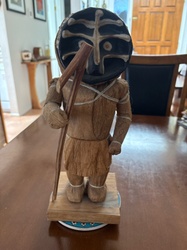
Hand-Carved African Figural Walking Stick

Folk Art / Ethnographic Collectibles

AI Estimated Value

·Not an official valuation·Verify before acting

$150 - $300

As of June 23, 2026

AI Item Analysis

·AI can make mistakes·Verify before acting
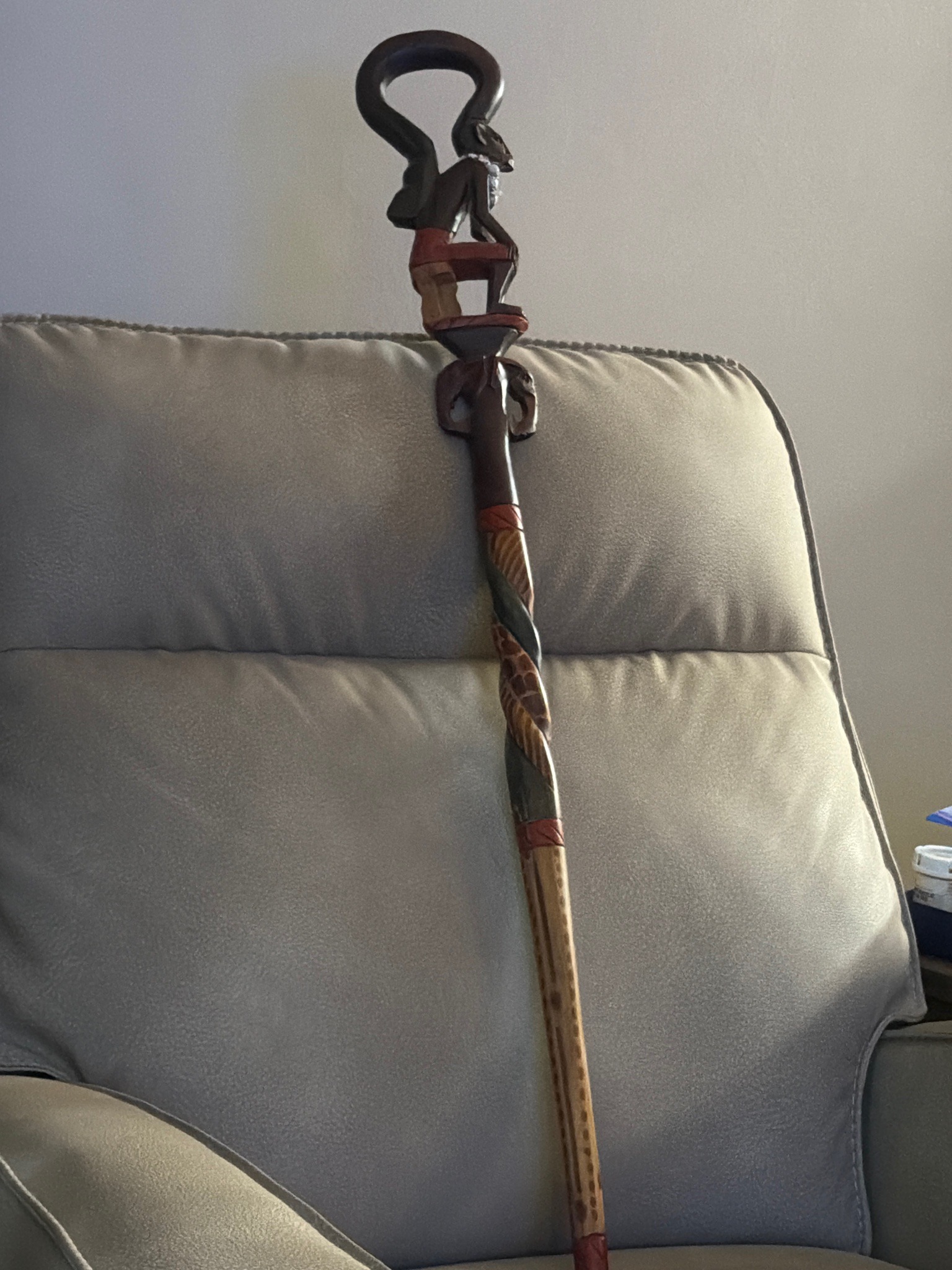
This is a decorative hand-carved wooden walking stick or cane, likely of East African origin (potentially Maasai or Akamba style). The piece is crafted from a single piece of hardwood, exhibiting a rich, multi-toned finish with segments of dark ebony-colored stain, reddish-brown hues, and a lighter natural wood tone. The most prominent feature is the ornate figural handle, which depicts a seated human figure in a crouched position beneath a curved loop, followed by a secondary carving of a head below the seated figure's platform. The shaft features sophisticated decorative elements, including a spiral-carved center section with intricate cross-hatched or scale-like textures, flanked by red painted bands. The lower portion of the shaft transitions into a lighter wood with a repeated stippled or burnt-dot pattern. The construction shows high-quality craftsmanship, with detailed facial features on the figures and precise geometric carving on the shaft. The condition appears to be excellent with no visible cracks or significant wood loss, displaying a lustrous polished finish that highlights the grain. This piece likely dates from the late 20th century to modern times, serving both as a functional walking aid and a significant piece of artisanal woodwork.
AI Appraisal Report

·AI can make mistakes·Verify before acting
This hand-carved walking stick, characterized by its complex figural handle and multi-textured shaft, represents a high-quality example of late 20th-century East African ethnographic craft. The piece demonstrates exceptional skill, particularly in the use of localized stains to mimic ebony and the precision of the spiral-carved center section. The condition is excellent, showing a well-maintained polished finish with no evidence of structural cracking or insect damage, which can often plague wooden collectibles of this origin. In the current market, African 'tourist' or artisanal folk art of this caliber sees steady demand, though it remains a niche segment. Comparable pieces typically sell within the $150 to $300 range at regional estate auctions and specialty ethnographic markets. Higher valuations are usually reserved for documented 19th-century pieces with established provenance and ritual use. The value here is driven by its aesthetic appeal and the labor-intensive nature of the carvings rather than historical rarity. As this appraisal is based on photographic evidence, please note that physical inspection is required to confirm the density and species of the wood (to determine if it is true ebony or a stained hardwood) and to check for hidden repairs. A full authentication would require provenance documentation detailing the original acquisition or importation. Without in-person examination, it is impossible to definitively rule out modern CNC-assisted base carving, though the varying depths of the stippled patterns suggest genuine hand-tooling.

Get your items appraised

Instant estimates of your treasures with AI-powered appraisals

Browse More Appraisals