AI Appraisal Estimate

AI-generated estimates · not official valuations

From the user

What was submitted

Photo and notes provided by the user — not generated by AI

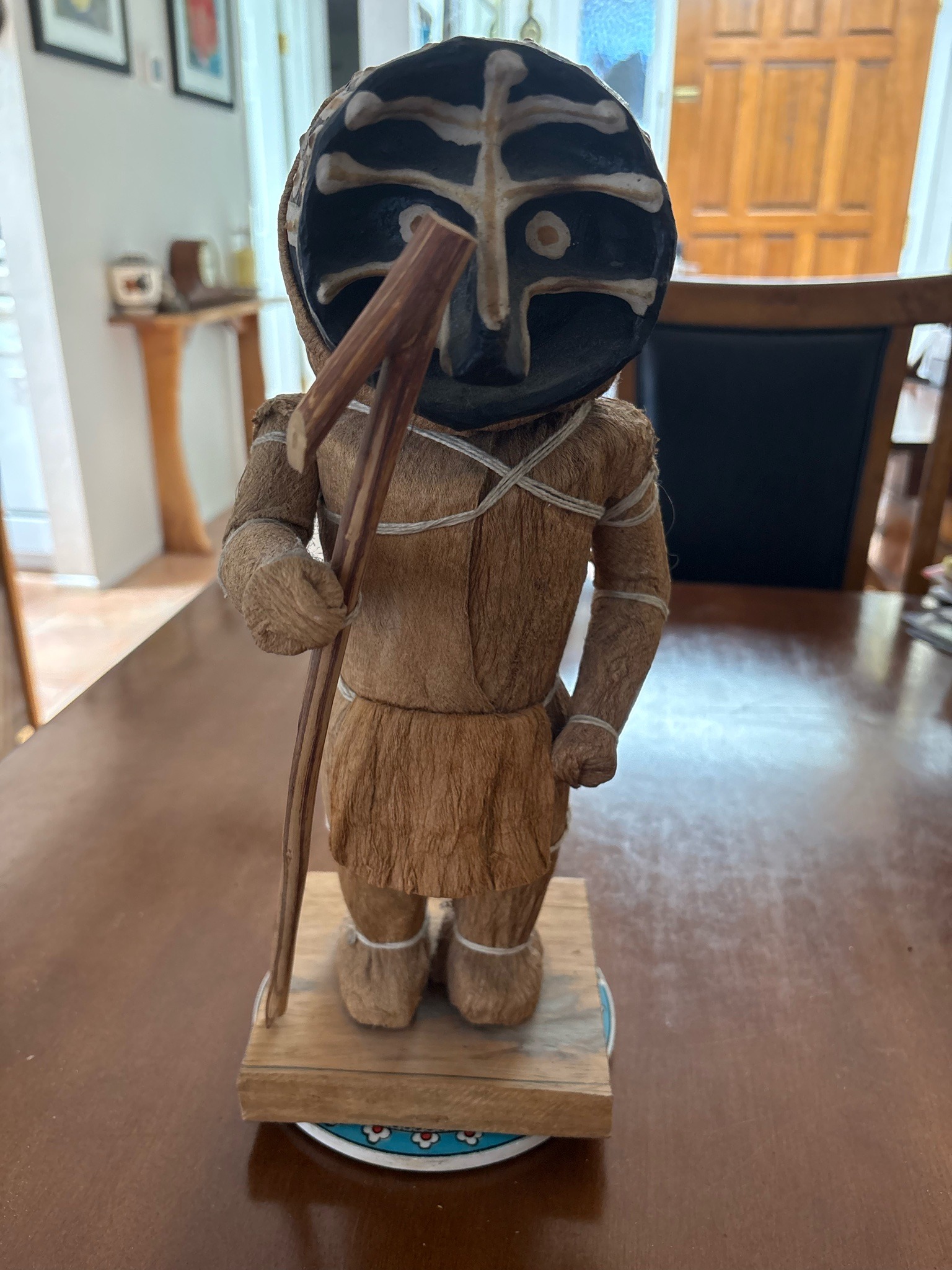
Submitted item photo
Submitted photo · May 24, 2026

User's notes

Authentic Amazon Yanomami Pygmy tribe kachina doll with blow gun and darts

AI analysis below

AI appraisal

AI analysis & estimate

AI-Generated · Verify before acting

Everything below is generated by AI for informational purposes only. AI can make mistakes — the AI may misidentify items or misattribute them (artist, maker, brand, designer, origin, era). This is not an official valuation and should not be used for insurance, sale, tax, estate, legal, or lending purposes — or any decision requiring a certified appraisal. It is not an authoritative claim about any person, brand, or rights holder — do not share or rely on it as a factual statement about a third party. Always consult qualified professionals before making financial decisions.

Note

This analysis also relies on unverified notes provided by the user, which may be incomplete or inaccurate and could affect the result.

Read the full disclaimer

AI Identification

·Not independently authenticated·Verify before acting

Folk Art Carved Figure with Mask and Hunting Implement

Folk Art and Ethnographic Objects

AI Estimated Value

·Not an official valuation·Verify before acting

$40-$125

As of May 24, 2026

AI Item Analysis

·AI can make mistakes·Verify before acting
This carved wooden figure stands approximately 10 to 12 inches tall, featuring a body constructed from textured brown bark or plant-fiber-wrapped wood. The figure wears a distinct black mask with white pigment highlights in a skeletal or zoomorphic pattern, including large circular eyes and a central vertical line with horizontal ribs. The torso is crisscrossed with light-colored twine or string, and the figure wears a short fibrous skirt. It holds a long wooden implement, possibly representing a blowgun or staff, with a forked top section. The feet are also bound with white cord. The entire piece is mounted on a plain, rectangular wooden base which itself rests on a circular decorative coaster. The owner identifies this as an 'Authentic Amazon Yanomami Pygmy tribe kachina doll with blow gun and darts,' but this attribution is unverified as there are no visible maker's marks, signatures, or tribal designations on the object itself. The term 'kachina' is also stylistically inconsistent with Amazonian cultures, as it typically refers to Hopi or Puebloan traditions of the American Southwest. The construction appears consistent with 20th-century folk art or ethnographic souvenir items manufactured for the travel market. The condition appears stable, though there is natural fraying and texture variations in the organic materials used.

AI Appraisal Report

·AI can make mistakes·Verify before acting
Based on my visual examination of the provided image, I have analyzed this carved figure, which the owner identifies as an 'Authentic Amazon Yanomami Pygmy tribe kachina doll.' It is important to note that the term 'kachina' is culturally associated with the American Southwest (Hopi/Pueblo) rather than the Yanomami of the Amazon basin, suggesting a possible misidentification or a naming convention used in the ethnographic souvenir market. The figure displays construction techniques consistent with 20th-century folk art, utilizing bark, plant fibers, and twine. The skeletal or zoomorphic mask and forked implement are stylized elements typical of items created for the travel and export trade. From the photo, I cannot verify the specific tribal origin or the age of the organic materials, as a physical inspection would be required to determine if the pigments and fibers show age-appropriate degradation or are modern applications. The value estimate of $40-$125 assumes the item is a mid-to-late 20th-century ethnographic souvenir. If the attribution to a specific Yanomami ritual context were supported by provenance or expert tribal analysis, the value could increase significantly; however, without such evidence, it is valued as decorative folk art. Conversely, if the materials are found to be purely synthetic or mass-produced, the value would likely fall below $25. Market demand for unassociated ethnographic figures is currently stable but favors pieces with documented collection history. To confirm the origin, an in-person assessment by an expert in South American indigenous material culture and a review of any available ownership history would be necessary. This estimate remains a hypothesis based on the visual characteristics of the object alone. Any definitive claim regarding tribal use would require scientific testing of the materials and pigments.

Get your items appraised

Instant estimates of your treasures with AI-powered appraisals

Browse More Appraisals