AI Appraisal Estimate

AI-generated estimates · not official valuations

From the user

What was submitted

Photo and notes provided by the user — not generated by AI

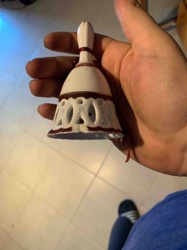
Submitted item photo
Submitted photo · June 15, 2026

User's notes

Old and rare white pearl pigeon and seashell bell

AI analysis below

AI appraisal

AI analysis & estimate

AI-Generated · Verify before acting

Everything below is generated by AI for informational purposes only. AI can make mistakes — the AI may misidentify items or misattribute them (artist, maker, brand, designer, origin, era). This is not an official valuation and should not be used for insurance, sale, tax, estate, legal, or lending purposes — or any decision requiring a certified appraisal. It is not an authoritative claim about any person, brand, or rights holder — do not share or rely on it as a factual statement about a third party. Always consult qualified professionals before making financial decisions.

Note

This analysis also relies on unverified notes provided by the user, which may be incomplete or inaccurate and could affect the result.

Read the full disclaimer

AI Identification

·Not independently authenticated·Verify before acting

Iridescent Ceramic Bird on Seashell Figurine Bell

Decorative Collectible Bell

AI Estimated Value

·Not an official valuation·Verify before acting

$20 - $45

As of June 15, 2026

AI Item Analysis

·AI can make mistakes·Verify before acting
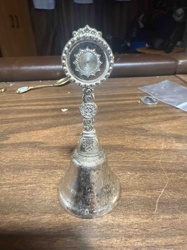
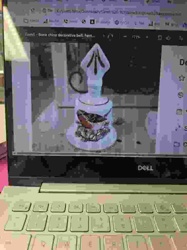
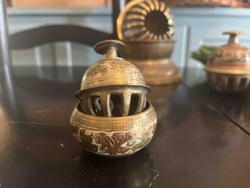
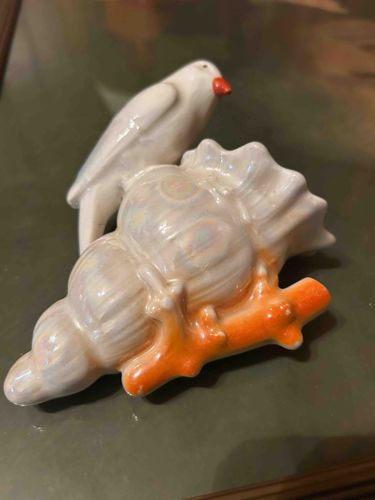
This appears to be a decorative ceramic bell, cleverly disguised as a figurine depicting a white bird perched atop a large seashell, with a branch of coral serving as the clapper. The item exhibits a predominantly white, iridescent glaze that reflects hues of pink, blue, and yellow, mimicking the shimmering quality of a pearl or natural nacre. The bird, likely a dove or pigeon as suggested by the context, is smooth and sleek with a distinct, small red beak, and small black eyes. It stands on the upper portion of the conch-like seashell. The seashell itself is intricately sculpted with realistic ridges and convolutions, typical of a conch. A vibrant orange branch of coral is molded into the underside or side of the seashell, acting as the clapper for the bell component, which is hinted at by the user's description. The material is glazed ceramic, suggesting a porcelain or earthenware composition. There are no immediately visible chips, cracks, or significant wear, indicating good preservation. The craftsmanship appears to be of good quality, with detailed sculpting of both the bird and the shell. The overall aesthetic suggests a mid-20th century decorative item, possibly from the 1950s or 1960s, a period known for such whimsical and pearlescent ceramic collectibles. No visible maker's marks or signatures are discernible from the provided images.
AI Appraisal Report

·AI can make mistakes·Verify before acting
Upon examining the images of this Iridescent Ceramic Bird on Seashell Figurine Bell, I find it to be a charming mid-20th century decorative collectible. The item appears to be in excellent condition, with no visible chips, cracks, or crazing to the pearlescent glaze. The high-gloss, iridescent finish, combined with the whimsical subject matter of a bird on a shell with a coral clapper, is very typical of decorative ceramics produced in Japan or the United States during the 1950s and 1960s. The owner's description of 'old and rare' is subjective. While these pieces are vintage, they were often mass-produced and are not exceptionally rare today. The market for such unbranded decorative ceramics is driven by collectors of specific themes (birds, bells, nautical) and by general nostalgia. Comparable iridescent ceramic bells from this era typically sell in the $20 to $45 range at online marketplaces and antique shops. The primary value driver is its excellent visual condition and decorative appeal. A significant limitation of this appraisal is the inability to physically inspect the piece. A hands-on examination is required to feel for hairline cracks, restorations, and to search for any faint maker's marks on the base or interior which could significantly alter the value. Without identifying a manufacturer (like Lefton, Napco, or a specific Japanese maker), the item is valued as a well-preserved, but generic, example of its kind. Full authentication and a more precise valuation would require physical inspection for marks and a review of period-specific ceramic catalogs.

Get your items appraised

Instant estimates of your treasures with AI-powered appraisals

Browse More Appraisals