AI Appraisal Estimate

AI-generated estimates · not official valuations

From the user

What was submitted

Photo and notes provided by the user — not generated by AI

Submitted item photo
Submitted photo · June 17, 2026

User's notes

No additional notes provided.

AI analysis below

AI appraisal

AI analysis & estimate

AI-Generated · Verify before acting

Everything below is generated by AI for informational purposes only. AI can make mistakes — the AI may misidentify items or misattribute them (artist, maker, brand, designer, origin, era). This is not an official valuation and should not be used for insurance, sale, tax, estate, legal, or lending purposes — or any decision requiring a certified appraisal. It is not an authoritative claim about any person, brand, or rights holder — do not share or rely on it as a factual statement about a third party. Always consult qualified professionals before making financial decisions.

Read the full disclaimer

AI Identification

·Not independently authenticated·Verify before acting

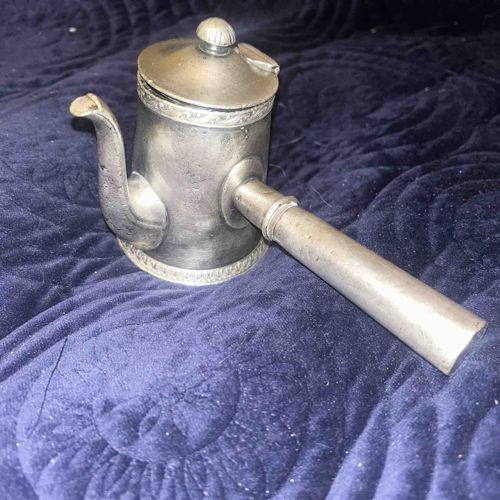
Antique Pewter Chocolate Pot or Beverage Warmer

Antiques & Collectibles

AI Estimated Value

·Not an official valuation·Verify before acting

$150-250

As of June 17, 2026

AI Item Analysis

·AI can make mistakes·Verify before acting
This item appears to be an antique pewter chocolate pot or a specialized beverage warmer, possibly for keeping drinks warm in bed. It features a cylindrical body with a hinged domed lid, topped with a small, spherical knob finial for easy opening. A distinctive elongated spout extends from one side, and a straight, tubular handle protrudes horizontally from the opposite side, suggesting it was designed to be held or perhaps rested on a heat source. The entire piece is constructed from what appears to be pewter, given its silvery-gray, slightly dull, and distressed metallic finish, consistent with aged tin-lead or tin-antimony alloys. The surface exhibits a significant degree of patina, with visible scratches, scuffs, and possibly some minor dents or irregularities, indicative of its age and use. There is delicate decorative banding around the rim of the pot and at its base, featuring a recurring floral or foliate pattern, adding a touch of elegance to the otherwise utilitarian form. The craftsmanship suggests it might be hand-wrought or cast and assembled, with visible seams or joints where the spout and handle attach to the main body. The absence of specific maker's marks is noted from the visible portions. Based on its form and typical materials for such objects, it likely dates from the late 18th to the mid-19th century. The condition, while showing wear, appears structurally sound, without significant breaks or repairs visible in the provided image.

AI Appraisal Report

·AI can make mistakes·Verify before acting
Upon visual examination of this pewter pot, its form—a cylindrical body with a long spout, hinged lid, and horizontal handle—is consistent with beverage warmers or chocolate pots dating from the late 18th to mid-19th century. The material appears to be pewter, displaying a silvery-gray patina, scuffs, and scratches that align with its purported age and utilitarian function. The decorative banding at the rim and base adds a touch of refinement. While structurally sound from the image, the piece shows considerable surface wear, which is typical for pewter of this era and generally accepted by collectors. The current market for antique pewter of this type is stable but modest. Similar, unmarked European or American pewter chocolate pots from this period typically sell in the $150 to $250 range at auction. The value is significantly influenced by the maker. Without any visible maker's marks, it is appraised as a generic, albeit attractive, example of the form. The demand is niche, primarily appealing to specialized collectors of early metalware or period home décor enthusiasts. Rarity is moderate; while these pots are not common, many examples survive. It is crucial to note the limitations of an appraisal based on images alone. I cannot definitively verify the pewter alloy's composition, confirm authenticity, or rule out later repairs or reproductions without a physical inspection. For full authentication, an in-person examination to search for hidden touchmarks, X-ray fluorescence (XRF) testing to analyze the metal content, and a review of any provenance documentation would be required. The absence of a discernible maker's mark is the primary factor limiting its value.

Get your items appraised

Instant estimates of your treasures with AI-powered appraisals

Browse More Appraisals