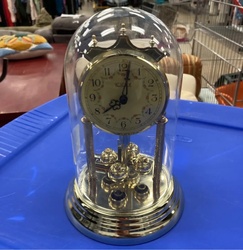
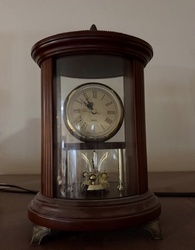
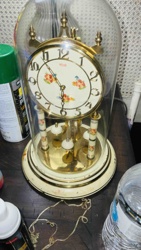
These notes were written by the person who submitted this item. Appraiser.AI has not verified them, and the AI's identification and estimate may rely on them.
AI Estimated Value
Not an official valuation
$75-125
AI estimate as of November 6, 2025 · verify with a professional before acting
AI-Generated · Verify before acting
Everything on this page is generated by AI for informational purposes only. AI can make mistakes — the AI may misidentify items or misattribute them (artist, maker, brand, designer, origin, era). This is not an official valuation and should not be used for insurance, sale, tax, estate, legal, or lending purposes — or any decision requiring a certified appraisal. It is not an authoritative claim about any person, brand, or rights holder — do not share or rely on it as a factual statement about a third party. Always consult qualified professionals before making financial decisions.
This analysis also relies on unverified notes provided by the user, which may be incomplete or inaccurate and could affect the result.
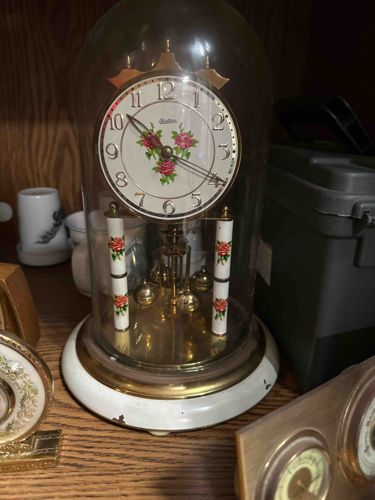
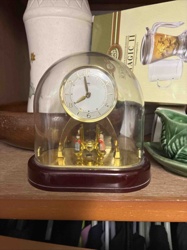
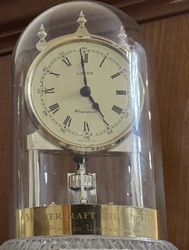
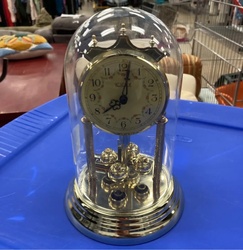
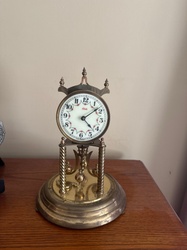
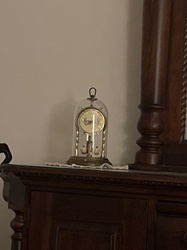
This is a vintage Kienzle anniversary clock, also known as a '400-day clock,' characterized by its rotating pendulum movement. The clock is encased in a clear glass dome, which rests on a two-tiered base. The lower tier of the base is painted in an off-white or cream enamel, which shows significant chipping and wear, particularly around the edges, revealing what appears to be a darker material or original finish beneath. The upper tier of the base, beneath the glass dome, is a polished brass-tone metal, which also exhibits some patina and minor signs of age. The clock dial is round and features Arabic numerals for hour markers, rendered in a simple, legible font. 'Kienzle' is prominently printed on the upper half of the dial. The center of the dial is adorned with a decorative rose motif, depicting clusters of pink and red roses with green foliage, adding a charming, somewhat traditional aesthetic. The hour and minute hands are simple, unadorned metal in a dark finish. Below the clock mechanism, two decorative pillars, likely ceramic or painted metal, are present, each featuring a complementary rose and foliage design, mirroring the dial. The torsion pendulum, characteristic of anniversary clocks, consists of several brass-toned spheres, suspended on a thin wire, designed for slow, continuous rotation. The overall style suggests a mid-20th-century European manufacture, consistent with Kienzle's known production periods for such clocks. While the glass dome appears intact, the visible wear on the base indicates a history of use and handling. The brass components show a natural aged patina. The intricate movement and the delicate decoration are indicators of a moderately crafted timepiece of its era.
AI Appraisal Report
Based on my examination of the provided image and description, this Kienzle Anniversary Clock with a rose motif appears to be an authentic example of a mid-20th-century '400-day' clock. The branding 'Kienzle' on the dial, the characteristic torsion pendulum, and the general aesthetic align with known productions from this manufacturer during that period. I assess its condition as fair to good, primarily due to the significant chipping and wear on the off-white enamel base. This wear is quite prominent and negatively impacts its aesthetic appeal. The brass components show a natural patination consistent with age, and the glass dome seems intact, which is a positive. The rose motif on the dial and decorative pillars adds a charming, albeit common, decorative element for these types of clocks.
From a market perspective, vintage anniversary clocks are generally not highly sought after unless they possess exceptional rarity, provenance, or pristine condition. The market for these clocks is moderate, primarily appealing to collectors of specific clock types or those decorating in a vintage style. This particular Kienzle, while authentic, doesn't present any exceptionally rare features or an uncommon design that would significantly elevate its value. The wear on the base is a detractor, reducing its desirability to some buyers. Comparable Kienzle anniversary clocks in similar or slightly better condition typically sell in the $75-$150 range, with pristine examples fetching a bit more. The intricate movement is appealing, but as observed from an image, its current functional status cannot be determined.
Factors impacting value include the brand authenticity (which appears good), the decorative motif (common), and most significantly, the condition of the base. The lack of a pristine finish on the base will lower its potential market price. Rarity is not a significant factor here; Kienzle produced many such clocks.
My assessment is limited by the visual nature of this appraisal. To fully authenticate and assess its value, an in-person examination would be necessary to verify the clock's operational status (does it run and keep time?), inspect the condition of the torsion spring, and confirm that all internal components are original Kienzle parts. Furthermore, examining the wear on the base up close could reveal if it’s surface chipping or a deeper structural issue. Provenance documentation, such as original purchase receipts or service records, would also provide a more complete history and verify authenticity. Without these, the appraisal remains based solely on visual cues and typical market conditions for similar items.