AI Appraisal Estimate

AI-generated estimates · not official valuations

From the user

What was submitted

Photo and notes provided by the user — not generated by AI

Submitted item photo
Submitted photo · June 10, 2026

User's notes

No additional notes provided.

AI analysis below

AI appraisal

AI analysis & estimate

AI-Generated · Verify before acting

Everything below is generated by AI for informational purposes only. AI can make mistakes — the AI may misidentify items or misattribute them (artist, maker, brand, designer, origin, era). This is not an official valuation and should not be used for insurance, sale, tax, estate, legal, or lending purposes — or any decision requiring a certified appraisal. It is not an authoritative claim about any person, brand, or rights holder — do not share or rely on it as a factual statement about a third party. Always consult qualified professionals before making financial decisions.

Read the full disclaimer

AI Identification

·Not independently authenticated·Verify before acting

Vintage Japanese Demitasse Cup and Saucer Set

Tableware - Demitasse Set

AI Estimated Value

·Not an official valuation·Verify before acting

$25-45

As of June 10, 2026

AI Item Analysis

·AI can make mistakes·Verify before acting
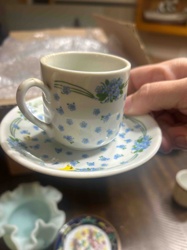
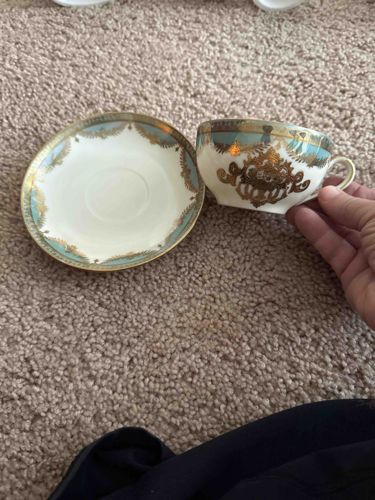
This is a vintage demitasse cup and saucer set, likely originating from Japan, characterized by its ornate decoration. The set features a creamy white porcelain or bone china base. The cup has a typical demitasse size, suggesting it was designed for serving espresso or strong coffee. Both the cup and saucer are adorned with a meticulously hand-painted or printed design in a rich turquoise or light blue enamel, combined with extensive gilded detailing. The gilding is prominent, forming intricate rococo-inspired scrollwork and floral motifs, particularly around the rim of the saucer and the mid-section of the cup. A broad band of the turquoise color encircles the interior rim of the cup and the outer edge of the saucer, bordered by the gilt pattern. The cup features an ear-shaped handle, also highlighted with gilding. The overall condition appears good, with no immediately visible chips, cracks, or significant crazing, though some minor wear to the gilding, common with age and handling, may be present upon closer inspection. The intricate design and delicate nature of the pieces suggest a mid-20th century manufacturing period, possibly post-WWII Japan, when such decorative porcelain was frequently exported. The quality of the gilding and the detailed artwork points to a moderately high level of craftsmanship for its type. The absence of visible maker's marks prevents more precise identification without further examination.
AI Appraisal Report

·AI can make mistakes·Verify before acting
Upon visual examination of the provided images, I have assessed this Japanese demitasse cup and saucer set. The piece presents in what appears to be very good vintage condition, with no immediately discernible chips, cracks, or significant crazing. The turquoise enamel and extensive gilt overlay, featuring rococo-style scrollwork, are vibrant and largely intact, indicating it was well-cared-for. The style is characteristic of mid-20th century Japanese export porcelain, a period when manufacturers catered heavily to Western tastes for ornate decorative wares. The primary factor limiting the value of this set is the absence of a visible maker's mark. Unmarked pieces, while often beautifully crafted, are difficult to attribute to sought-after kilns like Noritake, Kutani, or Okura, making them less desirable to serious collectors. The market for such unmarked Japanese porcelain is quite saturated. Comparable unmarked, highly decorated demitasse sets from this era typically sell in the $25 to $45 range at auction and on secondary online marketplaces. While the craftsmanship is of a good standard for export ware, its value lies more in its decorative appeal than its rarity or provenance. It is crucial to note the limitations of an appraisal based solely on images. I cannot definitively authenticate the materials (e.g., porcelain vs. bone china), confirm the application method of the decoration (hand-painted vs. transferware with hand-embellishment), or feel for subtle wear to the gilding. A full an in-person examination, including using a loupe to inspect the details of the paint and gilding and checking the base for any faint impressed marks under magnification, would be required for complete verification.

Get your items appraised

Instant estimates of your treasures with AI-powered appraisals

Browse More Appraisals