AI estimate as of August 15, 2025 · verify with a professional before acting
AI-Generated · Verify before acting
Everything on this page is generated by AI for informational purposes only. AI can make mistakes — the AI may misidentify items or misattribute them (artist, maker, brand, designer, origin, era). This is not an official valuation and should not be used for insurance, sale, tax, estate, legal, or lending purposes — or any decision requiring a certified appraisal. It is not an authoritative claim about any person, brand, or rights holder — do not share or rely on it as a factual statement about a third party. Always consult qualified professionals before making financial decisions.
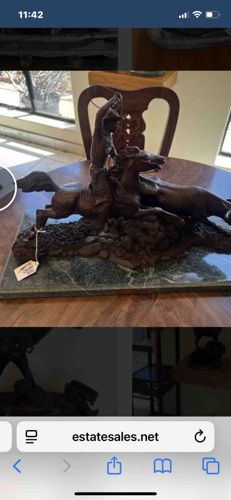
This item is a bronze sculpture depicting a dynamic scene of a rider on horseback, accompanied by another running horse, possibly engaging in a hunt or pursuit. The sculpture is mounted on a rectangular, polished green marble base, which provides a striking contrast to the dark patina of the bronze. The overall dimensions appear substantial, suitable for a tabletop or pedestal display. The bronze itself exhibits a rich, dark brown patina, suggesting age or an intended antique finish. Details such as the musculature of the horses and the attire of the rider are rendered with a degree of realism, indicating good craftsmanship. The composition skillfully captures motion, with the horses in mid-stride and the rider leaning forward, creating a sense of urgency and energy. There are no readily apparent condition issues from the image, such as significant damage, repairs, or excessive wear, though a closer inspection would be required to confirm. The marble base shows some natural veining characteristic of the stone. A small, handwritten tag is visible hanging from the sculpture, likely an inventory or sale tag, which implies it may be part of an estate sale or gallery inventory. Based on the style and subject matter, this piece likely dates from the late 19th to early 20th century, a period when equestrian themes were popular in decorative arts, particularly in bronze. The quality of the casting and the artistic execution suggest it is a well-made decorative or fine art piece.
AI Appraisal Report
Upon visual examination of this equestrian bronze sculpture on a marble base, I find it to be a well-crafted piece, likely dating from the late 19th to early 20th century. The dark brown patina is consistent with age and intentional antique finishes. Details of musculature and rider attire are rendered with good realism, capturing dynamic motion. From the image, the condition appears excellent, with no readily apparent damage, repairs, or excessive wear. The green marble base complements the bronze well.
Market conditions for decorative bronzes, especially equestrian themes, are stable. Comparable pieces of similar size, quality, and age often achieve values in the mid-to-high hundreds to low thousands. Demand for well-executed historical bronzes remains consistent among collectors of fine decorative arts. This piece, while not unique, represents a popular artistic motif.
The small, handwritten tag suggests it may be from an estate or gallery inventory, which typically means it has been cataloged or priced for imminent sale, influencing its current market position. Several factors impact value: the quality of the casting, the artistic merit, the condition, and provenance. This piece scores well on the first three.
It is important to note the limitations of assessing authenticity from images alone. While the style and apparent craftsmanship are consistent with the period, in-person examination would be required to verify the quality of the casting and ensure it's not a later reproduction. Physical inspection would allow for tactile assessment of the patina, examination of any foundry marks, and closer scrutiny for repairs or damage not visible in the photo. Provenance documentation, if available, would significantly enhance value and confirm authenticity. Scientific testing, such as material analysis, would only be pursued if significant doubt arose during physical inspection.