From the user

What was submitted

Photo and notes provided by the user — not generated by AI

Submitted item photo
Submitted photo · May 15, 2026

User's notes

No additional notes provided.

AI analysis below

AI appraisal

AI analysis & estimate

AI-Generated · Verify before acting

Everything below is generated by AI for informational purposes only. AI can make mistakes — the AI may misidentify items or misattribute them (artist, maker, brand, designer, origin, era). This is not an official valuation and should not be used for insurance, sale, tax, estate, legal, or lending purposes — or any decision requiring a certified appraisal. It is not an authoritative claim about any person, brand, or rights holder — do not share or rely on it as a factual statement about a third party. Always consult qualified professionals before making financial decisions.

Read the full disclaimer

AI Identification

·Not independently authenticated·Verify before acting

Vintage Pyrene Vaporizing Liquid Fire Extinguisher

Vintage Firefighting Equipment and Industrial Collectibles

AI Estimated Value

·Not an official valuation·Verify before acting

$65 - $110

As of May 15, 2026

AI Item Analysis

·AI can make mistakes·Verify before acting
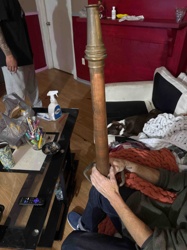
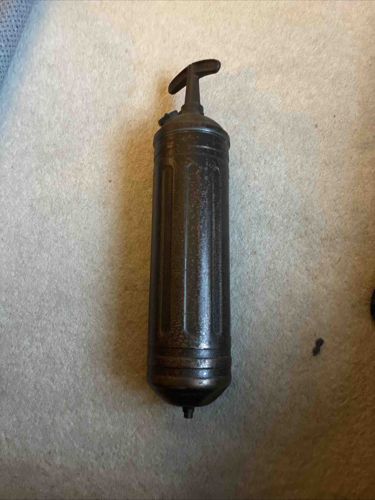
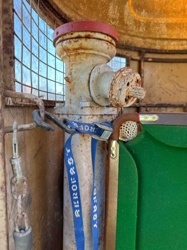
This is a vintage hand-pump style fire extinguisher, likely manufactured by the Pyrene Manufacturing Company, dating from the early to mid-20th century (circa 1920s-1950s). The item features a cylindrical body made of heavy-gauge brass or copper with a dark, naturally aged patina showing significant oxidation and surface wear. It is approximately 13 to 15 inches in height. The body is characterized by vertical recessed fluting or ribs intended for grip, along with horizontal banding at the top and bottom. It features a T-handle pump grip at the apex, which appears to be made of cast metal. A small nozzle is visible at the very bottom, while a textured filler cap is located on the shoulder of the cylinder. There is an area for a brass identification plate on the front, though it appears heavily tarnished or missing in the image. The condition is consistent with age, showing a mottled surface with darkening, minor pitting, and some potential verdigris. These units originally contained carbon tetrachloride, which is now known to be toxic, making current functionality secondary to its value as a historical industrial collectible. The craftsmanship is robust, typical of industrial safety equipment from the pre-war era.
AI Appraisal Report

·AI can make mistakes·Verify before acting
Based on my visual examination of this vintage Pyrene vaporizing liquid fire extinguisher, I have assessed it as an authentic industrial piece from the mid-20th century. The heavy-gauge brass body exhibits a deep, authentic patina with significant oxidation and verdigris, which is highly desirable for collectors seeking an 'as-found' industrial aesthetic. The integrity of the T-handle and the presence of the original filler cap suggest a complete unit, though the heavy tarnishing of the identification plate—a primary value driver—reduces its desirability compared to pristine, polished examples. The market for early firefighting equipment remains steady, with brass hand-pump extinguishers serving as popular 'crossover' items for both fire history enthusiasts and interior decorators. Comparable sales for unpolished Pyrene units of this size and condition typically fall within the $60 to $100 range. While Pyrene manufactured these in high volumes, making them relatively common, the specific fluted ribbing on this model adds a slight premium over smooth-sided variants. Several factors impact this valuation. The presence of carbon tetrachloride residue is a notable safety concern; value is often higher if the unit has been professionally drained. Furthermore, the lack of a legible brass label significantly caps the value, as the graphic elements of the label are often the centerpiece for collectors. Limitations: This appraisal is based solely on digital images. Without physical inspection, I cannot verify the mechanical state of the internal pump or the presence of punctures. A full authentication would require an in-person investigation of the manufacturer's stamps on the base and chemical testing to ensure the toxic contents have been safely mitigated. Provenance regarding its specific service history (e.g., use in a specific municipal fire department) would further enhance its market value.

Get your items appraised

Instant estimates of your treasures with AI-powered appraisals

Browse More Appraisals