AI estimate as of November 3, 2025 · verify with a professional before acting
AI-Generated · Verify before acting
Everything on this page is generated by AI for informational purposes only. AI can make mistakes — the AI may misidentify items or misattribute them (artist, maker, brand, designer, origin, era). This is not an official valuation and should not be used for insurance, sale, tax, estate, legal, or lending purposes — or any decision requiring a certified appraisal. It is not an authoritative claim about any person, brand, or rights holder — do not share or rely on it as a factual statement about a third party. Always consult qualified professionals before making financial decisions.
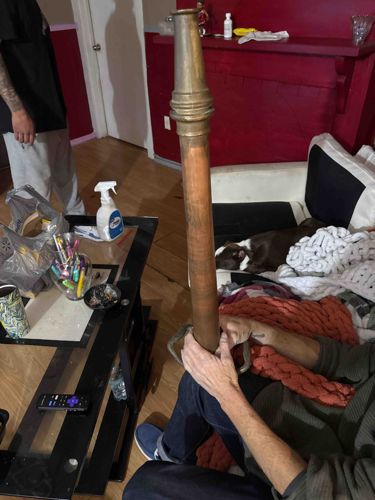
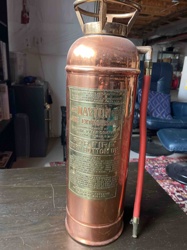
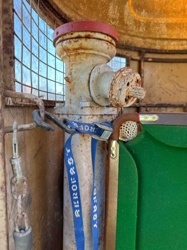
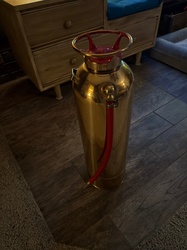
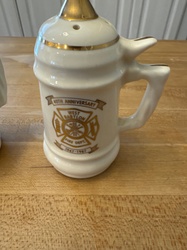
This item is a vintage fire hose nozzle, constructed primarily from brass and copper, giving it a distinct two-toned metallic appearance. The upper section, which tapers towards the discharge opening, is made of brass, exhibiting a golden-brown patina consistent with age and exposure. This brass section features several concentric rings or ridges, likely for grip or structural reinforcement, and shows signs of tarnishing and minor surface abrasions. The main body of the nozzle, which constitutes the majority of its length, appears to be made of copper or a copper alloy, displaying a rich, reddish-brown hue. This copper section has a smooth, cylindrical form and also shows an aged patina, along with some surface marks and possibly minor indentations which are difficult to ascertain precisely from the image. The overall length of the nozzle is substantial, suggesting it was designed for heavy-duty firefighting applications, possibly for municipal or industrial use. At the lower end, where it would connect to a fire hose, there are visible handles or grips, likely also made of brass, designed for manipulating the nozzle during operation. These handles appear to be loop-shaped or curved, suggesting a design for securing and controlling the water flow. The craftsmanship appears robust and utilitarian, typical of early to mid-20th-century industrial equipment. There are no clear manufacturer's marks or signatures visible from the provided images, but its construction points to a period when such equipment was built for durability and effectiveness. The wear and patina suggest it has been in use and has not been recently polished or restored, retaining its historical character. Its substantial size and robust materials indicate a high-quality piece of machinery for its intended purpose.
AI Appraisal Report
Upon examining the image of this vintage brass and copper fire hose nozzle, I assess its condition as good, consistent with its age and intended heavy-duty use. The two-toned metallic construction, with aged brass and copper, exhibits a desirable patina that collectors often value, indicating authenticity and lack of recent restoration. Surface abrasions and minor tarnishing are expected. The craftsmanship appears robust, typical of early to mid-20th-century industrial firefighting equipment. The substantial size suggests its use in municipal or industrial settings, adding to its historical interest.
Market conditions for vintage firefighting equipment are generally stable, with a niche but dedicated collector base. Comparable items, especially those with an attractive brass and copper combination and good display presence, tend to fetch reasonable prices. Demand for such functional historical pieces is moderate. This item's appeal lies in its decorative qualities as a display piece, its historical significance, and its robust utilitarian design. The absence of clear manufacturer's marks limits its value somewhat, as specific branding can sometimes significantly increase collectibility and value.
Without a physical inspection, I cannot ascertain the exact alloy composition, internal mechanics, or the extent of any internal wear or damage. Furthermore, direct examination would allow for a more precise assessment of surface imperfections, structural integrity, and the definitive identification of any faint markings. Provenance documentation, detailing its history of ownership or use, would also greatly enhance its value and confirm its authenticity. However, based purely on visual assessment, this is an authentic period piece from the early to mid-20th century.