AI estimate as of September 19, 2025 · verify with a professional before acting
AI-Generated · Verify before acting
Everything on this page is generated by AI for informational purposes only. AI can make mistakes — the AI may misidentify items or misattribute them (artist, maker, brand, designer, origin, era). This is not an official valuation and should not be used for insurance, sale, tax, estate, legal, or lending purposes — or any decision requiring a certified appraisal. It is not an authoritative claim about any person, brand, or rights holder — do not share or rely on it as a factual statement about a third party. Always consult qualified professionals before making financial decisions.
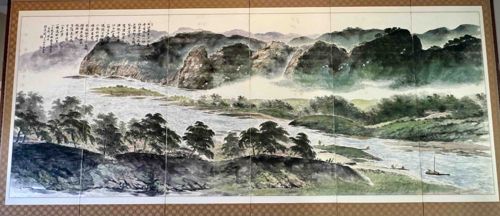
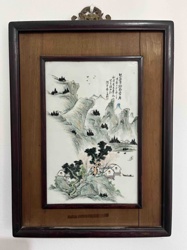
This item is a multi-panel folding screen featuring an expansive landscape painting, likely executed with ink and watercolor on paper or silk. The painting depicts a serene, mountainous river scene, characterized by a soft, atmospheric perspective. The colors are predominantly muted greens, grays, and whites, with touches of light brown, creating a tranquil and somewhat misty ambiance. Darker inks are used for defining tree foliage, mountainous contours, and foreground landmasses, providing depth and contrast. The composition is divided into multiple vertical panels, suggested by the subtle lines in the image, indicating a construction typical of screens. Calligraphy, possibly a poem or artist's inscription, is visible in the upper left quadrant of the painting, along with what appears to be a red seal, which could be an artist's signature or stamp. The screen itself has a visible border, which appears to be a patterned textile or paper, possibly mimicking a woven texture, in shades of brown and tan. The overall condition appears to be good, with no obvious tears or significant discoloration visible from the provided images, although close inspection would be required to identify subtle wear, fading, or minor damage associated with age. The style suggests an East Asian origin, either Japanese or Chinese, and could date from the late 19th to mid-20th century, given the artistic techniques and subject matter common during those periods. The quality of the brushwork and the detailed yet fluid rendering of the landscape components suggest a skilled artist and craftsmanship, indicating it is likely a decorative art piece of some substance.
AI Appraisal Report
Upon examining the provided image of this multi-panel folding screen, I assess its condition as good, with no overt tears, significant discoloration, or major structural damage visible. The colors appear well-preserved, and the intricate brushwork remains distinct. Authenticity, based solely on visual cues, points to an East Asian origin, likely Japanese or Chinese, consistent with the late 19th to mid-20th century. The calligraphy and red seal are strong indicators of authenticity but require closer inspection to decipher and verify the artist's identity.
In terms of market conditions, decorative screens of this type, especially those with well-executed landscape paintings, are consistently sought after. Comparable sales for similar quality screens, predominantly found in regional auction houses and online art marketplaces, suggest a robust demand for pieces that exhibit fine craftsmanship and a tranquil aesthetic. The muted color palette and atmospheric perspective contribute to its appeal, fitting well into various interior design schemes.
Demand for such screens remains steady, driven by collectors and interior designers. While not exceptionally rare, a screen of this quality with an intact, well-preserved painting is less common than mass-produced alternatives. Factors significantly impacting its value include the skilled brushwork, the apparent good condition, and the presence of artist's marks. A more precise identification of the artist or specific school would undoubtedly elevate its value.
Limitations in authenticity verification from images alone are significant. I cannot definitively confirm the material (paper vs. silk), detect subtle fading, minor repairs, or pinpoint the exact age without a physical examination. To provide full authentication, an in-person examination is crucial to assess the material's integrity, brushstroke application, and the quality of the backing. Expert analysis of the calligraphy and seal would be vital to identify the artist and provide provenance documentation, which is the gold standard for full authentication and value maximization.