AI identification & appraisal estimate

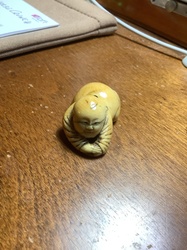
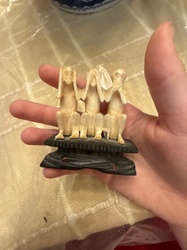
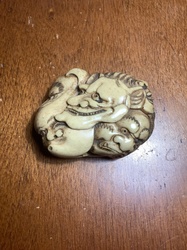
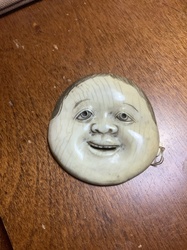
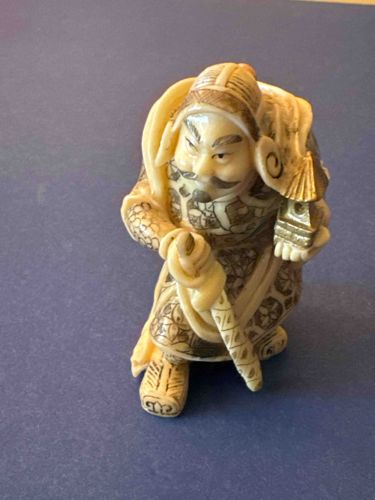
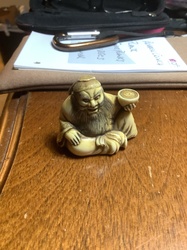
Japanese Ivory Netsuke of a Warrior or Deity with Pagoda/Lantern

Submitted photo of Japanese Ivory Netsuke of a Warrior or Deity with Pagoda/Lantern
Photo submitted by the user — not generated by AI

User's notes

Japanese figure

These notes were written by the person who submitted this item. Appraiser.AI has not verified them, and the AI's identification and estimate may rely on them.

AI Estimated Value

Not an official valuation

$400-600

AI estimate as of August 9, 2025 · verify with a professional before acting

AI-Generated · Verify before acting

Everything on this page is generated by AI for informational purposes only. AI can make mistakes — the AI may misidentify items or misattribute them (artist, maker, brand, designer, origin, era). This is not an official valuation and should not be used for insurance, sale, tax, estate, legal, or lending purposes — or any decision requiring a certified appraisal. It is not an authoritative claim about any person, brand, or rights holder — do not share or rely on it as a factual statement about a third party. Always consult qualified professionals before making financial decisions.

This analysis also relies on unverified notes provided by the user, which may be incomplete or inaccurate and could affect the result.

Read the full disclaimer

AI Item Analysis

This is a detailed Japanese Netsuke, carved from what appears to be ivory or a similar bone material, demonstrating exquisite craftsmanship. The figure depicts a stern-faced male character, possibly a warrior or deity, rendered in a kneeling or crouched pose, suggesting readiness or contemplation. He has a prominent mustache and goatee, and his expression is focused, with furrowed brows. The material is a creamy off-white color, consistent with aged ivory, and shows a natural patina with some areas, particularly the incised details, darkened, suggesting age and handling. This dark coloration highlights the intricate patterns on the figure's clothing which include geometric motifs and floral elements, possibly signifying rich textiles. The figure holds an object that resembles a small, multi-tiered pagoda or lantern in his right hand, and a staff-like object in his left. The carving exhibits fine lines and smooth surfaces, indicative of skilled artisan work. There are no obvious signs of significant damage such as chips or cracks, only minor surface wear consistent with age and typical handling of a Netsuke. The craftsmanship emphasizes the musculature and folds of the drapery, adding to the realism and depth of the piece. The base of the figure shows flat areas, typical for a Netsuke designed to rest securely. While not visible in these images, a traditional Netsuke would have an 'himotoshi' – two small holes for a cord to pass through, used to secure an 'inro' (container) to a kimono obi. The estimated age would likely be Meiji Period (1868-1912) or earlier, given the style and apparent material.
AI Appraisal Report

Upon examination of the provided images, this Japanese netsuke presents as a finely carved piece, likely from the Meiji period (1868-1912). The subject, a warrior or deity holding a pagoda, is a classic motif. The craftsmanship is of high quality, evident in the detailed rendering of the figure's facial expression, the intricate patterns on the robe, and the smooth finish of the surfaces. The patina, with darkened incised lines, suggests genuine age and handling consistent with a functional netsuke. The condition appears very good, with no major chips or cracks noted, only minor surface wear expected for an item of this vintage. However, authentication of the material as genuine elephant ivory versus bone or other substitutes is not possible from images alone. A definitive assessment would require in-person examination, including a 'hot pin' test or preferably more advanced, non-destructive methods like Schreger line analysis. The signature (or lack thereof) is a critical value factor that cannot be determined from the images provided. A signature from a known master carver would elevate the value substantially. The current market for antique Japanese decorative arts, including netsuke, is stable, with strong demand for high-quality, authentic pieces. This item's appeal is broad due to its subject matter and evident skill.

Keep exploring

More netsuke | decorative arts appraisals

Get your items appraised

Instant AI-powered appraisal estimates from a photo

Browse More Appraisals