AI Appraisal Estimate

AI-generated estimates · not official valuations

From the user

What was submitted

Photo and notes provided by the user — not generated by AI

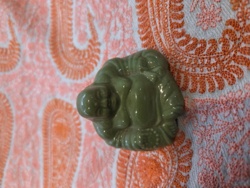
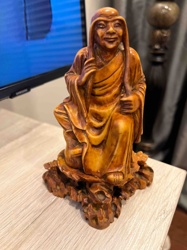
Submitted item photo
Submitted photo · May 25, 2026

User's notes

No additional notes provided.

AI analysis below

AI appraisal

AI analysis & estimate

AI-Generated · Verify before acting

Everything below is generated by AI for informational purposes only. AI can make mistakes — the AI may misidentify items or misattribute them (artist, maker, brand, designer, origin, era). This is not an official valuation and should not be used for insurance, sale, tax, estate, legal, or lending purposes — or any decision requiring a certified appraisal. It is not an authoritative claim about any person, brand, or rights holder — do not share or rely on it as a factual statement about a third party. Always consult qualified professionals before making financial decisions.

Read the full disclaimer

AI Identification

·Not independently authenticated·Verify before acting

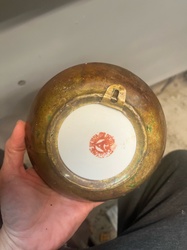
Carved Bovine Bone or Cinnabar-Stained Resin Rabbit Netsuke Style Figurine

Asian Decorative Arts & Collectibles

AI Estimated Value

·Not an official valuation·Verify before acting

$45.00 - $85.00

As of May 25, 2026

AI Item Analysis

·AI can make mistakes·Verify before acting
This item is a compact, intricately carved sculptural piece depicting a cluster of huddled rabbits or hares, styled after a Japanese katabori netsuke. The piece is characterized by a dense, rounded composition where multiple figures are intertwined, creating a tactile and organic form. The material appears to be either bone or a high-quality resin composite designed to mimic aged ivory or bone. It features a cream-colored base with a heavy brown or ochre staining within the recessed areas to accentuate the fine-line carving that represents fur texture. The surface exhibitions a varying patina with darker concentrations in the crevices, which is a common technique to simulate age and highlight craftsmanship. Physical characteristics include small inlaid or painted dark eyes on the rabbits and visible anatomical details such as paws and ears tucked into the mass. The condition shows minor surface wear consistent with handling, but no major chips or structural cracks are immediately visible. The style suggests a 20th-century production, likely an export or decorative piece rather than a period antique. The level of detail in the fur indicates a high level of decorative craftsmanship, though the uniform color of the staining suggests a mass-produced or studio-produced origin rather than a unique artist-signed piece.
AI Appraisal Report

·AI can make mistakes·Verify before acting
Based on my visual examination of the rabbits figurine, I have assessed this piece as a 20th-century decorative item made in the style of a Japanese katabori netsuke. The material is consistent with a molded resin or a low-density bovine bone composite. The uniform ochre staining in the fur recesses is characteristic of late 20th-century mass-production techniques used to simulate age and highlight texture for the export market. While the composition is pleasingly dense, the lack of a visible 'himotoshi' (cord holes) or a legitimate artist signature ('mei') confirms its status as a decorative 'netsuke-style' object rather than a functional antique. The condition appears excellent with minor handling wear but no significant losses. The market for mid-to-late 20th-century Asian decorative arts is currently saturated with similar resin and bone-dust reproductions. Authentic period netsukes (18th-19th century) carved from ivory or boxwood command thousands of dollars due to rarity and provenance; however, modern studio-produced pieces trade as affordable collectibles. Comparables on the secondary market frequently realize prices under $100. Limitations: This appraisal is based solely on digital images. Without a physical 'hot-pin' test or macroscopic inspection of the grain pattern (to look for 'Schreger lines' in ivory or 'haversian canals' in bone), I cannot definitively identify the substrate. A physical inspection would also reveal if the weight (density) and tactile temperature of the material align with natural bone or synthetic polymers. Provenance documentation or a verified purchase receipt from a reputable dealer would be required to elevate this valuation beyond decorative status.

Get your items appraised

Instant estimates of your treasures with AI-powered appraisals

Browse More Appraisals