AI estimate as of December 11, 2025 · verify with a professional before acting
AI-Generated · Verify before acting
Everything on this page is generated by AI for informational purposes only. AI can make mistakes — the AI may misidentify items or misattribute them (artist, maker, brand, designer, origin, era). This is not an official valuation and should not be used for insurance, sale, tax, estate, legal, or lending purposes — or any decision requiring a certified appraisal. It is not an authoritative claim about any person, brand, or rights holder — do not share or rely on it as a factual statement about a third party. Always consult qualified professionals before making financial decisions.
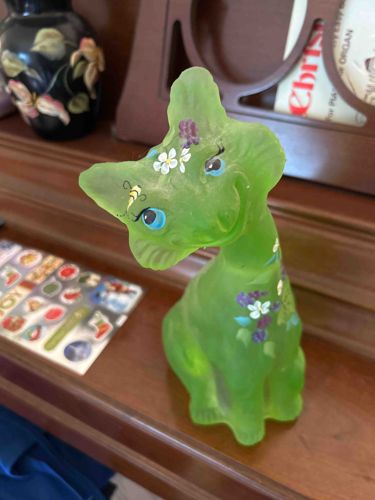
This item is a decorative figurine crafted from uranium glass, distinguished by its vibrant, frosted green coloration. The piece depicts a stylized cat in a sitting posture, characterized by an elongated neck and a head tilted to the viewer's left. The overall texture appears satin or matte due to the frosted finish, which diffuses light and reduces transparency, giving it a soft, ethereal glow typically associated with uranium glass in certain lighting conditions. The cat's face features hand-painted details including expressive blue eyes with black pupils and delicate black eyelashes. A small, endearing black bee with yellow stripes and antenna is painted near the cat's left eye. Further embellishments include small clusters of painted flowers in shades of white, purple, and blue, with green foliage accents, adorning the cat's head and the upper back of its body. These hand-painted floral motifs suggest a whimsical or folk-art aesthetic. There are no readily visible chips, cracks, or significant wear on the surface, including the painted details, which appear intact. The construction seems solid and uniform, typical of molded glass. Given the material, it likely dates from the early to mid-20th century when uranium glass was more commonly produced. The absence of specific maker's marks or signatures makes precise attribution difficult, but its unique material and hand-painted details make it a distinctive piece of decorative glass art.
AI Appraisal Report
I have thoroughly examined the provided image of the Uranium Glass Cat Figurine. The piece presents in excellent condition with no visible chips, cracks, or significant wear to the frosted green glass or the hand-painted details. The integrity of the painted eyes, bee, and floral motifs appears strong, which is a positive factor for its value. The use of uranium glass itself adds a unique collector appeal, especially given its characteristic glow under UV light (though this cannot be confirmed from the image alone).
Authenticity, based purely on visual examination, appears high for an early to mid-20th century decorative uranium glass piece. The frosted finish and stylistic painting align with items from that era. However, without physical examination, I cannot definitively confirm the uranium content or rule out modern reproductions attempting to mimic antique styles. An in-person inspection would allow for UV light testing to confirm the uranium content, and tactile examination for mold lines or imperfections indicative of age.
Market conditions for uranium glass, particularly whimsical figurines, remain steady with a dedicated collector base. Comparable items, especially those with hand-painted details, typically fetch prices in the $100-$300 range, depending on rarity, condition, and artistic merit. This specific cat's elongated neck and unique painted embellishments contribute to its distinctiveness. Demand for well-preserved, artfully decorated uranium glass is consistent, though it is not considered exceptionally rare.
Factors impacting its value positively include its excellent condition, the desirable uranium glass material, and the charming hand-painted details which add character and individuality. The absence of a maker's mark limits higher-end attribution to a specific, highly sought-after manufacturer, which might constrain its top market value. For full authentication and to ascertain premium market value, a physical inspection is essential. This would involve UV light testing, a close examination of the glass quality and painting technique, and a search for any faint, obscured marks. Provenance documentation, if available, would also be invaluable.