AI estimate as of August 27, 2025 · verify with a professional before acting
AI-Generated · Verify before acting
Everything on this page is generated by AI for informational purposes only. AI can make mistakes — the AI may misidentify items or misattribute them (artist, maker, brand, designer, origin, era). This is not an official valuation and should not be used for insurance, sale, tax, estate, legal, or lending purposes — or any decision requiring a certified appraisal. It is not an authoritative claim about any person, brand, or rights holder — do not share or rely on it as a factual statement about a third party. Always consult qualified professionals before making financial decisions.
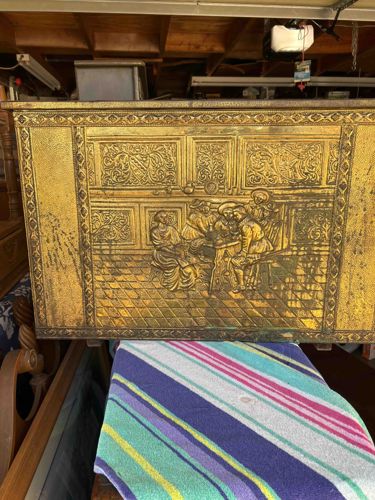
This item is a rectangular chest, likely a coffer or blanket chest, presenting a distinctly ornate and aged appearance. Its primary material appears to be a metal, possibly brass or bronze, or wood covered in embossed metal sheeting, given its metallic sheen and the texture of the relief work. The dominant color is a rich, tarnished gold, exhibiting significant patina and areas of discoloration, particularly on the left side, which suggest age and exposure. The front panel is the most striking feature, divided into multiple sections. The upper sections display repetitive, intricate scrollwork or foliate patterns, indicative of a Renaissance or Gothic revival style. The central and lower sections of the front panel feature a large, detailed figural scene in high relief. This scene depicts multiple robed figures, possibly engaged in a communal activity or religious subject, set against a patterned background that resembles tessellated tiles or stonework. The craftsmanship of the embossed details is considerable, showcasing depth and precision in the figures and surrounding motifs. The overall construction appears robust, with visible edges and borders suggesting panels fitted together. The item shows clear signs of wear consistent with age, including surface scratching, rubbing, and a non-uniform oxidation that contributes to its antique aesthetic. There are no immediately discernible maker's marks or signatures from the visible angles. The style and level of detail strongly suggest a period piece, possibly from the late 19th or early 20th century, drawing inspiration from historical aesthetics.
AI Appraisal Report
This rectangular chest, likely a coffer or blanket chest, presents as a highly ornate piece, consistent with a late 19th or early 20th-century decorative art object drawing inspiration from Renaissance or Gothic revival styles. Its material appears to be embossed metal, possibly brass or bronze, or wood completely clad in metal sheeting, which would require physical inspection to confirm. The dominant color, a rich tarnished gold with significant patina and discoloration, strongly suggests considerable age and authenticity of wear.
The condition appears consistent with its presumed age, showing expected surface scratching, rubbing, and non-uniform oxidation. The relief work of the figural scene and scrollwork is well-preserved, indicating robust construction methods. Based on the visual evidence, I assess the condition as good for its age, contributing positively to its antique aesthetic.
From images alone, definitive authenticity verification is limited. I would need to perform an in-person examination to ascertain the exact metal composition, construction techniques, and presence of any obscured maker's marks, which would influence the valuation. Specifically, an in-hand examination would reveal if the metal is solid brass/bronze, plated, or sheeting over wood. Provenance documentation, if available, linking the piece to a specific maker, region, or historical period, would significantly enhance its value and confirm authenticity. Scientific testing, such as elemental analysis of the metal, would be crucial for precise dating and material confirmation.
Market conditions for detailed, period-inspired decorative metalwork remain stable. Comparable items with strong figural scenes and good condition typically command fair prices among collectors of historical decorative arts. The demand for such pieces is moderate, appealing to specific niches. Rarity is difficult to assess without knowing the producer, but similar mass-produced embossed metal items from the late 19th/early 20th century are not exceedingly rare, while artist-signed or unique handcrafted pieces would be.
Factors impacting value include the intricate figural scene (a strong positive), the robust size (positive for decorative impact), and the genuine patina (positive). The primary limitation on value is the current inability to confirm exact material and maker without physical inspection, which limits the upper end of the valuation.