AI Appraisal Estimate

AI-generated estimates · not official valuations

From the user

What was submitted

Photo and notes provided by the user — not generated by AI

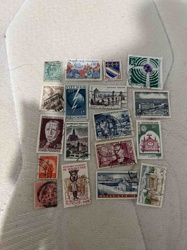
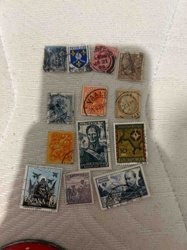
Submitted item photo
Submitted photo · June 23, 2026

User's notes

complete serie

AI analysis below

AI appraisal

AI analysis & estimate

AI-Generated · Verify before acting

Everything below is generated by AI for informational purposes only. AI can make mistakes — the AI may misidentify items or misattribute them (artist, maker, brand, designer, origin, era). This is not an official valuation and should not be used for insurance, sale, tax, estate, legal, or lending purposes — or any decision requiring a certified appraisal. It is not an authoritative claim about any person, brand, or rights holder — do not share or rely on it as a factual statement about a third party. Always consult qualified professionals before making financial decisions.

Note

This analysis also relies on unverified notes provided by the user, which may be incomplete or inaccurate and could affect the result.

Read the full disclaimer

AI Identification

·Not independently authenticated·Verify before acting

1960 Spanish Fernando Poo Native Birds Complete Stamp Series

Philatelic / Postage Stamps

AI Estimated Value

·Not an official valuation·Verify before acting

$5-15

As of June 23, 2026

AI Item Analysis

·AI can make mistakes·Verify before acting
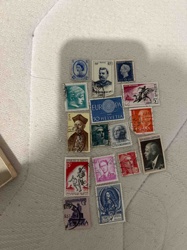
This is a complete philatelic series of nine postage stamps issued for the Spanish overseas province of Fernando Poo (now Bioko, Equatorial Guinea), specifically the 1960 'Native Birds' definitive set. The collection features monochrome intaglio printing (recess printing) on gummed paper with standard perforations. The set displays a variety of tropical avian species indigenous to the Gulf of Guinea, including pheasants, turacos, and waterfowl. Each stamp includes the country name 'ESPAÑA' and 'FERNANDO POO' along with the denomination and 'CORREOS' marking. The color palette spans a range of earth tones and vibrant dyes including ochre, slate gray, olive green, terracotta, turquoise, deep navy, and forest green. The craftsmanship is typical of the mid-20th-century Spanish printer 'Fábrica Nacional de Moneda y Timbre' (FNMT), characterized by fine line work and sophisticated shading. The condition appears to be 'Mint Never Hinged' (MNH) or 'Mint Lightly Hinged' (MLH), as the perforations are crisp and the colors show no signs of fading from UV exposure. There are no immediate signs of creasing, foxing, or staining across the displayed row, indicating well-preserved archival quality. This series represents the colonial administrative period of African territories under Spanish rule.

AI Appraisal Report

·AI can make mistakes·Verify before acting
I have examined the digital representation of the 1960 'Native Birds' complete series from the Spanish province of Fernando Poo (Scott #188-196). Visually, the set appears to be in excellent condition, likely Mint Never Hinged (MNH) or Mint Lightly Hinged (MLH). The centering is well-balanced across the row, and the colors—ranging from the distinct ochre of the 10c to the deep navy of the 20c—remain vibrant with no evidence of oxidation or UV fading. The perforations appear intact and uniform, characteristic of the precise work of the Fábrica Nacional de Moneda y Timbre (FNMT). From a market perspective, while this series is visually striking and historically interesting as a relic of Spanish colonial Africa, it is not rare. These definitive sets were issued in significant quantities for collectors. Consequently, the demand is moderate, primarily appealing to specialists in Spanish Colonies or thematic 'bird on stamps' collectors. Comparable sales for complete sets in this condition consistently fall in the very affordable range. The value here is strictly philatelic rather than investment-grade. It is important to note that without a physical inspection, I cannot verify the gum condition on the reverse side to confirm if it is truly 'Never Hinged' or check for original gum disturbances. I also cannot detect microscopic flaws like thins or pinholes that digital images obscure. For a standard issue like this, provenance documentation is rarely required, but a physical check of the watermark and gum would be the final step to confirm the precise grading (MNH vs. LH).

Get your items appraised

Instant estimates of your treasures with AI-powered appraisals

Browse More Appraisals