AI identification & appraisal estimate

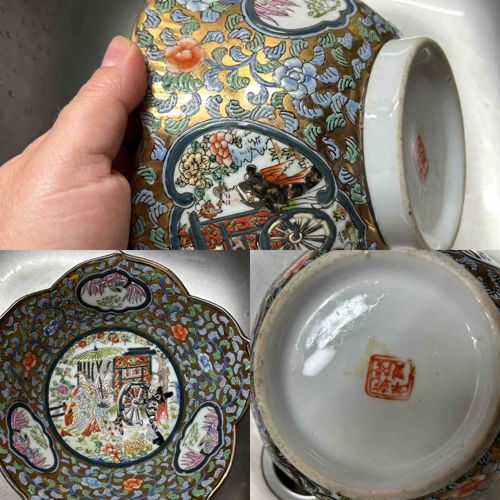
Japanese Imari-Style Porcelain Bowl with Cart and Floral Motifs

Submitted photo of Japanese Imari-Style Porcelain Bowl with Cart and Floral Motifs
Photo submitted by the user — not generated by AI

AI Estimated Value

Not an official valuation

$600-900

AI estimate as of November 1, 2025 · verify with a professional before acting

AI-Generated · Verify before acting

Everything on this page is generated by AI for informational purposes only. AI can make mistakes — the AI may misidentify items or misattribute them (artist, maker, brand, designer, origin, era). This is not an official valuation and should not be used for insurance, sale, tax, estate, legal, or lending purposes — or any decision requiring a certified appraisal. It is not an authoritative claim about any person, brand, or rights holder — do not share or rely on it as a factual statement about a third party. Always consult qualified professionals before making financial decisions.

Read the full disclaimer

AI Item Analysis

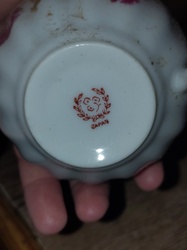
This exquisite item is a Japanese porcelain bowl, adorned with intricate Imari-style polychrome enamel decoration and extensive gilding. The bowl features a scalloped, multifoil rim, giving it a distinctive shape. The predominant colors in the decoration are a rich cobalt blue, vibrant iron red, leafy green, soft pink, and white, all highlighted with bright gold accents that cover much of the background in a dense, interlocking foliate pattern. The central motif of the bowl's interior depicts a scene with a traditional Japanese cart (possibly a 'karakasa' type) pulled by an unseen figure, accompanied by a female figure under an umbrella, and surrounded by lush floral arrangements. This central medallion is framed by a border of smaller, alternating cartouches containing floral or scenic elements and intricate geometric patterns. The exterior of the bowl continues the opulent decoration with similar dense floral and gilded motifs, interspersed with larger decorative panels that appear to mirror the interior’s central theme. The base of the bowl is unglazed on the footrim, revealing the smooth white porcelain body, and features a distinct red seal mark, likely indicating the maker or a specific period. The craftsmanship is evident in the fine details of the hand-painted enamels and the meticulous application of gold, suggesting a high-quality piece. Visible condition issues include some expected wear to the gilding, particularly on raised areas, and a slight discoloration or residue in the unglazed footrim area. The overall condition appears to be good for its estimated age, which, based on the Imari style and extensive decoration, could be late 19th to early 20th century. The intricate detail and vibrant color palette are characteristic of Japanese export porcelain produced during that era.
AI Appraisal Report

This exquisite Japanese Imari-Style Porcelain Bowl exhibits a high degree of craftsmanship, consistent with late 19th to early 20th-century export ware. The vibrant polychrome enamels – cobalt blue, iron red, green, pink, and white – are richly applied, and the extensive gilding in an interlocking foliate pattern across most surfaces is particularly striking. The central motif of a traditional cart with figures under an umbrella is well-executed, framed by detailed cartouches and geometric patterns, reflecting typical Imari design elements. Condition-wise, based solely on the provided description, the bowl appears to be in good overall condition for its age. Expected wear to the gilding on raised areas is noted, which is common for pieces of this vintage and does not significantly detract from value. The unglazed footrim shows some residue, which an in-person examination could clarify as superficial dirt or a more ingrained discoloration. Market demand for quality Imari continues to be steady, especially for pieces with intricate detail and a rich color palette like this. Comparables often fall within this range, though exceptional examples can fetch higher. The presence of a red seal mark on the unglazed footrim is a significant factor; while I cannot decipher it from the description alone, such marks often indicate a specific maker or kiln, which can enhance value. Without an in-person examination, I can't definitively confirm the authenticity of the mark or the age with absolute certainty, as expertly crafted reproductions exist. A physical inspection would allow me to assess the porcelain body's quality, the enamel application under magnification, and the true nature of any wear. Provenance documentation or scientific analysis of the pigments and porcelain body would be necessary for full authentication to rule out a later revival piece.

Keep exploring

More ceramics and porcelain appraisals

Get your items appraised

Instant AI-powered appraisal estimates from a photo

Browse More Appraisals