AI estimate as of August 29, 2025 · verify with a professional before acting
AI-Generated · Verify before acting
Everything on this page is generated by AI for informational purposes only. AI can make mistakes — the AI may misidentify items or misattribute them (artist, maker, brand, designer, origin, era). This is not an official valuation and should not be used for insurance, sale, tax, estate, legal, or lending purposes — or any decision requiring a certified appraisal. It is not an authoritative claim about any person, brand, or rights holder — do not share or rely on it as a factual statement about a third party. Always consult qualified professionals before making financial decisions.
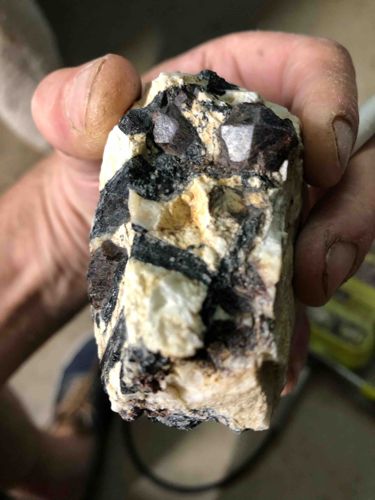
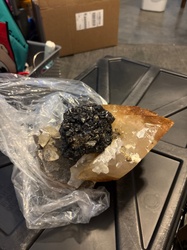
This specimen is a hand-sized piece of matrix rock containing multiple visible mineral crystals. The overall size appears to fit comfortably within an average person's hand, suggesting dimensions of approximately 3-5 inches in length. The matrix material exhibits a mottled appearance, primarily composed of light-colored, possibly off-white or yellowish, crystalline host rock contrasted sharply with dark, likely black or deep brown, veining or inclusions. Interspersed within this matrix are several well-formed reddish-brown to dark brown crystalline structures, which exhibit distinct octahedral or dodecahedral habits, characteristic of garnets. Two of these crystals are particularly prominent and have visible facets that reflect light, indicating good crystal formation and some degree of translucency or luster. The surface of the matrix is uneven and naturally fractured, typical of a raw mineral find, and shows some areas of earthy or rough texture. There are no obvious signs of polishing, cutting, or artificial treatment. The overall condition appears to be stable, with no visible significant chips or extensive damage to the prominently embedded crystals. The specimen appears to be geological in origin, likely a natural formation, and given the well-formed crystals, it represents a good quality example of garnet in matrix. The colors and crystal forms suggest an uncleaned, natural state, possibly recently extracted from its geological context. The specific type of garnet would require further analysis, but based on the crystal habit and color, it could be almandine or spessartine. No maker's marks or signatures are discernible, as expected for a natural mineral specimen. The estimated age is geological.
AI Appraisal Report
Upon visual examination of the provided image, I assess this Garnet in Matrix specimen to be a genuine geological formation. The octahedral/dodecahedral habits and reddish-brown coloration are highly consistent with natural garnet crystals, likely almandine or spessartine, embedded within a natural host rock. The matrix appears undisturbed, showing typical fracturing and texture of a freshly extracted mineral, and there are no signs of artificial treatment, cutting, or polishing. The overall condition appears good; the prominent garnet crystals are well-formed and intact, showing visible facets and luster, and no significant damage observed. This specimen holds significant aesthetic appeal due to the contrast between the dark garnets and the lighter matrix.
In terms of market conditions, garnet in matrix specimens are relatively common, but those with well-formed, visible crystals, particularly multiple ones as seen here, are more desirable. Comparables for specimens of this size and quality typically range from $100-$300 from reputable mineral dealers. Demand for such specimens is moderate among mineral collectors, particularly those focusing on aesthetic display pieces. The size of the specimen, making it 'hand-sized', contributes positively to its collectibility. Rarity is not exceptionally high for generalized garnet matrix, but the quality of these specific crystals elevates its appeal.
Factors significantly impacting value include the visible quality of the crystals, their size relative to the matrix, and the overall aesthetic presentation. The natural, uncleaned state is also a plus for collectors who prefer specimens as found. While I am confident in its authenticity based on visual cues, physical inspection would allow for definitive verification of crystal hardness, specific gravity, and optical properties, which are crucial for precise mineral identification and ruling out any synthetic or treated materials. Furthermore, provenance documentation would confirm its origin. This appraisal is limited to what can be discernable from the provided image and assumes no undisclosed treatments or damages.