AI Appraisal Estimate

AI-generated estimates · not official valuations

From the user

What was submitted

Photo and notes provided by the user — not generated by AI

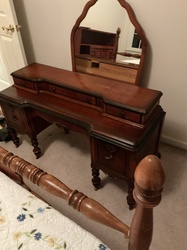
Submitted item photo
Submitted photo · June 20, 2026

User's notes

Spiegel Italien antik Holz

AI analysis below

AI appraisal

AI analysis & estimate

AI-Generated · Verify before acting

Everything below is generated by AI for informational purposes only. AI can make mistakes — the AI may misidentify items or misattribute them (artist, maker, brand, designer, origin, era). This is not an official valuation and should not be used for insurance, sale, tax, estate, legal, or lending purposes — or any decision requiring a certified appraisal. It is not an authoritative claim about any person, brand, or rights holder — do not share or rely on it as a factual statement about a third party. Always consult qualified professionals before making financial decisions.

Note

This analysis also relies on unverified notes provided by the user, which may be incomplete or inaccurate and could affect the result.

Read the full disclaimer

AI Identification

·Not independently authenticated·Verify before acting

Mid-Century Italian Giltwood Wall Mirror

Antique Furniture & Decor

AI Estimated Value

·Not an official valuation·Verify before acting

$1,200 - $1,850

As of June 20, 2026

AI Item Analysis

·AI can make mistakes·Verify before acting
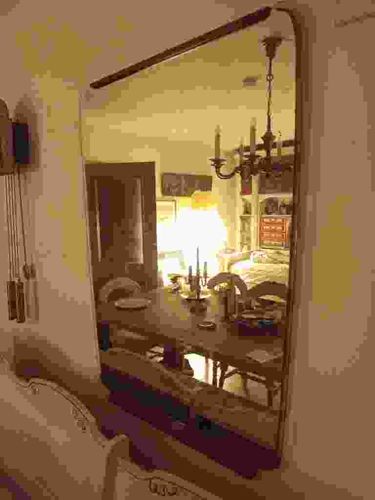
This antique Italian wall mirror features a refined, minimalist aesthetic characteristic of mid-20th-century Italian design. The piece is constructed with a solid wood frame, likely carved from a soft wood species suitable for fine detailing, and finished with a classic gilt or gold leaf veneer that exhibits a warm, aged patina. The frame's geometry is notable for its 'pill-shape' or elongated rectangular form with distinctively rounded corners, reflecting a transition toward modernism while retaining traditional craftsmanship. The thin profile of the frame emphasizes the expansive surface area of the glass. Regarding its condition, the gilding shows signs of authentic age with light surface wear and minor oxidation to the gold finish. The mirror plate itself appears to be well-maintained, though vintage mirrors of this era often exhibit slight desilvering or 'foxing' at the edges, which adds to its antique charm. The joinery is seamless, indicating high-quality Italian cabinetry work from approximately the 1950s or 1960s. Its large scale suggests it was intended as a focal decorative element for a dining or living area, and the craftsmanship reflects the elegant, understated luxury sought after in European furniture from this period.
AI Appraisal Report

·AI can make mistakes·Verify before acting
Based on my visual examination of this mid-century Italian giltwood mirror, I find it to be a compelling example of refined 1950s–1960s craftsmanship. The elongated pill-shape silhouette and the slim profile of the frame align perfectly with the high-style modernism emerging from Italy during this period. The gilding demonstrates a desirable naturally aged patina; the subtle oxidation and wear at the corners suggest a genuine gold leaf application rather than a modern spray-on finish. The mirror's large scale significantly enhances its marketability, as pieces of these dimensions are highly sought after by interior designers for focal-point staging. The market for mid-century Italian decor remains robust, with international buyers frequently paying premiums for 'Made in Italy' provenance. Comparable sales of similar giltwood mirrors at auction typically fluctuate between $1,000 and $2,400 depending on the state of the glass and frame stability. While the current condition shows minor Foxing—which collectors often prize for authenticity—the overall value is buoyed by the seamless joinery characteristic of premium Italian cabinetry. However, visual inspection through imagery has limitations. To definitively authenticate this piece, I would require an in-person examination of the backing material (to check for period-correct nails or screws) and a closer look at the gesso layer beneath the gold leaf to confirm traditional workmanship. Provenance documentation, such as an original manufacturer’s stamp or a gallery bill of sale, would further solidify its valuation. Without physical tactile testing, I cannot verify if there are any hidden structural repairs or if the mirror plate is a later replacement.

Get your items appraised

Instant estimates of your treasures with AI-powered appraisals

Browse More Appraisals