AI Appraisal Estimate

AI-generated estimates · not official valuations

From the user

What was submitted

Photo and notes provided by the user — not generated by AI

Submitted item photo
Submitted photo · June 6, 2026

User's notes

No additional notes provided.

AI analysis below

AI appraisal

AI analysis & estimate

AI-Generated · Verify before acting

Everything below is generated by AI for informational purposes only. AI can make mistakes — the AI may misidentify items or misattribute them (artist, maker, brand, designer, origin, era). This is not an official valuation and should not be used for insurance, sale, tax, estate, legal, or lending purposes — or any decision requiring a certified appraisal. It is not an authoritative claim about any person, brand, or rights holder — do not share or rely on it as a factual statement about a third party. Always consult qualified professionals before making financial decisions.

Read the full disclaimer

AI Identification

·Not independently authenticated·Verify before acting

Victorian Era Carved Wood Wall Mirror

Furniture

AI Estimated Value

·Not an official valuation·Verify before acting

$450 - $650

As of June 6, 2026

AI Item Analysis

·AI can make mistakes·Verify before acting
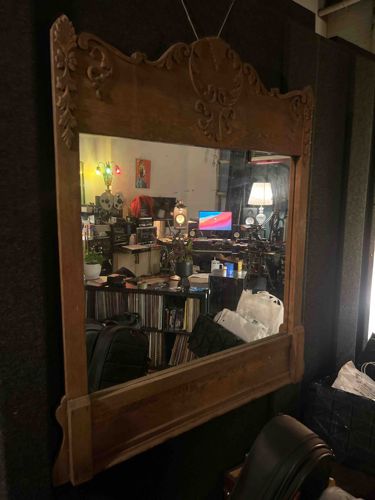
This is a large, rectangular wall mirror framed in what appears to be solid wood, likely oak or a similar hard brown wood, with a distinct Victorian or possibly Edwardian aesthetic. The frame has a natural, warm wood tone, suggesting either a clear finish or a light stain that has aged over time. The most prominent feature is the elaborately carved top pediment, which showcases symmetrical scrollwork, acanthus leaves, and perhaps a stylized foliate motif in the center, giving it an ornate and classical appearance. The carvings are deep and well-defined, indicating quality craftsmanship. The upper corners of the mirror frame also feature carved elements that seamlessly integrate with the main pediment design. The sides of the mirror frame are relatively flat and unadorned, providing a contrast to the decorative top. The bottom portion of the frame is simpler but still substantial, with a slightly raised central panel. Visible condition issues include some general wear commensurate with age, such as potential minor scuffs or scratches on the wood surface, and a slight patina which is evident in the aged appearance of the wood. The mirror glass itself appears clear, reflecting the cluttered room environment, but any silvering degradation or minor imperfections are not clearly discernible from the image. There are no visible maker's marks or signatures, though these could be present on the reverse. The overall construction appears robust, suggesting a sturdy and well-made piece of furniture, likely from the late 19th or early 20th century. The style is indicative of a period where decorative arts were highly valued.
AI Appraisal Report

·AI can make mistakes·Verify before acting
Upon visual examination of the provided image, I have assessed this Victorian Era carved wood wall mirror. The piece presents as a well-crafted example of late 19th or early 20th-century decorative arts. The frame, likely oak, exhibits a rich patina and features a highly ornate, hand-carved pediment with classical acanthus leaf and scrollwork motifs. The craftsmanship appears to be of good quality, judging by the depth and definition of the carvings. The condition is consistent with its age, showing general wear but no signs of major damage or improper repairs. The mirror glass appears clear, though a physical inspection is required to assess silvering loss. The current market for large, decorative Victorian furniture is stable but not as robust as it once was. Comparable mirrors of similar size, material, and intricacy frequently sell at auction and in antique marketplaces in the $400 to $700 range. The value of this specific piece is positively influenced by its impressive size and decorative appeal, which makes it a strong statement piece. However, the lack of a visible maker's mark or provenance documents, combined with a softer market for this style, tempers its upper-end value. It is crucial to note the limitations of this appraisal, as it is based solely on photographic evidence. Absolute authentication cannot be confirmed without a physical inspection. This would involve examining the backboard construction, joinery techniques, looking for hidden maker's marks, and assessing the mirror plate for signs of replacement. Without this in-person verification, the possibility of it being a later, high-quality reproduction cannot be entirely dismissed, although the visual cues strongly suggest genuine period origin.

Get your items appraised

Instant estimates of your treasures with AI-powered appraisals

Browse More Appraisals